


Secure collaboration tools for real estate professionals
Your stack grew one tool at a time. But the gaps between those tools are exactly where fraud gets in. Here's how to consolidate without losing what works.
Share article:


Michelle Artreche
7 minutes
Real Estate
May 26, 2026
May 26, 2026
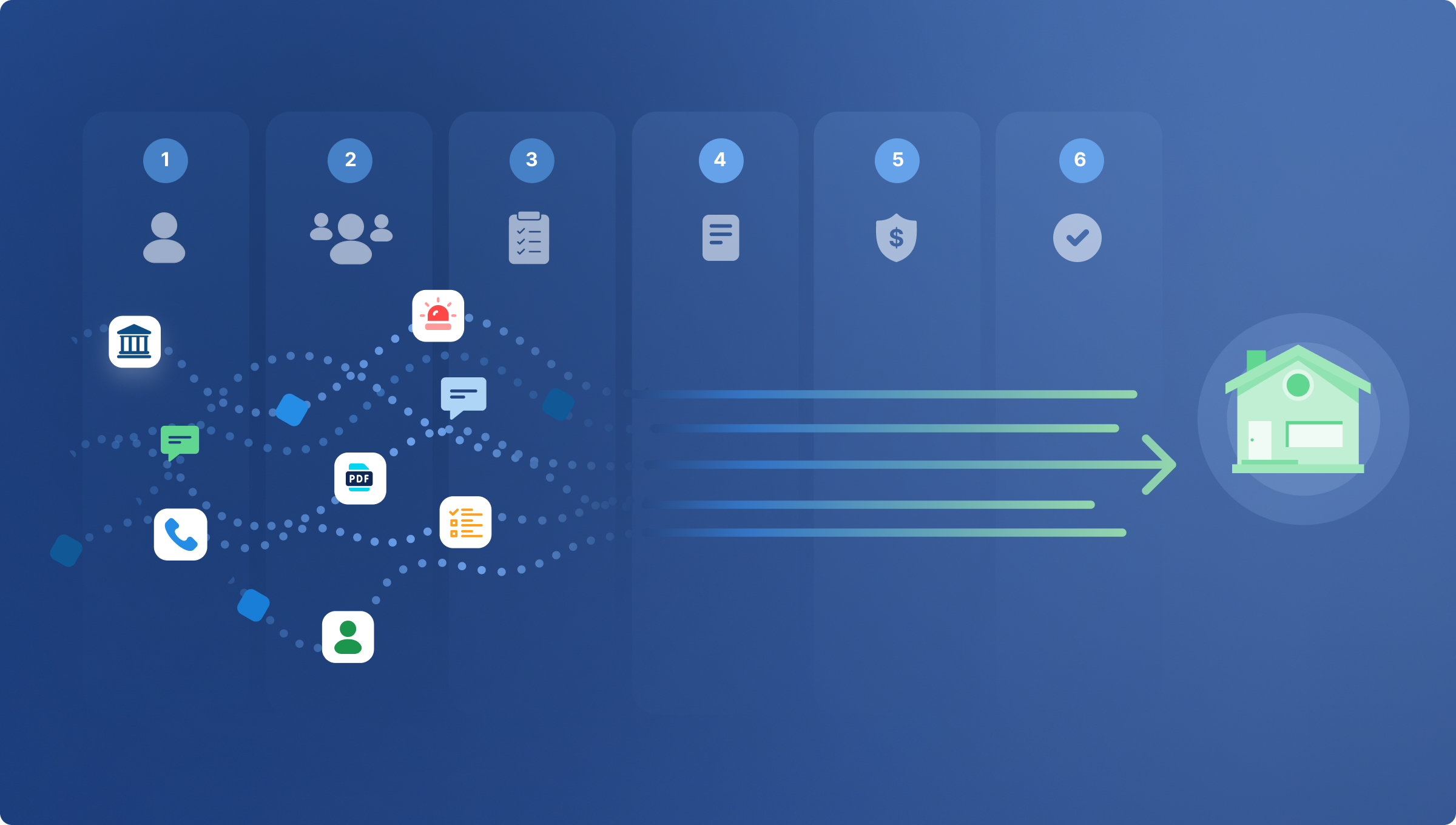
A single real estate transaction touches a dozen platforms. Your CRM tracks the lead. Your title production software (TPS) manages the file. Email carries wire instructions. One tool handles e-signatures, another collects earnest money, and communication spreads across texts, calls, and threaded replies nobody can find later.
Each tool earned its place when you bought it. But your firm has grown, closing volume has climbed, and the stack that worked at 50 files a month now creates duplicate work, lost context, and gaps fraudsters are built to exploit.
Whether you're an attorney, lender, or title professional, the question is the same: how do you collaborate securely without adding another login? This guide lays out your options.
What secure collaboration tools actually do in real estate operations
Collaboration tools in real estate fall into two broad groups:
- Operational platforms that keep your team coordinated across files, offices, and partners
- Security platforms that protect the money moving through every closing
On the operational side, that means CRM and pipeline management tools that track leads, referral partners, and client relationships across the closing lifecycle.
Alongside those sit team communication platforms that replace scattered email threads and text messages with organized, searchable conversations tied to specific files.
Task and workflow management tools layer on top, assigning responsibilities, setting deadlines, and keeping multi-office teams aligned. Marketing automation closes the loop by nurturing referral relationships and keeping your firm top-of-mind with past clients.

On the security side, collaboration tools cover multi-factor identity verification, bank account validation, encrypted wire delivery, digital payment collection, automated payoff ordering, and electronic signatures.
The best platforms integrate with your TPS — SoftPro, ResWare, RamQuest, or Settlor instance — meaning verification, payment status, and payoff results flow back into your closing files automatically.
This replaces a fragmented reality most title operations and law firms know too well: manual callbacks to servicers averaging 15+ minutes per payoff, email-based wire sharing that exposes buyers to spoofed instructions, disconnected vendor tools with separate credentials, and zero documented proof of due diligence when something goes wrong.
Why fragmented tools create the fraud exposure you're trying to prevent
Every handoff between systems introduces a data-transfer gap where information can be intercepted, altered, or spoofed. Your team loses documented proof of what due diligence actually happened.
According to our 2026 State of Wire Fraud Report, median losses run $68,000 on buyer cash-to-close fraud, $172,000 on seller proceeds, and $276,000 on mortgage payoffs.
One prevented incident pays for years of a unified platform. But that prevention only works when every step (verification, payoff confirmation, wire delivery, and document execution) is documented in one auditable record.
Set of tools a real estate company should consider
When evaluating platforms, these are the categories of tools a real estate professional should consider:
- CRM and pipeline management: Track leads, referral sources, and file progress in one place, connected to your TPS
- Team communication and task management: File-specific messaging, task assignment, and deadline tracking that replaces scattered email threads
- Marketing automation: Automated email sequences and referral partner nurturing that keep your firm top-of-mind
- Multi-factor identity verification: ID scanning, biometric matching, and knowledge-based authentication across 250+ government databases. Verification in under a minute
- Encrypted wire instruction delivery: Replaces email entirely with secure, branded delivery, including proof of receipt and documented access logs
- Automated mortgage payoff ordering: Direct requests to servicers without phone calls. Insurance backing that transfers liability from your firm to the platform
- Digital earnest money collection: ACH, instant payment, or wire delivery with real-time tracking
- Native e-signing: Unlimited signatures in per-file pricing with identity verification built into the signing flow
A real consolidated stack covers two jobs: coordinating your team and protecting your transactions. Operational tools handle the coordination. Security platforms handle the protection. Together, they create a stack your real estate business can actually scale with.
The real estate operational nightmare: vendor sprawl and manual workarounds
Picture your team's typical day. One person manages client relationships in a CRM that doesn't connect to your production software.
Another juggles verification through a point solution with its own login. A third orders payoffs via phone because the payoff system is unreliable.
Someone else collects earnest money by sending wire instructions over email. Your marketing coordinator runs campaigns in a separate platform with no visibility into which referral partners are actually sending closings. Your compliance officer spends hours reconciling logs from all these systems.
Manual callbacks to services average 15+ minutes per payoff, which adds up to roughly 16 hours per escrow officer every month. That’s a full workweek per quarter spent on hold instead of closing files.
Vendor sprawl carries a hidden cost beyond subscriptions. Every system has its own login, training demands, and integration points.
Your team context-switches constantly, which creates the exact conditions where human error takes hold: someone skips a verification step, forgets to document a callback, or sends wire instructions through email because it feels faster.
The cost of a fragmented stack extends beyond operations into liability
After a fraudulent wire goes out, your team tries to reconstruct what happened. The verification was in Tool A, the payoff in Tool B, the wire instructions were sent via email, and the signature was in Tool D, with no link to the verified identity.
Your E&O claim goes to the carrier with fragmented evidence. Your underwriter can't determine whether you followed ALTA Best Practices. Your firm absorbs the liability.
You also can't enforce consistent security policies across offices, can't produce unified compliance reports without manual work, and have no single source of truth when something goes wrong.
Comparing specific tools across each category
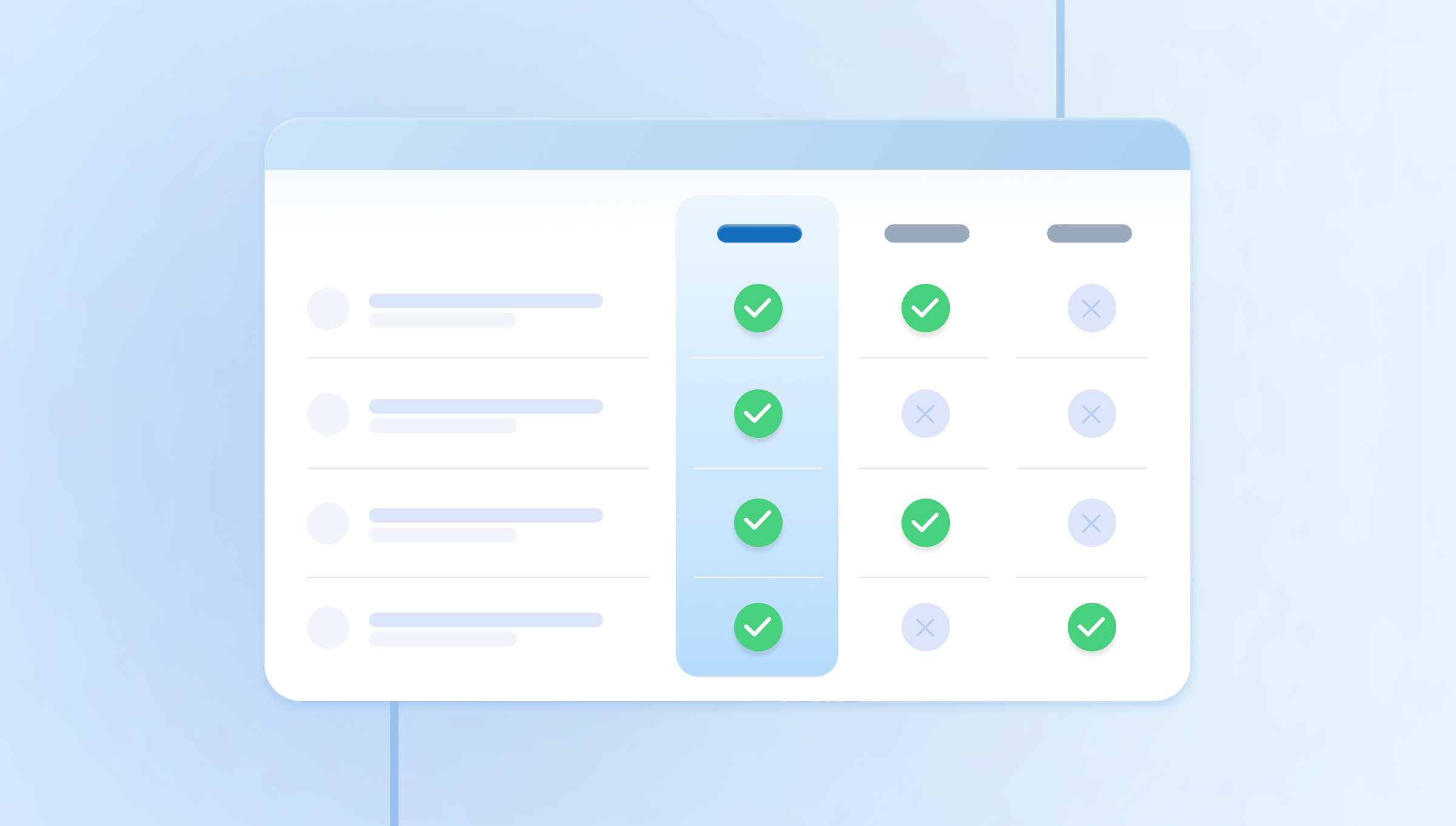
Here's how the major platforms stack up. Some are point solutions covering one category. Others are consolidated platforms covering multiple categories in a single workflow.
CRM and pipeline management
Qualia offers a fully integrated CRM within its title production ecosystem. Strong for firms already running Qualia as their TPS, but limited if you're on SoftPro or ResWare.
Follow Up Boss is a popular CRM across real estate with strong lead routing, communication tracking, and integrations. More agent- and broker-focused than title-company-focused.
HubSpot and Salesforce serve as general-purpose CRMs that larger title operations and law firms customize for their workflows. Powerful but require configuration and don't natively connect to TPS platforms.
Most title-specific TPS platforms (SoftPro, ResWare, RamQuest) include some pipeline and file management natively, but lack the marketing automation and referral tracking depth of a dedicated CRM.
Team communication and task management
Slack and Microsoft Teams are the standard for internal communication and they're a popular choice among title professionals.
The key question for multi-office firms: does communication data connect to your TPS and compliance records, or live in a separate silo?
Marketing automation
Mailchimp, ActiveCampaign, and HubSpot cover email marketing, drip campaigns, and referral partner nurturing.
Many marketing tools work with common CRM systems, but they are not specific to any one title. BombBomb is popular in real estate for video email marketing. The gap: most marketing tools don't connect to your closing data, so triggering campaigns based on file status requires custom integration.
Identity verification
Identity verification sits at the front of every high-risk closing — out-of-state sellers, LLC transactions, and remote signers. The platforms below take very different approaches to client experience, fraud detection depth, and the amount of data your buyers and sellers must share.
- CertifID Match analyzes 150+ fraud markers, scans governent IDs against 250+ agency databases, and performs liveness detection and device verification. Smooth experience for your clients — no SSN, no passwords. Integrates with SoftPro, ResWare, RamQuest, AIM+, and Settlor
- ClosingLock offers integrated ID verification with Plaid-based bank account verification as an added layer for wire instructions. Integrates with SoftPro, ResWare, RamQuest, and Settlor
- Qualia Shield provides identity verification within the Qualia TPS ecosystem using facial recognition and ID scanning. Best for firms already on Qualia
Verification rate and TPS integration depth determine whether your team and customers actually use the tool or work around it.
Payoff verification and ordering
According to our data, mortgage payoff fraud carries the highest median loss in real estate at $276,000 per incident, and manual callbacks eat 16+ hours per escrow officer every month.
The platforms below handle verification and ordering with very different database depth and automation levels.
- CertifID PayoffProtect achieves a 97% verification rate across millions of transactions and 5,000+ lenders. A dedicated team handles the remaining manual verifications. Payoff Ordering automates requests through a centralized dashboard. Has saved customers an estimated 38,000+ employee hours
- ClosingLock added automated payoff ordering through its 2025 acquisition of Viking Sasquatch's payoff retrieval solution. Each verified payoff is insured up to $2.5 million
- Qualia provides payoff functionality within its ecosystem and announced an Automated Payoff Agent in 2026 to manage identification, authorization, and risk assessment. Lender database depth has historically been smaller than dedicated payoff platforms
Instant verification rate and lender database size are the numbers that matter. A purpose-built payoff product with direct servicer relationships outperforms bolt-on integrations, especially at scale, where every manual verification adds friction your team will eventually skip.
Digital payment platforms
Digital payments cover more than earnest money. A full payment platform handles collections, seller disbursements, agent commissions, and refunds across ACH, RTP, and wire rails. The platforms below range from single-purpose EMD tools to full-lifecycle payment infrastructure.
- CertifID Digital Payments supports same-day ACH, RTP, and wires. Covers the full lifecycle: EMD collection, seller disbursements, commissions, and refunds. Fully white-labeled, web-based, no app required
- ClosingLock supports ACH, RTP, and wire transfers through its Good Funds Payments tool, with coverage under its wire fraud insurance policy. Integrates with SoftPro, ResWare, RamQuest, and Settlor
- Earnnest focuses primarily on EMD collection via ACH through Dwolla, with Plaid-based bank linking. Supports same-day ACH, next-day ACH, and wire for disbursements, though standard settlement on payments over $100k takes 4–5 business days
Scope and settlement speed separate these tools. EMD-only platforms leave disbursements, commissions, and refunds unsolved. App-based tools add friction for clients who don't want another download. Same-day ACH and RTP support matter most for firms competing on closing speed.
E-signature tools
E-signing is where most title firms still pay per-envelope fees to a separate vendor, with an audit trail that doesn't connect to anything else in the closing. The platforms below take two very different approaches to pricing and integration.
Consolidated platforms with native e-signing include:
- CertifID E-signature — unlimited signatures in per-file pricing with identity verification built into the signing flow
- ClosingLock — document exchange and eSigning integrated into the platform
- Qualia — e-signing within the Qualia ecosystem
DocuSign and Dotloop execute documents well, but they don't know who was verified, what was paid, or whether the payoff cleared. Consolidated platforms tie the signature to the verified identity, which is the documentation your E&O carrier actually wants to see.
Insurance and fraud recovery comparison
Insurance is the single largest differentiator across these platforms — and the one most firms underweight until they need to file a claim. Coverage limits, first-party versus third-party structure, and fraud recovery capability all matter when something goes wrong.
- CertifID: Up to $5 million per file in direct, first-party insurance, underwritten by Lloyd's of London. You're the named insured on every transaction verified by CertifID software. Exclusive partnerships with Stewart and Old Republic underwriters. Fraud Recovery Services has recovered $118.4 million in stolen funds for 773 victims, with a 69% recovery rate, backed by a U.S. Secret Service partnership
- ClosingLock: Up to $2.5 million per wire transfer (with some product pages citing up to $5M on newer coverage), backed by Lloyd's of London. Customers are directly named on the certificate of insurance
- Qualia Shield: Up to $2 million in insurance coverage for eligible wire transfers assessed as "low risk," backed by Lloyd's of London
First-party coverage means your firm is the named insured and claims go directly to the insurer. Third-party coverage means disputes run through the vendor first. When $2 million is missing, that distinction determines how fast you get paid and whether liability actually transfers off your balance sheet.
How to evaluate vendors: questions to ask during demos
Every vendor will tell you they prevent fraud, integrate with your systems, and back their work with insurance.
The demo is where those claims either hold up or fall apart. The questions below force specifics on the points that actually matter — whether you're a title agent or attorney.
- On CRM and pipeline management: "Does the CRM connect to my TPS, or will my team rekey data between systems?"
- On team communication and task management: "Does file-specific communication get captured in my compliance record, or does it live in a separate silo?"
- On marketing automation: "Can campaigns trigger based on closing data, or only on manual list uploads?"
- On identity verification: "Does my buyer or seller need to download an app, create a password, or enter their SSN?"
- On payoff verification and ordering: "What's your instant verification rate, how many lenders are in your database, and how do you handle payoffs that don't verify automatically?"
- On digital payments: "Does your platform cover the full payment lifecycle — EMD, disbursements, commissions, refunds — or only collection?"
- On e-signing: "Is e-signing included in per-file pricing, or priced per envelope? And does the signature tie to a verified identity?"
- On insurance: "Is the insurance first-party or third-party? Am I the named insured? What's the claims process?"
- On fraud recovery: "If money goes to the wrong account, what happens in the first 24 hours?"
- On integration and audit trails: "Does verified data flow back into the systems my team already uses? Can I pull one report covering every step of a single transaction?"
If a vendor hesitates on insurance structure, verification rates, or how their tool shows up inside your existing systems — that hesitation tells you more than any demo slide. The best platforms answer these questions with specifics: numbers, named insured status, and a live walkthrough inside your TPS, not a marketing deck.
Ready to consolidate your security stack?
If your team is managing verification in one tool, payoffs in another, wire delivery through email, and signatures through a separate subscription, you're paying more than you need to, carrying liability you shouldn't, and asking your escrow officers to juggle workflows that fraudsters are built to exploit.
CertifID is a consolidated closing platform that includes identity verification, payoff protection, wire delivery, digital payments, and e-signing that integrates with your TPS. Every transaction is backed by up to $5 million in first-party insurance and a U.S. Secret Service-backed recovery team.
See how it works for your specific workflow — whether you're on SoftPro, ResWare, RamQuest, AIM+, or Settlor.
FAQ
What's the difference between a consolidated platform and bundling separate point solutions?

Real consolidation means one data model where identity verification, payments, and signatures connect without manual reconciliation. Bundling means combining separate tools under a single login. You're still managing fragmentation underneath, and your audit trail still lives across multiple systems when something goes wrong.
Should our CRM be part of the consolidated stack?
It depends on your firm's size and role. Smaller firms and solo practitioners may find their core system handles enough pipeline management natively. Larger firms, multi-office operations, and law practices benefit from a dedicated CRM that integrates with both their core systems and security platforms.
Can we pilot on just high-risk transactions?
Yes. A phased rollout for high-risk transactions (remote closings, out-of-state parties, large commercial deals) typically drives faster adoption than a company-wide deployment. Most firms scale from pilot to 80%+ adoption within 60 days, regardless of whether they're a title company, law firm, or lender.
How should we evaluate insurance backing?
Ask whether insurance is first-party or third-party, what the per-transaction and aggregate limits are, and what the claims timeline looks like. First-party coverage with higher limits provides meaningfully stronger protection, and matters most when you're the one explaining a lost wire to a client.
Do we still need separate e-signing subscriptions?
Not necessarily. Several consolidated platforms include native e-signing with unlimited signatures in per-transaction pricing, eliminating per-envelope costs. More importantly, the signature ties directly to the verified identity, which gives your E&O carrier documentation that standalone e-signing tools can't produce.
What if a payment turns out to be fraudulent after verification?
If verified through an insured platform with first-party coverage, the insurance covers the loss and liability transfers from your firm. Without that, your firm holds full liability with no documented proof of due diligence, regardless of whether you're a title agent, attorney, or lender.

Content Marketer

Michelle has spent her career in B2B SaaS startups leading content marketing, strategy, and social media efforts that help teams grow and audiences stay informed. At CertifID, she applies that expertise to help title and real estate professionals understand fraud risks and stay ahead of emerging threats.
A single real estate transaction touches a dozen platforms. Your CRM tracks the lead. Your title production software (TPS) manages the file. Email carries wire instructions. One tool handles e-signatures, another collects earnest money, and communication spreads across texts, calls, and threaded replies nobody can find later.
Each tool earned its place when you bought it. But your firm has grown, closing volume has climbed, and the stack that worked at 50 files a month now creates duplicate work, lost context, and gaps fraudsters are built to exploit.
Whether you're an attorney, lender, or title professional, the question is the same: how do you collaborate securely without adding another login? This guide lays out your options.
What secure collaboration tools actually do in real estate operations
Collaboration tools in real estate fall into two broad groups:
- Operational platforms that keep your team coordinated across files, offices, and partners
- Security platforms that protect the money moving through every closing
On the operational side, that means CRM and pipeline management tools that track leads, referral partners, and client relationships across the closing lifecycle.
Alongside those sit team communication platforms that replace scattered email threads and text messages with organized, searchable conversations tied to specific files.
Task and workflow management tools layer on top, assigning responsibilities, setting deadlines, and keeping multi-office teams aligned. Marketing automation closes the loop by nurturing referral relationships and keeping your firm top-of-mind with past clients.
On the security side, collaboration tools cover multi-factor identity verification, bank account validation, encrypted wire delivery, digital payment collection, automated payoff ordering, and electronic signatures.
The best platforms integrate with your TPS — SoftPro, ResWare, RamQuest, or Settlor instance — meaning verification, payment status, and payoff results flow back into your closing files automatically.
This replaces a fragmented reality most title operations and law firms know too well: manual callbacks to servicers averaging 15+ minutes per payoff, email-based wire sharing that exposes buyers to spoofed instructions, disconnected vendor tools with separate credentials, and zero documented proof of due diligence when something goes wrong.
Why fragmented tools create the fraud exposure you're trying to prevent
Every handoff between systems introduces a data-transfer gap where information can be intercepted, altered, or spoofed. Your team loses documented proof of what due diligence actually happened.
According to our 2026 State of Wire Fraud Report, median losses run $68,000 on buyer cash-to-close fraud, $172,000 on seller proceeds, and $276,000 on mortgage payoffs.
One prevented incident pays for years of a unified platform. But that prevention only works when every step (verification, payoff confirmation, wire delivery, and document execution) is documented in one auditable record.
Set of tools a real estate company should consider
When evaluating platforms, these are the categories of tools a real estate professional should consider:
- CRM and pipeline management: Track leads, referral sources, and file progress in one place, connected to your TPS
- Team communication and task management: File-specific messaging, task assignment, and deadline tracking that replaces scattered email threads
- Marketing automation: Automated email sequences and referral partner nurturing that keep your firm top-of-mind
- Multi-factor identity verification: ID scanning, biometric matching, and knowledge-based authentication across 250+ government databases. Verification in under a minute
- Encrypted wire instruction delivery: Replaces email entirely with secure, branded delivery, including proof of receipt and documented access logs
- Automated mortgage payoff ordering: Direct requests to servicers without phone calls. Insurance backing that transfers liability from your firm to the platform
- Digital earnest money collection: ACH, instant payment, or wire delivery with real-time tracking
- Native e-signing: Unlimited signatures in per-file pricing with identity verification built into the signing flow
A real consolidated stack covers two jobs: coordinating your team and protecting your transactions. Operational tools handle the coordination. Security platforms handle the protection. Together, they create a stack your real estate business can actually scale with.
The real estate operational nightmare: vendor sprawl and manual workarounds
Picture your team's typical day. One person manages client relationships in a CRM that doesn't connect to your production software.
Another juggles verification through a point solution with its own login. A third orders payoffs via phone because the payoff system is unreliable.
Someone else collects earnest money by sending wire instructions over email. Your marketing coordinator runs campaigns in a separate platform with no visibility into which referral partners are actually sending closings. Your compliance officer spends hours reconciling logs from all these systems.
Manual callbacks to services average 15+ minutes per payoff, which adds up to roughly 16 hours per escrow officer every month. That’s a full workweek per quarter spent on hold instead of closing files.
Vendor sprawl carries a hidden cost beyond subscriptions. Every system has its own login, training demands, and integration points.
Your team context-switches constantly, which creates the exact conditions where human error takes hold: someone skips a verification step, forgets to document a callback, or sends wire instructions through email because it feels faster.
The cost of a fragmented stack extends beyond operations into liability
After a fraudulent wire goes out, your team tries to reconstruct what happened. The verification was in Tool A, the payoff in Tool B, the wire instructions were sent via email, and the signature was in Tool D, with no link to the verified identity.
Your E&O claim goes to the carrier with fragmented evidence. Your underwriter can't determine whether you followed ALTA Best Practices. Your firm absorbs the liability.
You also can't enforce consistent security policies across offices, can't produce unified compliance reports without manual work, and have no single source of truth when something goes wrong.
Comparing specific tools across each category
Here's how the major platforms stack up. Some are point solutions covering one category. Others are consolidated platforms covering multiple categories in a single workflow.
CRM and pipeline management
Qualia offers a fully integrated CRM within its title production ecosystem. Strong for firms already running Qualia as their TPS, but limited if you're on SoftPro or ResWare.
Follow Up Boss is a popular CRM across real estate with strong lead routing, communication tracking, and integrations. More agent- and broker-focused than title-company-focused.
HubSpot and Salesforce serve as general-purpose CRMs that larger title operations and law firms customize for their workflows. Powerful but require configuration and don't natively connect to TPS platforms.
Most title-specific TPS platforms (SoftPro, ResWare, RamQuest) include some pipeline and file management natively, but lack the marketing automation and referral tracking depth of a dedicated CRM.
Team communication and task management
Slack and Microsoft Teams are the standard for internal communication and they're a popular choice among title professionals.
The key question for multi-office firms: does communication data connect to your TPS and compliance records, or live in a separate silo?
Marketing automation
Mailchimp, ActiveCampaign, and HubSpot cover email marketing, drip campaigns, and referral partner nurturing.
Many marketing tools work with common CRM systems, but they are not specific to any one title. BombBomb is popular in real estate for video email marketing. The gap: most marketing tools don't connect to your closing data, so triggering campaigns based on file status requires custom integration.
Identity verification
Identity verification sits at the front of every high-risk closing — out-of-state sellers, LLC transactions, and remote signers. The platforms below take very different approaches to client experience, fraud detection depth, and the amount of data your buyers and sellers must share.
- CertifID Match analyzes 150+ fraud markers, scans governent IDs against 250+ agency databases, and performs liveness detection and device verification. Smooth experience for your clients — no SSN, no passwords. Integrates with SoftPro, ResWare, RamQuest, AIM+, and Settlor
- ClosingLock offers integrated ID verification with Plaid-based bank account verification as an added layer for wire instructions. Integrates with SoftPro, ResWare, RamQuest, and Settlor
- Qualia Shield provides identity verification within the Qualia TPS ecosystem using facial recognition and ID scanning. Best for firms already on Qualia
Verification rate and TPS integration depth determine whether your team and customers actually use the tool or work around it.
Payoff verification and ordering
According to our data, mortgage payoff fraud carries the highest median loss in real estate at $276,000 per incident, and manual callbacks eat 16+ hours per escrow officer every month.
The platforms below handle verification and ordering with very different database depth and automation levels.
- CertifID PayoffProtect achieves a 97% verification rate across millions of transactions and 5,000+ lenders. A dedicated team handles the remaining manual verifications. Payoff Ordering automates requests through a centralized dashboard. Has saved customers an estimated 38,000+ employee hours
- ClosingLock added automated payoff ordering through its 2025 acquisition of Viking Sasquatch's payoff retrieval solution. Each verified payoff is insured up to $2.5 million
- Qualia provides payoff functionality within its ecosystem and announced an Automated Payoff Agent in 2026 to manage identification, authorization, and risk assessment. Lender database depth has historically been smaller than dedicated payoff platforms
Instant verification rate and lender database size are the numbers that matter. A purpose-built payoff product with direct servicer relationships outperforms bolt-on integrations, especially at scale, where every manual verification adds friction your team will eventually skip.
Digital payment platforms
Digital payments cover more than earnest money. A full payment platform handles collections, seller disbursements, agent commissions, and refunds across ACH, RTP, and wire rails. The platforms below range from single-purpose EMD tools to full-lifecycle payment infrastructure.
- CertifID Digital Payments supports same-day ACH, RTP, and wires. Covers the full lifecycle: EMD collection, seller disbursements, commissions, and refunds. Fully white-labeled, web-based, no app required
- ClosingLock supports ACH, RTP, and wire transfers through its Good Funds Payments tool, with coverage under its wire fraud insurance policy. Integrates with SoftPro, ResWare, RamQuest, and Settlor
- Earnnest focuses primarily on EMD collection via ACH through Dwolla, with Plaid-based bank linking. Supports same-day ACH, next-day ACH, and wire for disbursements, though standard settlement on payments over $100k takes 4–5 business days
Scope and settlement speed separate these tools. EMD-only platforms leave disbursements, commissions, and refunds unsolved. App-based tools add friction for clients who don't want another download. Same-day ACH and RTP support matter most for firms competing on closing speed.
E-signature tools
E-signing is where most title firms still pay per-envelope fees to a separate vendor, with an audit trail that doesn't connect to anything else in the closing. The platforms below take two very different approaches to pricing and integration.
Consolidated platforms with native e-signing include:
- CertifID E-signature — unlimited signatures in per-file pricing with identity verification built into the signing flow
- ClosingLock — document exchange and eSigning integrated into the platform
- Qualia — e-signing within the Qualia ecosystem
DocuSign and Dotloop execute documents well, but they don't know who was verified, what was paid, or whether the payoff cleared. Consolidated platforms tie the signature to the verified identity, which is the documentation your E&O carrier actually wants to see.
Insurance and fraud recovery comparison
Insurance is the single largest differentiator across these platforms — and the one most firms underweight until they need to file a claim. Coverage limits, first-party versus third-party structure, and fraud recovery capability all matter when something goes wrong.
- CertifID: Up to $5 million per file in direct, first-party insurance, underwritten by Lloyd's of London. You're the named insured on every transaction verified by CertifID software. Exclusive partnerships with Stewart and Old Republic underwriters. Fraud Recovery Services has recovered $118.4 million in stolen funds for 773 victims, with a 69% recovery rate, backed by a U.S. Secret Service partnership
- ClosingLock: Up to $2.5 million per wire transfer (with some product pages citing up to $5M on newer coverage), backed by Lloyd's of London. Customers are directly named on the certificate of insurance
- Qualia Shield: Up to $2 million in insurance coverage for eligible wire transfers assessed as "low risk," backed by Lloyd's of London
First-party coverage means your firm is the named insured and claims go directly to the insurer. Third-party coverage means disputes run through the vendor first. When $2 million is missing, that distinction determines how fast you get paid and whether liability actually transfers off your balance sheet.
How to evaluate vendors: questions to ask during demos
Every vendor will tell you they prevent fraud, integrate with your systems, and back their work with insurance.
The demo is where those claims either hold up or fall apart. The questions below force specifics on the points that actually matter — whether you're a title agent or attorney.
- On CRM and pipeline management: "Does the CRM connect to my TPS, or will my team rekey data between systems?"
- On team communication and task management: "Does file-specific communication get captured in my compliance record, or does it live in a separate silo?"
- On marketing automation: "Can campaigns trigger based on closing data, or only on manual list uploads?"
- On identity verification: "Does my buyer or seller need to download an app, create a password, or enter their SSN?"
- On payoff verification and ordering: "What's your instant verification rate, how many lenders are in your database, and how do you handle payoffs that don't verify automatically?"
- On digital payments: "Does your platform cover the full payment lifecycle — EMD, disbursements, commissions, refunds — or only collection?"
- On e-signing: "Is e-signing included in per-file pricing, or priced per envelope? And does the signature tie to a verified identity?"
- On insurance: "Is the insurance first-party or third-party? Am I the named insured? What's the claims process?"
- On fraud recovery: "If money goes to the wrong account, what happens in the first 24 hours?"
- On integration and audit trails: "Does verified data flow back into the systems my team already uses? Can I pull one report covering every step of a single transaction?"
If a vendor hesitates on insurance structure, verification rates, or how their tool shows up inside your existing systems — that hesitation tells you more than any demo slide. The best platforms answer these questions with specifics: numbers, named insured status, and a live walkthrough inside your TPS, not a marketing deck.
Ready to consolidate your security stack?
If your team is managing verification in one tool, payoffs in another, wire delivery through email, and signatures through a separate subscription, you're paying more than you need to, carrying liability you shouldn't, and asking your escrow officers to juggle workflows that fraudsters are built to exploit.
CertifID is a consolidated closing platform that includes identity verification, payoff protection, wire delivery, digital payments, and e-signing that integrates with your TPS. Every transaction is backed by up to $5 million in first-party insurance and a U.S. Secret Service-backed recovery team.
See how it works for your specific workflow — whether you're on SoftPro, ResWare, RamQuest, AIM+, or Settlor.
Content Marketer
Michelle has spent her career in B2B SaaS startups leading content marketing, strategy, and social media efforts that help teams grow and audiences stay informed. At CertifID, she applies that expertise to help title and real estate professionals understand fraud risks and stay ahead of emerging threats.
Sign up for The Wire to join the conversation.




Austin
3601 South Congress Ave.
Ste D200, Austin, Texas 78704

Grand Rapids
124 Fulton Street E
Grand Rapids, MI 49503

