


We found 6 Castle payment alternatives for title and escrow teams
A side-by-side look at six digital payment platforms for title and escrow teams, including where each one fits and what it leaves to you.
Share article:


.png)
Tyler Nickel
7 minutes
Digital Payments
Sep 4, 2026
Sep 4, 2026
Quick Summary
Castle gives title companies and attorneys a simpler way to collect earnest money and cash-to-close without relying on wires. For teams mainly focused on speed and removing wire instructions from the payment process, that can be a strong fit.
But not every firm is solving the same problem. Some need stronger guarantees around fund finality. Others want insurance, fraud recovery support, deeper title-software integrations, or a more established payment workflow.
In this guide, we compare six Castle alternatives across those areas so you can see which option best fits the way your team handles closing funds. Here are three Castle alternatives worth considering:
Why listen to us?
Every title team we work with is one wrong click away from a closing that can't be undone. That's the problem we built CertifID to solve, and it's the lens we bring to comparing Castle alternatives.
In 2024 alone, we protected 913,000 transactions and $1.4 billion in funds. Our recovery team has also retrieved $140+ million for fraud victims, and we back verified wires with up to $5 million in insurance. Fast payments matter, but what matters more is what a platform does before money moves, and what it does for you if something still goes wrong.
What is Castle?
Castle (Castle Pay, Inc.) is a seed-stage fintech based in Hudson, New York, led by co-founder and CEO Madeline Hung. The company has historically offered homeowner payment and savings tools and now also provides a dedicated payments product for title and escrow teams.
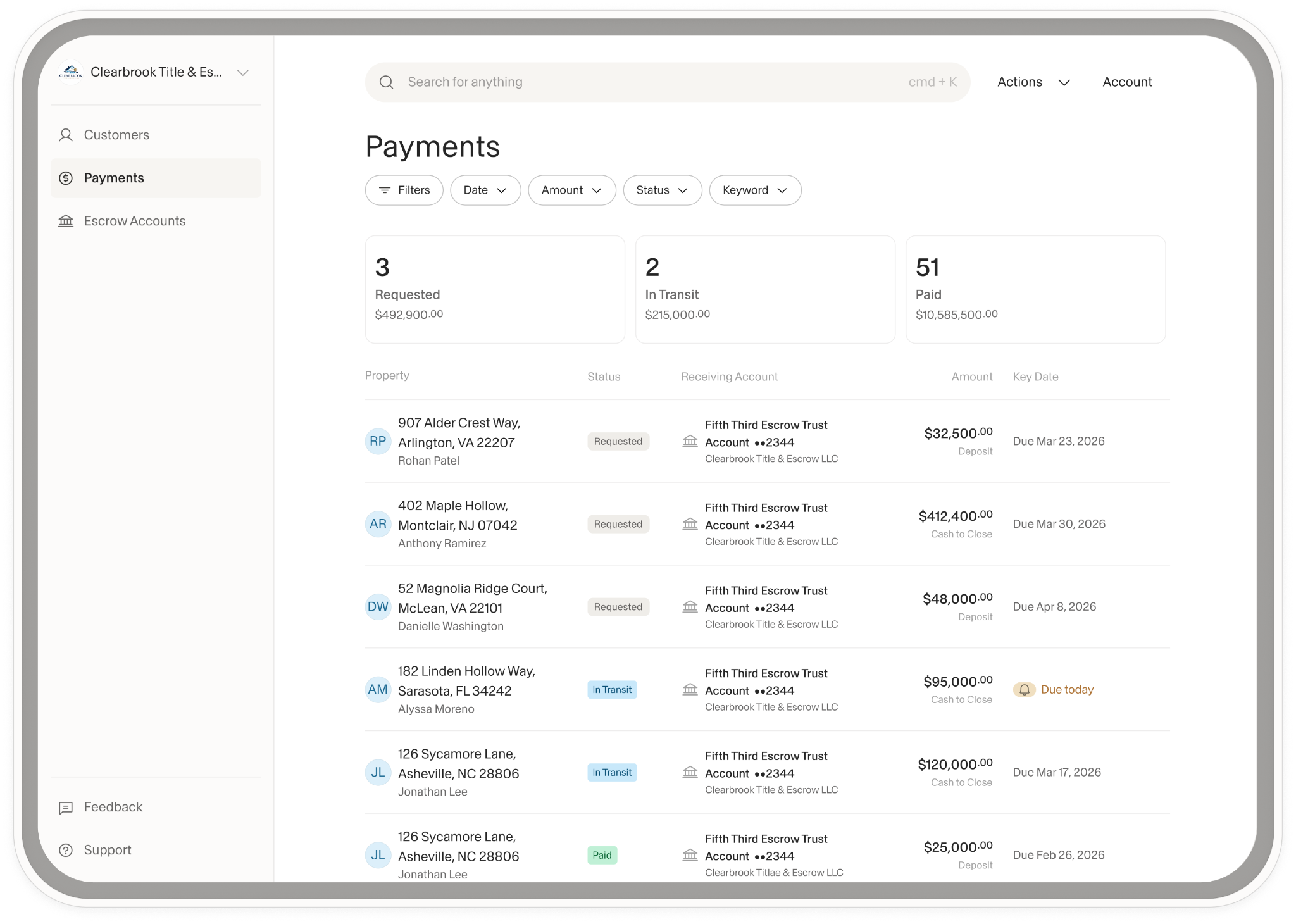
For settlement agents and real estate attorneys, Castle offers wire-free earnest money deposits, cash-to-close payments, and payments upon signing. Buyers fund through ACH debit. The money then arrives via same-day ACH or Real Time Payments, where the receiving bank supports it. Castle uses the Column National Association as its bank partner, requires no complex integrations, and can go live within days.
Castle's primary headline is "No wires. No wire fraud." The logic is straightforward. If you remove the wire entirely, you remove the instruction-interception vector that BEC attackers exploit. That's a legitimate narrowing of one specific risk. But whether it addresses the full scope of payment fraud a title company faces is a different question. That's one of the main reasons buyers compare alternatives.
Some reasons you might be looking for Castle alternatives
Fast transfers aren't the same as guaranteed funds.
Castle leads its marketing with payment speed, and same-day ACH or RTP delivery is genuinely fast. But the platform doesn't publish anything about what happens if a payment is recalled after it hits your escrow account. ACH payments are reversible for up to 60 days in certain dispute scenarios. And Real Time Payments are only final where the receiving bank supports RTP. If it doesn't, the payment falls back to same-day ACH. For a settlement agent who needs guaranteed good funds on closing day, that ambiguity matters.
No published insurance or recovery support.
Castle's website doesn't disclose any per-file insurance coverage or a dedicated fraud recovery team. If a payment goes sideways after you've already disbursed, there's no stated mechanism for recovering those funds through Castle.
No title production integrations.
Castle markets "no complicated integrations" as a benefit. But for firms whose teams live inside SoftPro, Resware, RamQuest, or Qualia every day, that also means no embedded workflow. You'd run Castle as a separate tab rather than triggering payment requests from within the file you're already working on.
No listed underwriter partnerships.
Castle doesn't publish any underwriter partnerships (Old Republic, Fidelity, Stewart, Investors Title) or ALTA Best Practices alignment documentation. If your underwriter requires specific controls or you're looking for subsidized pricing, that's worth noting.
A quick look at 6 Castle alternatives
Now let’s look at each Castle alternative in more detail.
1. CertifID
Best for title agencies and law firms that need guaranteed good funds, direct insurance, and a recovery plan if something goes wrong.
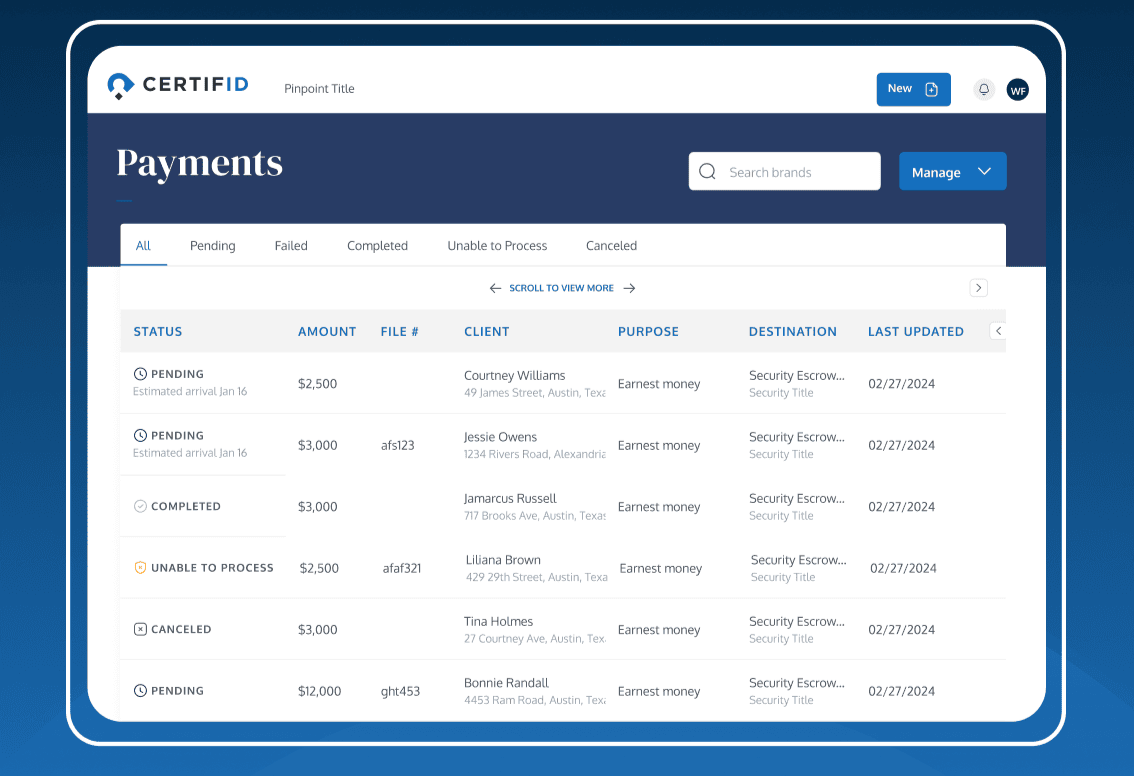
CertifID is a fraud prevention and payments platform built for title and escrow professionals. It handles earnest money and cash-to-close collection, identity and bank account verification, mortgage payoff validation, and high-risk transaction review in one place.
Cash to Close delivers guaranteed good funds to your escrow account the same business day, typically within two hours of the buyer's submission. Guaranteed means final. Once the funds land in escrow they aren't subject to clawback, and if an ACH return comes through after delivery, CertifID absorbs it rather than your firm. That distinction is the whole reason to read past the delivery speed, since fast and final are two different promises.
Every payment runs through identity verification against 150 fraud markers, bank account validation through Plaid, a real-time balance check, and a review by our Trust and Safety team. If any of those checks fail, the file falls back automatically to pre-populated wire instructions, so a buyer who doesn't clear verification doesn't leave you without a way to fund on closing day.
Each file sets its own deadline. If you only need funds by the close of business, the buyer gets an end-of-day submit-by time in their own time zone. If you need funds in escrow by a specific hour, you set that hour, and the buyer's deadline moves ahead of it far enough to guarantee delivery. Either way, the buyer sees one deadline in local time, and nobody does the math.
Every verified file carries up to $5 million in direct insurance with your firm as the named insured, so valid claims pay to you rather than through an intermediary. If an attack does get through, our Fraud Recovery Services team works with federal law enforcement to trace and recover funds. We've recovered $140M+ across 870+ cases.
Key Features:
- Cash to Close: Buyers pay from any device in a guided flow. The title company sets the exact amount and receives the escrow account in advance, so the buyer can't redirect or enter incorrect details. Funds arrive as guaranteed good funds on the same business day, typically within 2 hours.
- PayoffProtect: Submit a payoff statement, and CertifID validates the wiring instructions directly with the lending institution across a network of 5,000+ lenders. If instant validation isn't possible, an in-house team calls the lender on your behalf. Each verified payoff is insured up to $5M.
- Identity Verification: Verify the identity of every party in the file through device validation, multi-factor authentication, and dynamic knowledge-based authentication, screened against 150 fraud markers.
- Fraud Recovery Services: In the event of payment fraud, CertifID's recovery team works with federal law enforcement to freeze and recover funds.
- Fund Finality Commitment: Post-credit return risk stays with CertifID, not your title company. You disburse knowing the funds are final.
- TPS Integrations: SoftPro, Resware, RamQuest, AtClose, AIM+, and Settlor integrations let you start payment requests directly from within the file you're already working on.
- Direct Insurance: Up to $5M per verified file. Your title company is the named insured on the policy, with no intermediary.
Pros:
- Fund finality commitment removes post-delivery risk from the title company entirely
- $5M direct insurance with your firm as named insured
- Fraud recovery team with a federal law-enforcement partnership and $140M+ recovered
Cons:
- Current transfer cap is $500,000 per file (though payments exceeding this amount can be made in multiple submissions, and an increase to $750,000 is on our roadmap)
Pricing:
$48 flat fee per file, regardless of payment amount. That covers identity verification, bank validation, fraud detection, Trust and Safety review, guaranteed delivery, and fraud insurance.
2. Zoccam
Best for: Title companies that want direct-to-escrow deposits, real-time payment options, and a white-labeled buyer experience.
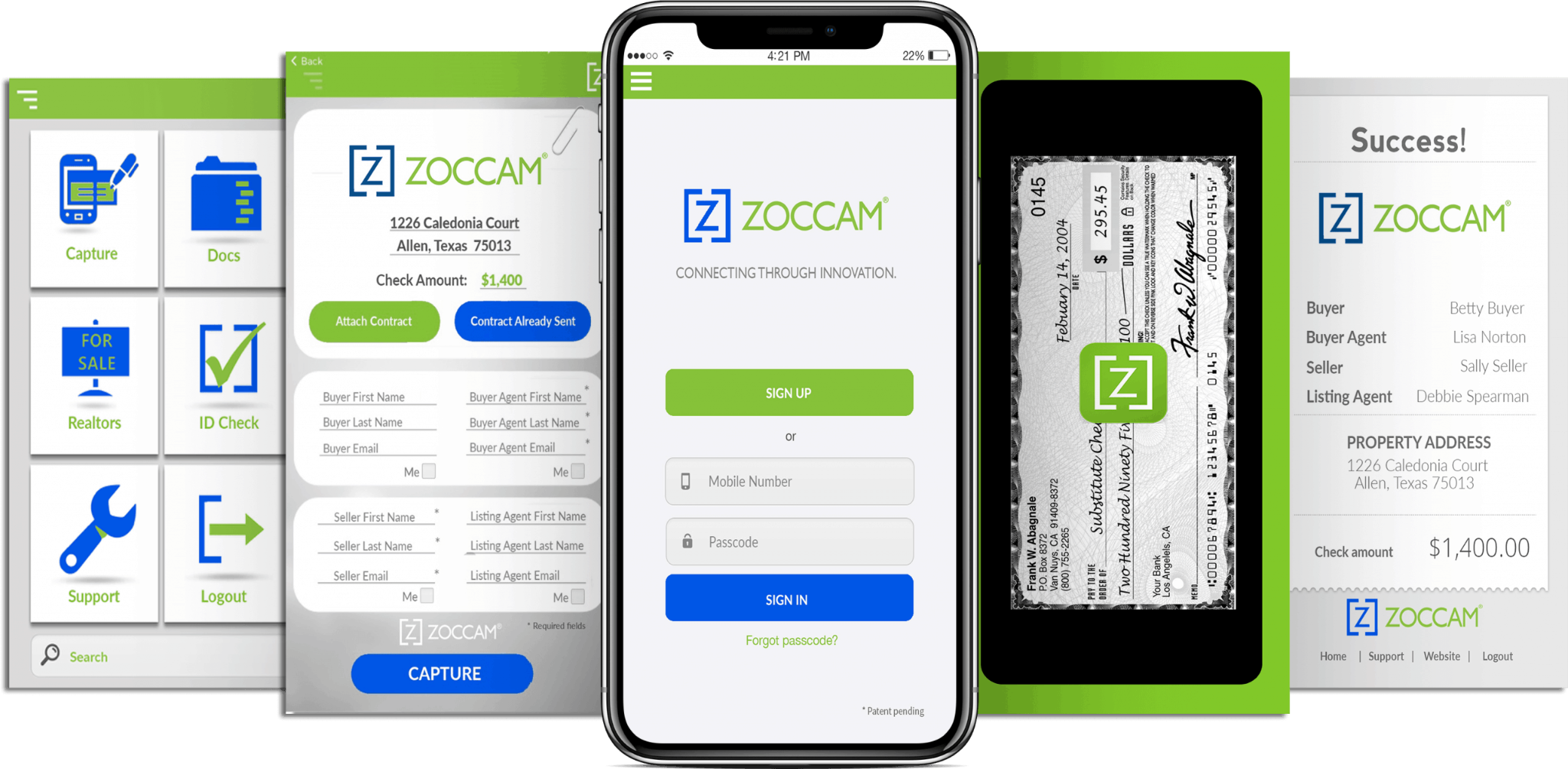
Zoccam is a real estate payments platform built around one simple idea: the money should move directly from the consumer to escrow without an intermediary holding it along the way. It supports earnest money and other escrow deposits through electronic check, ACH, paper check capture, and real-time payments.
That direct-to-escrow model is what makes Zoccam an interesting Castle alternative. Like Castle, it removes the need to exchange wire instructions for many transactions. But Zoccam also offers Request for Pay (RfP) through its partnership with U.S. Bank and Stewart Title. With RfP, the buyer authorizes the payment inside Zoccam and the title company receives irrevocable good funds with real-time confirmation, 24/7.
Key features
- Direct-to-escrow payments: Funds move directly from the buyer's bank to the title company's escrow account without Zoccam holding them in an intermediary account.
- Request for Pay: Offers 24/7 real-time payments with irrevocable good funds through its U.S. Bank and Stewart Title partnership.
- Identity verification: Every payor can be verified through Mitek ID Verify before funds move.
- Multiple deposit options: Supports electronic checks, ACH, paper check capture, and real-time payments.
Pros
- Funds move directly into escrow without an intermediary holding account.
- Eliminates the instruction-interception vector by design, since no bank info is shared
- Integrates with major title production systems, including SoftPro and RamQuest.
- Free for real estate agents and buyers.
Cons
- Zoccam is primarily focused on payments and escrow deposits rather than broader fraud protection, such as mortgage payoff verification or fraud recovery.
- It doesn't publicly advertise per-file fraud insurance comparable to CertifID's.
Pricing
Zoccam is free for real estate agents and buyers. Title companies need to contact Zoccam for implementation and pricing details.
3. Earnnest
Best for: Teams primarily looking for a simple digital EMD experience with irrevocable Good Funds, rather than a broader title-fraud platform.
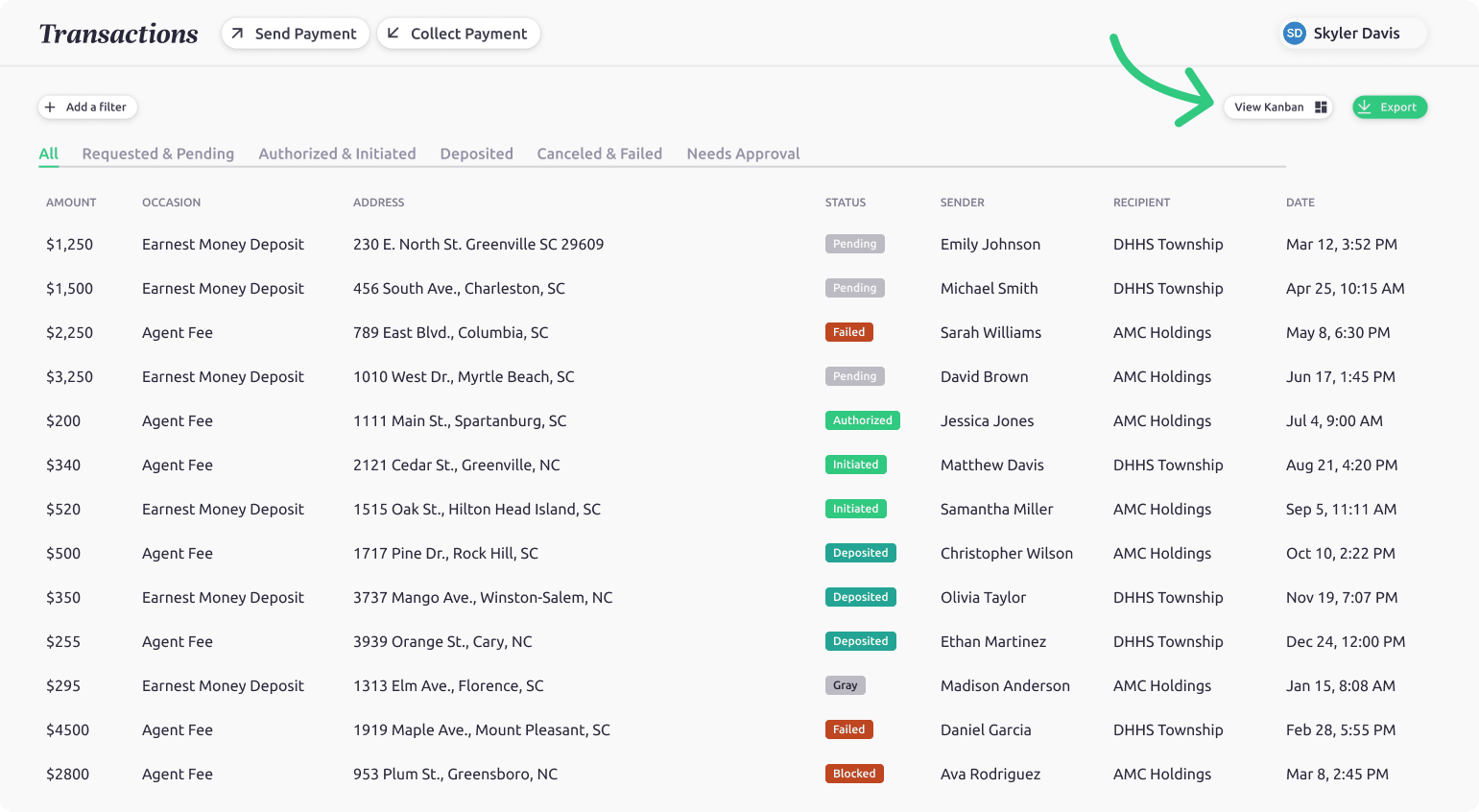
Earnnest is a digital earnest money deposit platform built to replace checks and wires at the start of a closing. Buyers send EMD payments directly from their bank account in minutes without a wire or an app download. Once deposited, Earnnest says its Good Funds are irrevocable and protected against pullbacks and chargebacks.
Earnnest solves one specific piece of the closing. For firms that only need to digitize earnest money collection without a broader payment or fraud platform, it's a simple and cost-effective entry point. For full cash-to-close coverage, payoff verification, or file-level insurance, you'd need to pair Earnnest with a separate platform.
Key features
- Irrevocable Good Funds: Deposited payments are protected against pullbacks and chargebacks.
- Digital EMD: Buyers can send earnest money directly from their bank account without using a check or wire.
- Identity and bank verification: Buyers verify their identity and connect their bank account through Plaid before paying.
- Payment tracking: Agents, buyers, and escrow teams receive updates as the payment moves from authorization to deposit.
- High transaction limits: Supports earnest money payments up to $250,000.
- SOC 2 Type 2 compliance: Earnnest has completed a SOC 2 Type 2 audit.
Pros
- Clear guarantee around irrevocable Good Funds once deposited.
- Free for agents and escrow holders.
- Simple buyer experience without requiring a wire.
- Integrates with several real estate technology platforms.
Cons
- Slower than Castle's same-day ACH or RTP options, with deposits typically taking one to three business days after funds clear.
- Its core title use case is still earnest money rather than the broader cash-to-close and fraud-protection workflow CertifID offers.
- It doesn't publicly advertise per-file fraud insurance or a dedicated fraud-recovery service.
Pricing
Earnnest is free for agents and escrow holders. Buyers currently pay a flat $18 convenience fee per earnest money transfer.
4. Payload / Keybox
Best for: Real estate teams that want to handle EMD alongside commissions, agent fees, refunds, and other payments in one system.
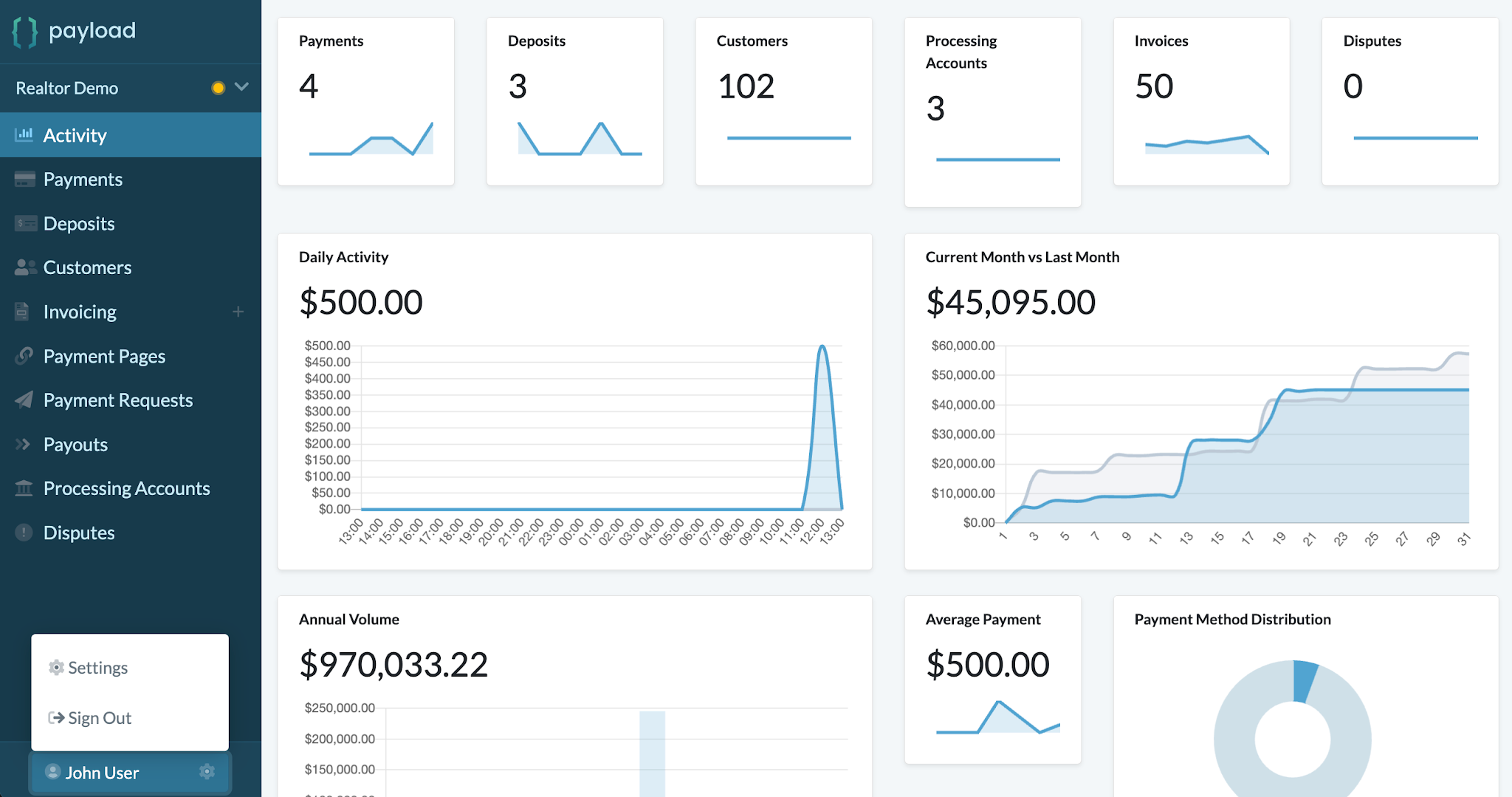
Payload is a payments platform used by brokerages and title companies, while Keybox is its real-estate-specific product for earnest money and related payment workflows. It goes beyond EMD, letting teams collect agent fees, issue refunds, automate commission payouts, and route funds to brokerage, title company, or attorney trust accounts.
Compared with Castle, the biggest advantage is the breadth of the payment workflow. Castle is primarily focused on wire-free EMD and cash-to-close. Keybox can sit across more of the back office, including EMD, commissions, recurring agent fees, refunds, reconciliation, and integrations with transaction-management and accounting platforms.
Key features
- Digital EMD: Send buyers a branded payment request or let them initiate payment through a secure payment page.
- Same-day ACH: Keybox supports same-day ACH, with typical funding schedules ranging from next day to second day depending on the payment.
- Payload Protect: Provides an irrevocable Good Funds guarantee for qualifying real estate payments.
- Commission payouts: Automate commission disbursements rather than relying on paper checks or manual wires.
Pros
- Covers more of the real estate payment lifecycle than Castle's core EMD and cash-to-close offering.
- Payload Protect provides explicit Good Funds protection against qualifying clawback risk.
- Strong fit for brokerages that also need commission payouts, agent billing, and reconciliation.
- Offers integrations and API options for teams that want payments connected to existing systems.
Cons
- Keybox itself is ACH-focused: Its current EMD workflow supports electronic transfers via ACH, although the broader Payload platform supports RTP and FedNow for other payment use cases.
- Payload doesn't publicly advertise the same per-file fraud insurance or dedicated fraud-recovery service that CertifID offers.
- Teams that only need a simple EMD tool may not need its broader brokerage and payment-management functionality.
Pricing
Keybox currently costs $20 per month for the base plan. The homebuyer pays a $12 earnest money payment fee, while additional features such as extra depository accounts and expedited funding are available as add-ons.
5. DepositLink
Best for: Title and escrow teams that want a straightforward ACH-based payment platform for EMD, closing funds, refunds, and other real estate payments.
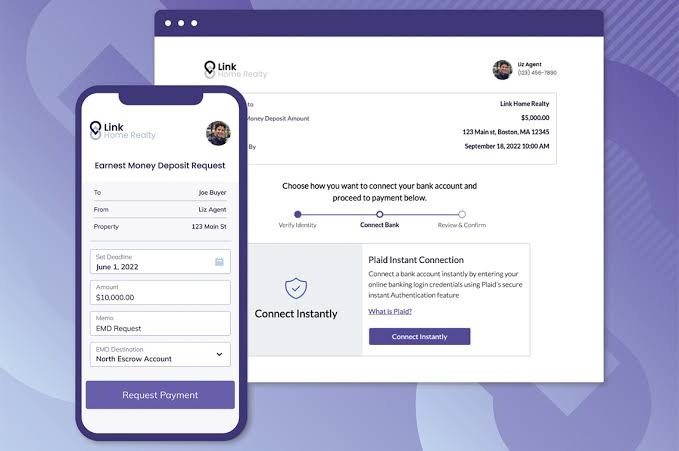
DepositLink is a digital payments tool built for real estate agencies and escrow holders. It uses the ACH network to handle earnest money, closing funds, commissions, and rental payments electronically, supporting transfers up to $250,000 that clear in as little as 24 hours.
Unlike Castle, which focuses heavily on speed for cash-to-close payments, DepositLink operates as a broader real estate platform. While Castle relies on same-day ACH and RTP, DepositLink sticks primarily to standard ACH, putting its energy into simplifying collection, refunds, reporting, and reconciliation.
DepositLink also offers better software connectivity. It integrates natively with platforms like SkySlope and Dotloop, supports single sign-on through providers like Okta, and features an API if you want to build it directly into your existing setup.
Key features
- Digital EMD and closing funds: Collect earnest money and other closing-related payments electronically.
- Up to $250,000 per transfer: Supports larger real estate payments through a single transaction.
- Bank verification: Uses Plaid and other verification options to connect and validate payer bank accounts.
- Refunds and commissions: Supports outgoing refunds and commission-related payments alongside incoming deposits.
- Integrations and API: Connects with SkySlope and Dotloop, supports SSO, and provides an API for custom integrations.
Pros
- Covers more than EMD, including closing funds, commissions, refunds, and rental payments.
- No platform fee for escrow holders.
- Supports payments up to $250,000.
- Good funds can clear in as little as 24 hours.
- Offers API and transaction-management integrations for teams that want payments connected to other systems.
Cons
- ACH-focused: Unlike Castle, DepositLink doesn't publicly advertise RTP or FedNow as payment options.
- Not a fraud-protection platform: It provides identity and account verification, but doesn't advertise dedicated payoff verification, per-file fraud insurance, or a fraud-recovery service.
Pricing
DepositLink is free for escrow holders. Buyers and renters currently pay a $18 non-refundable processing fee per payment.
6. Dwolla
Best for: Larger title companies or real estate fintechs that want to build their own payment experience instead of buying an off-the-shelf title payment product.
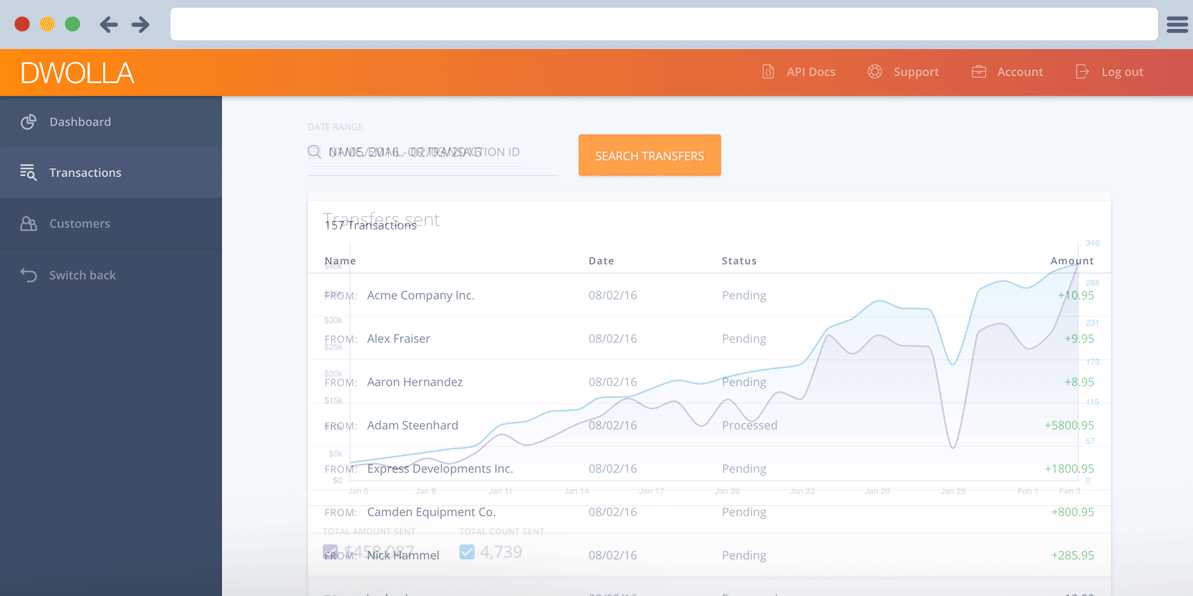
Dwolla is a payment infrastructure platform rather than a ready-made title or escrow tool. Its API gives companies access to Standard ACH, Same Day ACH, RTP, and FedNow through one integration, so teams can build their own payment workflows and choose the rail that makes sense for each transaction.
The trade-off compared to Castle is control versus convenience. Castle gives title teams a finished wire-free payment product they can start using quickly. Dwolla gives you the underlying payment infrastructure to build something much more customized, but your team has to create the buyer experience, escrow workflow, and title-specific rules around it.
Key features
- Multi-rail payments: Access Standard ACH, Same Day ACH, RTP, and FedNow through a single API.
- Instant payments: RTP and FedNow can settle in seconds and operate 24/7/365 where supported.
- Plaid verification: Supports instant bank-account verification and real-time balance checks through Plaid.
- White-label experience: Build the payment flow directly into your own product and brand.
Pros
- Much more flexible than Castle if you want to design your own payment workflow.
- Gives you ACH and real-time rails through one integration.
- Built for high-volume payment operations.
- Real estate platforms have already used Dwolla for EMD and other real estate payments at a meaningful scale.
Cons
- Not a finished title product: You'll need engineering resources to build the buyer experience and connect payments to your title workflow.
- Fraud controls remain your responsibility: Dwolla explicitly states that it does not provide fraud protection or fraud monitoring, so customers must manage transaction review and suspicious activity themselves.
- ACH return risk still matters: Dwolla notes that a completed ACH transfer can later fail, and clients may be responsible for negative balances created by returns.
Pricing
Dwolla uses custom pricing based on transaction volume, payment rails, and integration requirements. It does not publish fixed pricing tiers.
How to choose the right Castle alternative
When comparing Castle alternatives, focus on a few core criteria:
- Fund finality: Check whether funds are truly final once they reach escrow, or whether they can still be returned or clawed back later.
- Payment rails: Look at whether the platform supports only ACH or also offers RTP, FedNow, wire, or other faster settlement options.
- Fraud protection: Compare identity verification, bank account validation, payoff verification, and other controls that happen before money moves.
- Insurance coverage: Check whether eligible transactions are backed by insurance, how much coverage is available, and who is actually insured.
- Fraud recovery: Look at what support exists if fraud still gets through, including whether the provider has a dedicated recovery team.
- Title integrations: Look at how well the platform connects with systems such as SoftPro, RamQuest, Resware, or other software your team already uses.
- Payment scope: Decide whether you only need EMD collection or also want cash-to-close, refunds, commissions, disbursements, and other payment workflows.
- Pricing: Compare platform fees, transaction fees, buyer-paid fees, and any additional costs for faster settlement or advanced features.
The right choice comes down to which of these matters most to your operation. A team focused mainly on simple digital EMD will evaluate the market very differently from one that needs guaranteed funds, insurance, and broader fraud protection.
Protect more than the payment
Castle makes it easier to move closing funds without relying on wires. But choosing an alternative comes down to what else you need around that payment, whether that is guaranteed fund finality, stronger fraud controls, insurance, integrations, or recovery support.
CertifID brings those pieces together in one platform. Alongside EMD and cash-to-close payments, it helps title teams verify identities and bank accounts, protect mortgage payoffs, and back eligible verified files with up to $5 million in insurance. If fraud still occurs, our Fraud Recovery Services team can also help trace and recover stolen funds.

FAQ
What is the best Castle alternative for title companies?

It depends on what you need most. If your priority is fund finality, fraud protection, insurance, and recovery support, CertifID is the strongest fit. If you mainly need digital EMD, tools like Earnnest or Zoccam may be simpler.
Does Castle offer guaranteed Good Funds?
Castle offers same-day ACH and RTP, but its public title pages do not clearly state a post-credit finality guarantee for same-day ACH payments. Title teams should confirm who bears the risk if an ACH payment is returned after funds reach escrow.
Which Castle alternatives offer real-time payments?
Several do. Zoccam offers real-time Request for Pay, Payload supports real-time payment rails across parts of its platform, and Dwolla provides RTP and FedNow infrastructure for companies building custom payment workflows. CertifID also supports instant delivery options for qualifying payments.
Which Castle alternative offers fraud insurance?
CertifID backs eligible verified files with up to $5 million in direct insurance. Other providers may offer their own coverage, so compare not only the dollar limit but also who is insured, what transactions qualify, and how claims are handled.
Which Castle alternative is best for earnest money only?
Earnnest is a strong option if your main goal is simple digital EMD collection with irrevocable Good Funds. Zoccam is another option if you want direct-to-escrow deposits and real-time payment capabilities.
Do Castle alternatives integrate with title production software?
Some do. CertifID connects with major title production systems including SoftPro, Resware, and RamQuest, while Zoccam also supports integrations with platforms such as SoftPro and RamQuest. Others, like Dwolla, provide APIs rather than ready-made title integrations.

Head of Product Marketing

Tyler brings over 15 years across SaaS and AI, he specializes in turning complex technology into clear, differentiated stories for audiences from startup to enterprise. At CertifID he leads the positioning, messaging, and go-to-market strategy behind the company's work to make real estate closings safe and simple.
Quick Summary
Castle gives title companies and attorneys a simpler way to collect earnest money and cash-to-close without relying on wires. For teams mainly focused on speed and removing wire instructions from the payment process, that can be a strong fit.
But not every firm is solving the same problem. Some need stronger guarantees around fund finality. Others want insurance, fraud recovery support, deeper title-software integrations, or a more established payment workflow.
In this guide, we compare six Castle alternatives across those areas so you can see which option best fits the way your team handles closing funds. Here are three Castle alternatives worth considering:
Why listen to us?
Every title team we work with is one wrong click away from a closing that can't be undone. That's the problem we built CertifID to solve, and it's the lens we bring to comparing Castle alternatives.
In 2024 alone, we protected 913,000 transactions and $1.4 billion in funds. Our recovery team has also retrieved $140+ million for fraud victims, and we back verified wires with up to $5 million in insurance. Fast payments matter, but what matters more is what a platform does before money moves, and what it does for you if something still goes wrong.
What is Castle?
Castle (Castle Pay, Inc.) is a seed-stage fintech based in Hudson, New York, led by co-founder and CEO Madeline Hung. The company has historically offered homeowner payment and savings tools and now also provides a dedicated payments product for title and escrow teams.
For settlement agents and real estate attorneys, Castle offers wire-free earnest money deposits, cash-to-close payments, and payments upon signing. Buyers fund through ACH debit. The money then arrives via same-day ACH or Real Time Payments, where the receiving bank supports it. Castle uses the Column National Association as its bank partner, requires no complex integrations, and can go live within days.
Castle's primary headline is "No wires. No wire fraud." The logic is straightforward. If you remove the wire entirely, you remove the instruction-interception vector that BEC attackers exploit. That's a legitimate narrowing of one specific risk. But whether it addresses the full scope of payment fraud a title company faces is a different question. That's one of the main reasons buyers compare alternatives.
Some reasons you might be looking for Castle alternatives
Fast transfers aren't the same as guaranteed funds.
Castle leads its marketing with payment speed, and same-day ACH or RTP delivery is genuinely fast. But the platform doesn't publish anything about what happens if a payment is recalled after it hits your escrow account. ACH payments are reversible for up to 60 days in certain dispute scenarios. And Real Time Payments are only final where the receiving bank supports RTP. If it doesn't, the payment falls back to same-day ACH. For a settlement agent who needs guaranteed good funds on closing day, that ambiguity matters.
No published insurance or recovery support.
Castle's website doesn't disclose any per-file insurance coverage or a dedicated fraud recovery team. If a payment goes sideways after you've already disbursed, there's no stated mechanism for recovering those funds through Castle.
No title production integrations.
Castle markets "no complicated integrations" as a benefit. But for firms whose teams live inside SoftPro, Resware, RamQuest, or Qualia every day, that also means no embedded workflow. You'd run Castle as a separate tab rather than triggering payment requests from within the file you're already working on.
No listed underwriter partnerships.
Castle doesn't publish any underwriter partnerships (Old Republic, Fidelity, Stewart, Investors Title) or ALTA Best Practices alignment documentation. If your underwriter requires specific controls or you're looking for subsidized pricing, that's worth noting.
A quick look at 6 Castle alternatives
Now let’s look at each Castle alternative in more detail.
1. CertifID
Best for title agencies and law firms that need guaranteed good funds, direct insurance, and a recovery plan if something goes wrong.
CertifID is a fraud prevention and payments platform built for title and escrow professionals. It handles earnest money and cash-to-close collection, identity and bank account verification, mortgage payoff validation, and high-risk transaction review in one place.
Cash to Close delivers guaranteed good funds to your escrow account the same business day, typically within two hours of the buyer's submission. Guaranteed means final. Once the funds land in escrow they aren't subject to clawback, and if an ACH return comes through after delivery, CertifID absorbs it rather than your firm. That distinction is the whole reason to read past the delivery speed, since fast and final are two different promises.
Every payment runs through identity verification against 150 fraud markers, bank account validation through Plaid, a real-time balance check, and a review by our Trust and Safety team. If any of those checks fail, the file falls back automatically to pre-populated wire instructions, so a buyer who doesn't clear verification doesn't leave you without a way to fund on closing day.
Each file sets its own deadline. If you only need funds by the close of business, the buyer gets an end-of-day submit-by time in their own time zone. If you need funds in escrow by a specific hour, you set that hour, and the buyer's deadline moves ahead of it far enough to guarantee delivery. Either way, the buyer sees one deadline in local time, and nobody does the math.
Every verified file carries up to $5 million in direct insurance with your firm as the named insured, so valid claims pay to you rather than through an intermediary. If an attack does get through, our Fraud Recovery Services team works with federal law enforcement to trace and recover funds. We've recovered $140M+ across 870+ cases.
Key Features:
- Cash to Close: Buyers pay from any device in a guided flow. The title company sets the exact amount and receives the escrow account in advance, so the buyer can't redirect or enter incorrect details. Funds arrive as guaranteed good funds on the same business day, typically within 2 hours.
- PayoffProtect: Submit a payoff statement, and CertifID validates the wiring instructions directly with the lending institution across a network of 5,000+ lenders. If instant validation isn't possible, an in-house team calls the lender on your behalf. Each verified payoff is insured up to $5M.
- Identity Verification: Verify the identity of every party in the file through device validation, multi-factor authentication, and dynamic knowledge-based authentication, screened against 150 fraud markers.
- Fraud Recovery Services: In the event of payment fraud, CertifID's recovery team works with federal law enforcement to freeze and recover funds.
- Fund Finality Commitment: Post-credit return risk stays with CertifID, not your title company. You disburse knowing the funds are final.
- TPS Integrations: SoftPro, Resware, RamQuest, AtClose, AIM+, and Settlor integrations let you start payment requests directly from within the file you're already working on.
- Direct Insurance: Up to $5M per verified file. Your title company is the named insured on the policy, with no intermediary.
Pros:
- Fund finality commitment removes post-delivery risk from the title company entirely
- $5M direct insurance with your firm as named insured
- Fraud recovery team with a federal law-enforcement partnership and $140M+ recovered
Cons:
- Current transfer cap is $500,000 per file (though payments exceeding this amount can be made in multiple submissions, and an increase to $750,000 is on our roadmap)
Pricing:
$48 flat fee per file, regardless of payment amount. That covers identity verification, bank validation, fraud detection, Trust and Safety review, guaranteed delivery, and fraud insurance.
2. Zoccam
Best for: Title companies that want direct-to-escrow deposits, real-time payment options, and a white-labeled buyer experience.
Zoccam is a real estate payments platform built around one simple idea: the money should move directly from the consumer to escrow without an intermediary holding it along the way. It supports earnest money and other escrow deposits through electronic check, ACH, paper check capture, and real-time payments.
That direct-to-escrow model is what makes Zoccam an interesting Castle alternative. Like Castle, it removes the need to exchange wire instructions for many transactions. But Zoccam also offers Request for Pay (RfP) through its partnership with U.S. Bank and Stewart Title. With RfP, the buyer authorizes the payment inside Zoccam and the title company receives irrevocable good funds with real-time confirmation, 24/7.
Key features
- Direct-to-escrow payments: Funds move directly from the buyer's bank to the title company's escrow account without Zoccam holding them in an intermediary account.
- Request for Pay: Offers 24/7 real-time payments with irrevocable good funds through its U.S. Bank and Stewart Title partnership.
- Identity verification: Every payor can be verified through Mitek ID Verify before funds move.
- Multiple deposit options: Supports electronic checks, ACH, paper check capture, and real-time payments.
Pros
- Funds move directly into escrow without an intermediary holding account.
- Eliminates the instruction-interception vector by design, since no bank info is shared
- Integrates with major title production systems, including SoftPro and RamQuest.
- Free for real estate agents and buyers.
Cons
- Zoccam is primarily focused on payments and escrow deposits rather than broader fraud protection, such as mortgage payoff verification or fraud recovery.
- It doesn't publicly advertise per-file fraud insurance comparable to CertifID's.
Pricing
Zoccam is free for real estate agents and buyers. Title companies need to contact Zoccam for implementation and pricing details.
3. Earnnest
Best for: Teams primarily looking for a simple digital EMD experience with irrevocable Good Funds, rather than a broader title-fraud platform.
Earnnest is a digital earnest money deposit platform built to replace checks and wires at the start of a closing. Buyers send EMD payments directly from their bank account in minutes without a wire or an app download. Once deposited, Earnnest says its Good Funds are irrevocable and protected against pullbacks and chargebacks.
Earnnest solves one specific piece of the closing. For firms that only need to digitize earnest money collection without a broader payment or fraud platform, it's a simple and cost-effective entry point. For full cash-to-close coverage, payoff verification, or file-level insurance, you'd need to pair Earnnest with a separate platform.
Key features
- Irrevocable Good Funds: Deposited payments are protected against pullbacks and chargebacks.
- Digital EMD: Buyers can send earnest money directly from their bank account without using a check or wire.
- Identity and bank verification: Buyers verify their identity and connect their bank account through Plaid before paying.
- Payment tracking: Agents, buyers, and escrow teams receive updates as the payment moves from authorization to deposit.
- High transaction limits: Supports earnest money payments up to $250,000.
- SOC 2 Type 2 compliance: Earnnest has completed a SOC 2 Type 2 audit.
Pros
- Clear guarantee around irrevocable Good Funds once deposited.
- Free for agents and escrow holders.
- Simple buyer experience without requiring a wire.
- Integrates with several real estate technology platforms.
Cons
- Slower than Castle's same-day ACH or RTP options, with deposits typically taking one to three business days after funds clear.
- Its core title use case is still earnest money rather than the broader cash-to-close and fraud-protection workflow CertifID offers.
- It doesn't publicly advertise per-file fraud insurance or a dedicated fraud-recovery service.
Pricing
Earnnest is free for agents and escrow holders. Buyers currently pay a flat $18 convenience fee per earnest money transfer.
4. Payload / Keybox
Best for: Real estate teams that want to handle EMD alongside commissions, agent fees, refunds, and other payments in one system.
Payload is a payments platform used by brokerages and title companies, while Keybox is its real-estate-specific product for earnest money and related payment workflows. It goes beyond EMD, letting teams collect agent fees, issue refunds, automate commission payouts, and route funds to brokerage, title company, or attorney trust accounts.
Compared with Castle, the biggest advantage is the breadth of the payment workflow. Castle is primarily focused on wire-free EMD and cash-to-close. Keybox can sit across more of the back office, including EMD, commissions, recurring agent fees, refunds, reconciliation, and integrations with transaction-management and accounting platforms.
Key features
- Digital EMD: Send buyers a branded payment request or let them initiate payment through a secure payment page.
- Same-day ACH: Keybox supports same-day ACH, with typical funding schedules ranging from next day to second day depending on the payment.
- Payload Protect: Provides an irrevocable Good Funds guarantee for qualifying real estate payments.
- Commission payouts: Automate commission disbursements rather than relying on paper checks or manual wires.
Pros
- Covers more of the real estate payment lifecycle than Castle's core EMD and cash-to-close offering.
- Payload Protect provides explicit Good Funds protection against qualifying clawback risk.
- Strong fit for brokerages that also need commission payouts, agent billing, and reconciliation.
- Offers integrations and API options for teams that want payments connected to existing systems.
Cons
- Keybox itself is ACH-focused: Its current EMD workflow supports electronic transfers via ACH, although the broader Payload platform supports RTP and FedNow for other payment use cases.
- Payload doesn't publicly advertise the same per-file fraud insurance or dedicated fraud-recovery service that CertifID offers.
- Teams that only need a simple EMD tool may not need its broader brokerage and payment-management functionality.
Pricing
Keybox currently costs $20 per month for the base plan. The homebuyer pays a $12 earnest money payment fee, while additional features such as extra depository accounts and expedited funding are available as add-ons.
5. DepositLink
Best for: Title and escrow teams that want a straightforward ACH-based payment platform for EMD, closing funds, refunds, and other real estate payments.
DepositLink is a digital payments tool built for real estate agencies and escrow holders. It uses the ACH network to handle earnest money, closing funds, commissions, and rental payments electronically, supporting transfers up to $250,000 that clear in as little as 24 hours.
Unlike Castle, which focuses heavily on speed for cash-to-close payments, DepositLink operates as a broader real estate platform. While Castle relies on same-day ACH and RTP, DepositLink sticks primarily to standard ACH, putting its energy into simplifying collection, refunds, reporting, and reconciliation.
DepositLink also offers better software connectivity. It integrates natively with platforms like SkySlope and Dotloop, supports single sign-on through providers like Okta, and features an API if you want to build it directly into your existing setup.
Key features
- Digital EMD and closing funds: Collect earnest money and other closing-related payments electronically.
- Up to $250,000 per transfer: Supports larger real estate payments through a single transaction.
- Bank verification: Uses Plaid and other verification options to connect and validate payer bank accounts.
- Refunds and commissions: Supports outgoing refunds and commission-related payments alongside incoming deposits.
- Integrations and API: Connects with SkySlope and Dotloop, supports SSO, and provides an API for custom integrations.
Pros
- Covers more than EMD, including closing funds, commissions, refunds, and rental payments.
- No platform fee for escrow holders.
- Supports payments up to $250,000.
- Good funds can clear in as little as 24 hours.
- Offers API and transaction-management integrations for teams that want payments connected to other systems.
Cons
- ACH-focused: Unlike Castle, DepositLink doesn't publicly advertise RTP or FedNow as payment options.
- Not a fraud-protection platform: It provides identity and account verification, but doesn't advertise dedicated payoff verification, per-file fraud insurance, or a fraud-recovery service.
Pricing
DepositLink is free for escrow holders. Buyers and renters currently pay a $18 non-refundable processing fee per payment.
6. Dwolla
Best for: Larger title companies or real estate fintechs that want to build their own payment experience instead of buying an off-the-shelf title payment product.
Dwolla is a payment infrastructure platform rather than a ready-made title or escrow tool. Its API gives companies access to Standard ACH, Same Day ACH, RTP, and FedNow through one integration, so teams can build their own payment workflows and choose the rail that makes sense for each transaction.
The trade-off compared to Castle is control versus convenience. Castle gives title teams a finished wire-free payment product they can start using quickly. Dwolla gives you the underlying payment infrastructure to build something much more customized, but your team has to create the buyer experience, escrow workflow, and title-specific rules around it.
Key features
- Multi-rail payments: Access Standard ACH, Same Day ACH, RTP, and FedNow through a single API.
- Instant payments: RTP and FedNow can settle in seconds and operate 24/7/365 where supported.
- Plaid verification: Supports instant bank-account verification and real-time balance checks through Plaid.
- White-label experience: Build the payment flow directly into your own product and brand.
Pros
- Much more flexible than Castle if you want to design your own payment workflow.
- Gives you ACH and real-time rails through one integration.
- Built for high-volume payment operations.
- Real estate platforms have already used Dwolla for EMD and other real estate payments at a meaningful scale.
Cons
- Not a finished title product: You'll need engineering resources to build the buyer experience and connect payments to your title workflow.
- Fraud controls remain your responsibility: Dwolla explicitly states that it does not provide fraud protection or fraud monitoring, so customers must manage transaction review and suspicious activity themselves.
- ACH return risk still matters: Dwolla notes that a completed ACH transfer can later fail, and clients may be responsible for negative balances created by returns.
Pricing
Dwolla uses custom pricing based on transaction volume, payment rails, and integration requirements. It does not publish fixed pricing tiers.
How to choose the right Castle alternative
When comparing Castle alternatives, focus on a few core criteria:
- Fund finality: Check whether funds are truly final once they reach escrow, or whether they can still be returned or clawed back later.
- Payment rails: Look at whether the platform supports only ACH or also offers RTP, FedNow, wire, or other faster settlement options.
- Fraud protection: Compare identity verification, bank account validation, payoff verification, and other controls that happen before money moves.
- Insurance coverage: Check whether eligible transactions are backed by insurance, how much coverage is available, and who is actually insured.
- Fraud recovery: Look at what support exists if fraud still gets through, including whether the provider has a dedicated recovery team.
- Title integrations: Look at how well the platform connects with systems such as SoftPro, RamQuest, Resware, or other software your team already uses.
- Payment scope: Decide whether you only need EMD collection or also want cash-to-close, refunds, commissions, disbursements, and other payment workflows.
- Pricing: Compare platform fees, transaction fees, buyer-paid fees, and any additional costs for faster settlement or advanced features.
The right choice comes down to which of these matters most to your operation. A team focused mainly on simple digital EMD will evaluate the market very differently from one that needs guaranteed funds, insurance, and broader fraud protection.
Protect more than the payment
Castle makes it easier to move closing funds without relying on wires. But choosing an alternative comes down to what else you need around that payment, whether that is guaranteed fund finality, stronger fraud controls, insurance, integrations, or recovery support.
CertifID brings those pieces together in one platform. Alongside EMD and cash-to-close payments, it helps title teams verify identities and bank accounts, protect mortgage payoffs, and back eligible verified files with up to $5 million in insurance. If fraud still occurs, our Fraud Recovery Services team can also help trace and recover stolen funds.
Head of Product Marketing
Tyler brings over 15 years across SaaS and AI, he specializes in turning complex technology into clear, differentiated stories for audiences from startup to enterprise. At CertifID he leads the positioning, messaging, and go-to-market strategy behind the company's work to make real estate closings safe and simple.
Sign up for The Wire to join the conversation.





Austin
3601 South Congress Ave.
Ste D200, Austin, Texas 78704

Grand Rapids
124 Fulton Street E
Grand Rapids, MI 49503

