


The real estate closing checklist every title company and closing team needs
Wiring money is the highest-risk step in any closing. This checklist covers what to verify before, during, and after every file so nothing gets skipped under pressure.
Share article:


Katie Stewart
5 minutes
Real Estate
Sep 8, 2026
Sep 8, 2026
A real estate closing checklist for title and escrow teams covers document prep, deadline tracking, and fund protection at every stage of the file. Wiring money is the highest-risk step, so validate instructions by phone and verify receiving accounts through a secure platform like CertifID before releasing funds. This guide covers what your team should verify before, during, and after every closing.
Why a closing checklist is a must for serious closing teams
Closing day means signatures, funds, and deadlines converging at once across every file your team is running.
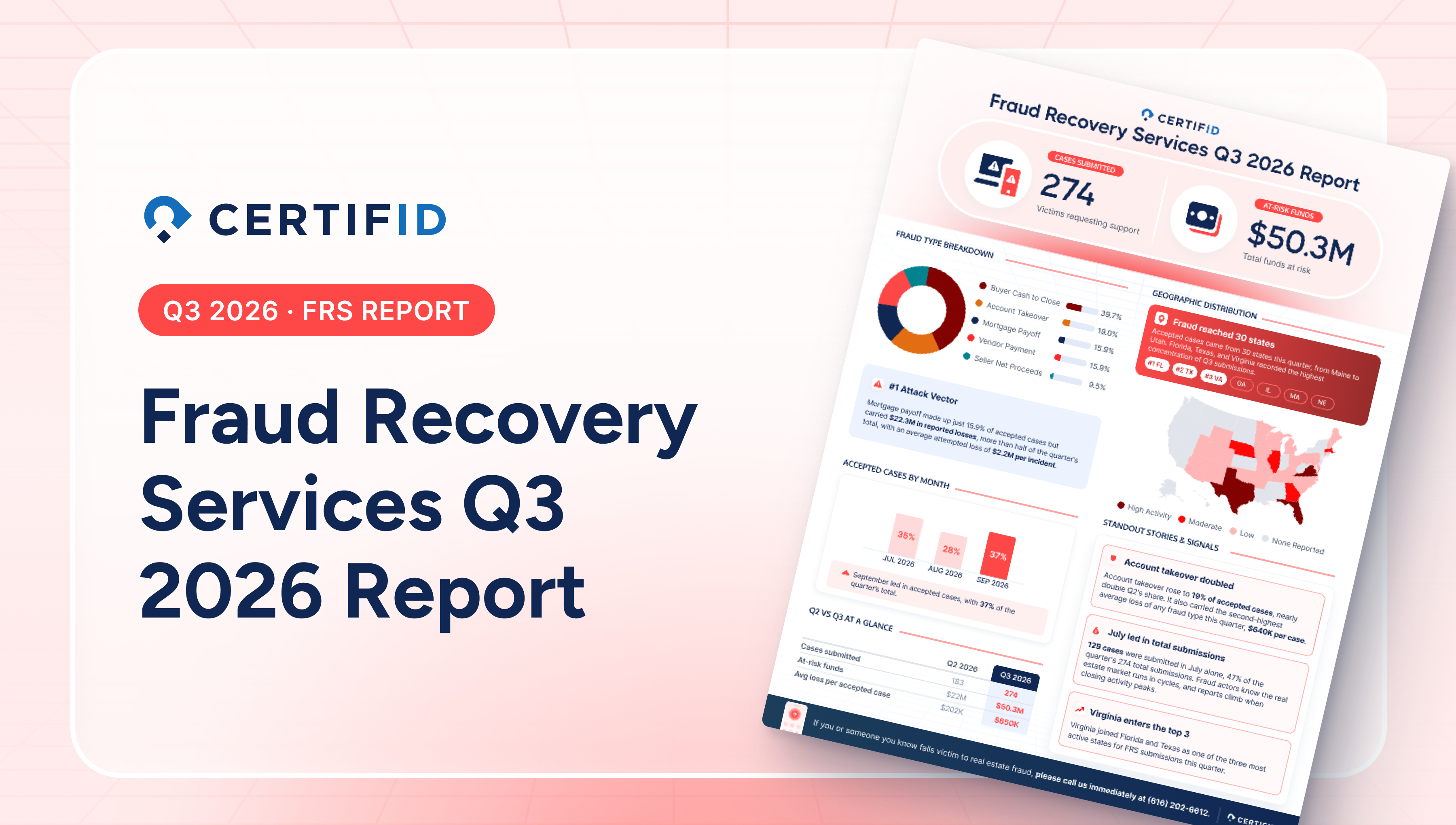
One missed step can delay a closing. One skipped verification can cost a client their life savings and cost your firm its reputation. Real estate buyer cash-to-close fraud had a median loss of $239,850 in 2025, accounting for 30% of all FRS cases that year (2026 State of Wire Fraud Report). Most of these losses trace back to one unverified email or one rushed phone call that never happened.
With the right payment fraud systems in place, title companies can avoid most of these losses. A structured checklist protects the file and all parties involved in the closing. The rest of this guide outlines how to build that checklist into your team's closing process.
Why Listen to Us
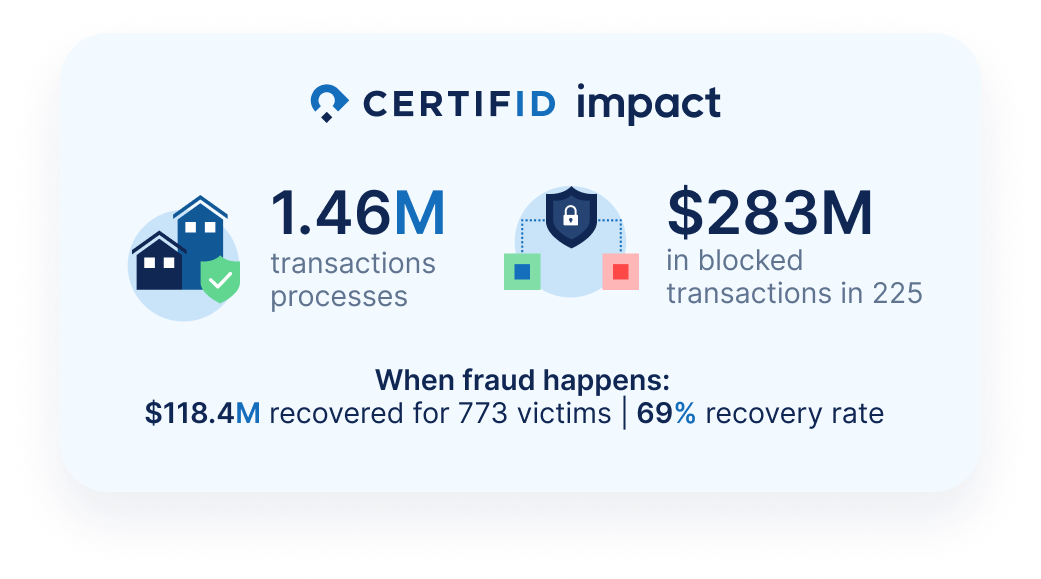
In 2025, CertifID verified more than 1.46 million wire transfers for title companies, law firms, and lenders nationwide. We prevented $283 million in fraud loss across those verified wires and blocked 1,018 fraudulent transactions before funds moved. That's documented, file-level defense, not theoretical protection. We know firsthand what it takes to protect a closing team from sophisticated, modern payoff fraud.
Weeks before closing: Set the foundation
Most closing problems start early, well before closing week. Fix the most important issues first by setting up protective measures your team will rely on later.
Verify identities when the file opens, not at closing
Verify the identities of buyers, sellers, and any newly introduced party as soon as the file is opened, not on closing day. By the time closing day arrives, your team is under time pressure and less likely to push back on questionable documentation. Early verification gives you room to dig deeper, request additional documents, or contact a property owner through an independently verified channel without derailing the timeline.
Map your title production system integrations

First, identify which title production system your office runs on. SoftPro, Qualia, and RamQuest are the most common platforms, and each connects directly with wire and payoff identity verification platforms. When your system integrates with a service like CertifID, wiring instructions and payoff requests move through a secure, verified channel instead of open email.
Some integrations go further. CertifID's PayoffProtect runs directly inside SoftPro. The payoff verification step happens without your team leaving the title production workflow or re-keying account numbers by hand.
Put contact protocols in writing, early
Next, give clients the names, direct phone numbers, and email addresses of everyone on the file.
That includes the real estate agent, lender, closing attorney, and your own team's escrow officer. Keep the list together in one place your client can reference. Tell them clearly: use these numbers to verify anything that looks off later, never a number pulled from an email.
Set expectations on wiring instructions upfront
Afterward, tell every client, in writing, before the file gets close to closing:
- How we'll send wiring instructions
- How to verify them
- What to do if the instructions change
- Who to call if anything looks different
If your process still relies on emailing instructions, define the verification step that follows, and put it in front of the client before you send anything.
Turn on multi-factor authentication everywhere
Email compromise is how most payment fraud starts. Enable multi-factor authentication on every email account tied to the file, both on your team's side and your clients'. Activate it well before closing week.
It's a five-minute setting change that shuts off the easiest way fraudsters get in.
Review the purchase agreement and build the file timeline
Next up, read the purchase agreement in full before building the file timeline. Note every deadline it creates: inspection period, financing contingency, appraisal contingency, and the target closing date.
Load each deadline into a shared calendar your whole team can see, not just the closing file. Assign an owner to each one. Financing contingencies belong to the lender relationship, inspection deadlines usually sit with the agent, and the closing date is yours to protect.
Set a reminder several days ahead of every deadline, not on the day it falls due. A missed deadline can jeopardize earnest money or delay the whole file, and a same-day scramble is how that happens. If the agreement is amended later, treat it as a new timeline. Update the calendar and confirm the revised dates with every party before moving on.
Before closing day: Verify everything twice
This is peak fraud season. Criminals monitor closing email threads for weeks and wait until the closing date approaches before striking. Build verification into the file now, while there's still time.
Start pre-closing verification three to five days out
Don't wait until the day of closing to run verification.
Starting three to five days ahead gives your team a buffer to resolve red flags without holding up the closing itself. A rushed same-day verification is exactly the scenario fraudsters count on.
Treat last-minute changes to wiring instructions as a red flag
A change to wiring instructions in the final days before closing is one of the clearest signs of fraud in real estate. Flag any unexpected change for manual review, even if it looks official and cites accurate closing details.
ALTA's Outgoing Wire Preparation Checklist recommends validating the source of any wiring instructions and confirming delivery once funds are sent. Call the client or counterparty using a number already on file, not one included in the email, and validate the change verbally before releasing funds.
Validate bank account details through a secure platform, not email
Email is not a safe channel for sending or receiving banking details. Fraudsters spoof addresses that look nearly identical to the real one, changing a single character that's easy to miss.
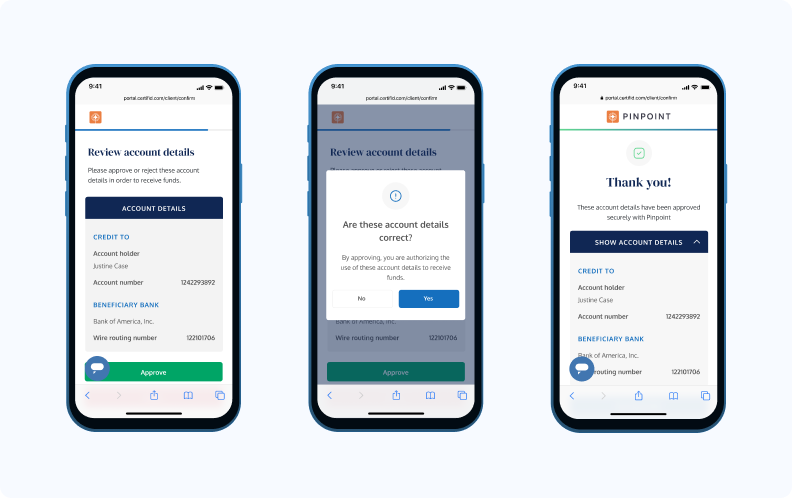
CertifID's purpose-built account verification platform sends the account holder a request by email and text, then verifies identity through device checks and knowledge-based questions before the account is used. The system validates the routing number in real time and flags devices located outside the country or recently activated, a common signal of a fraudulent claimant.
That removes the risk tied to opening email-based instructions. Verification is built into the title workflow, not a separate step your team has to remember.
Train staff to check the sender's full email address, not the display name
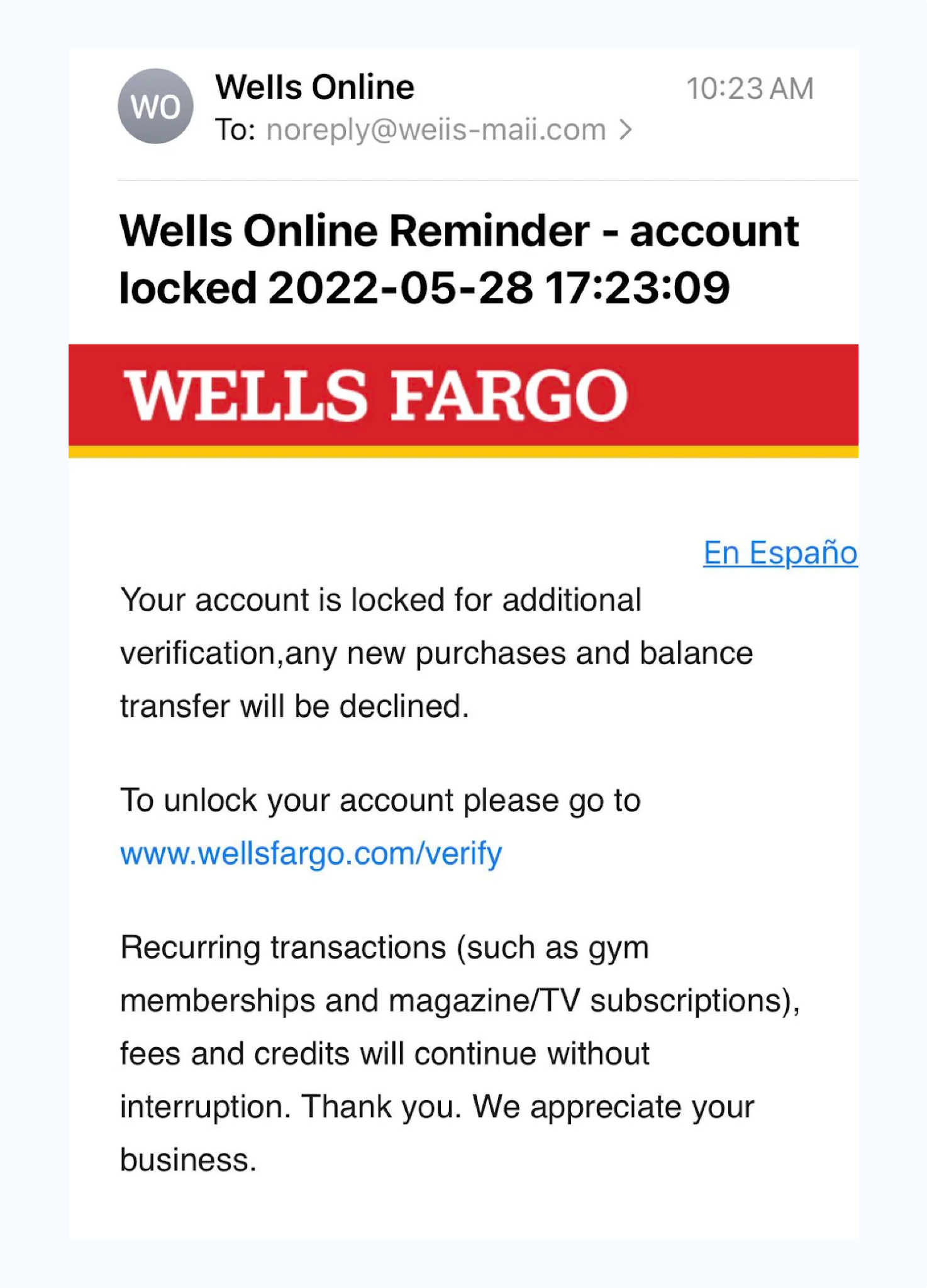
Display names are easy to fake. The address underneath is what matters.
Watch for extra letters, swapped characters, or a slightly different domain, like a lowercase "l" replaced with a capital "I." Fraudsters also register lookalike domains that add a hyphen or an extra character, such as "title-c0mpany.com" instead of "titlecompany.com." That small change slips past a glance and most spam filters.
Make it standard practice to expand the full sender address before trusting anything in a message. If the domain doesn't match what's on file, don't reply. Call the contact on file instead.
Watch for urgency language
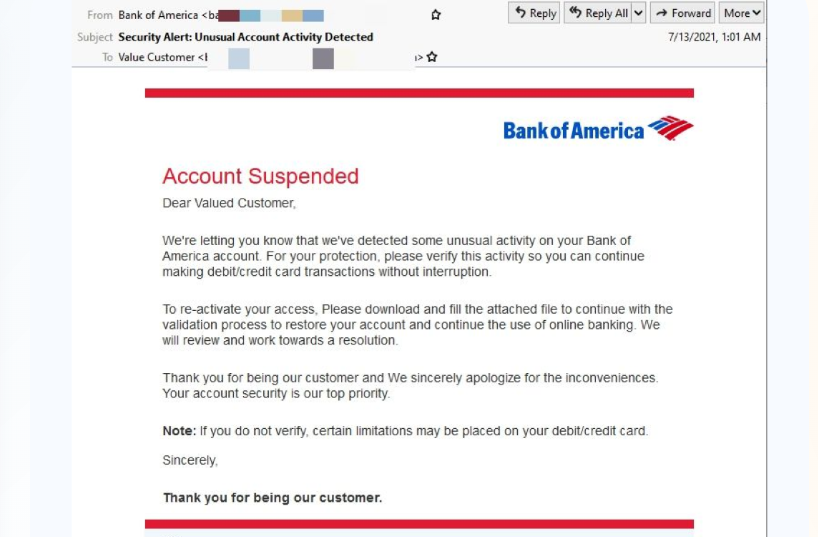
Watch for urgent language in wire instructions.
Words like "urgent," "immediately," or "kindly act now" are common pressure tactics. Fraudsters want your team to move before anyone thinks it through.
The FBI's guidance on business email compromise specifically warns to be wary when a requestor presses you to act quickly, especially paired with a request to skip normal verification steps. Build a "slow down and call" rule into your process.
A legitimate request will never penalize the extra step.
Validate the exact wire amount against the closing disclosure
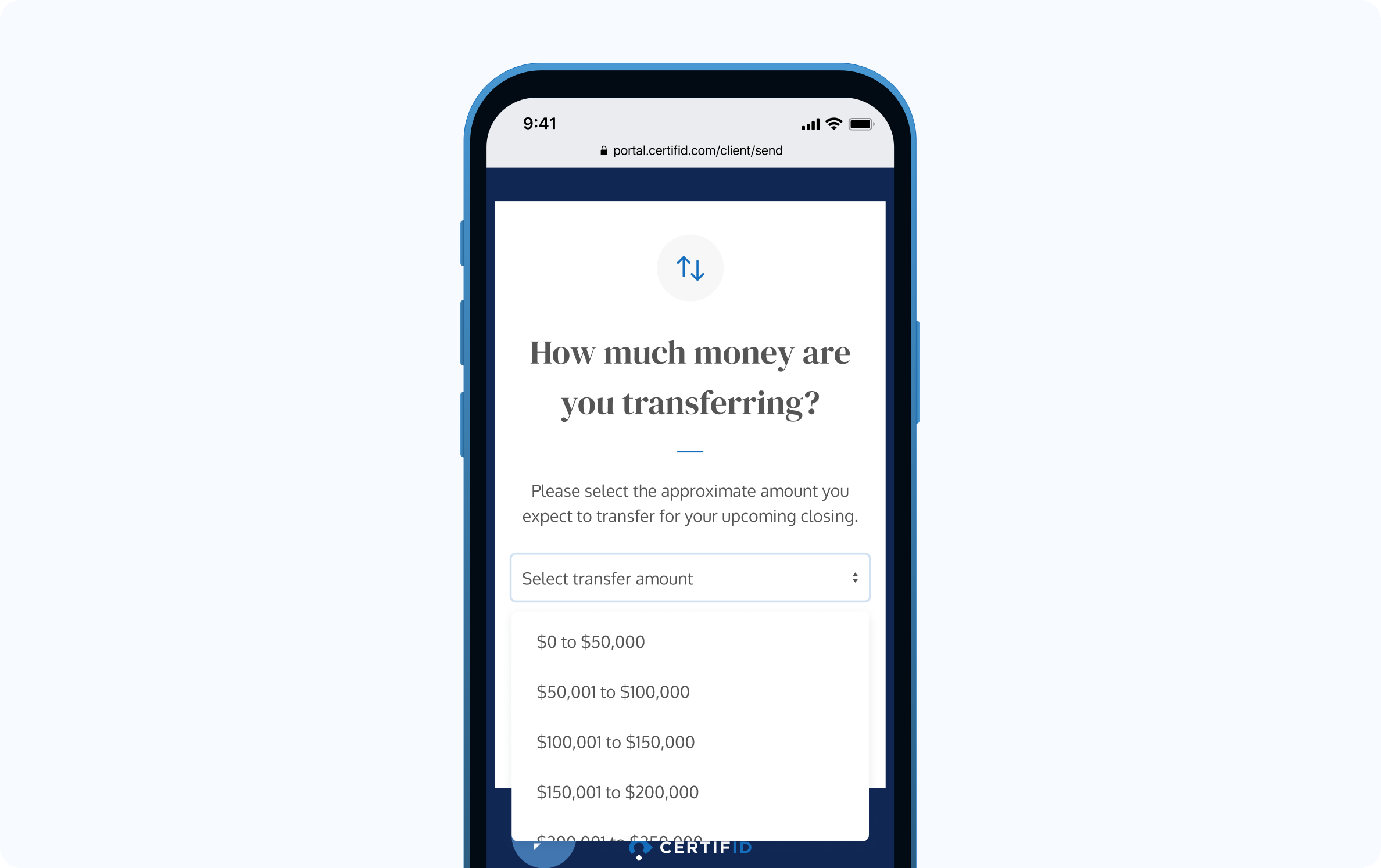
Compare the closing disclosure's final cash-to-close figure against any wire request tied to the file. A mismatch, even a small one, is worth a phone call before funds move.
Fraudsters sometimes request an amount close to the real figure, hoping no one checks closely. Others request the full amount to a different account. Matching the dollar figure isn't enough on its own. Validate the account and routing details too. If a lender or your team sends a revised closing disclosure late in the process, treat the new figure with the same scrutiny as a first-time request.
Cash-to-close is often the single largest wire in the file, and the one fraudsters target hardest. Routing it through a dedicated cash-to-close workflow keeps the amount, account, and identity checks tied together instead of scattered across email and phone calls.
Documents to gather before closing day
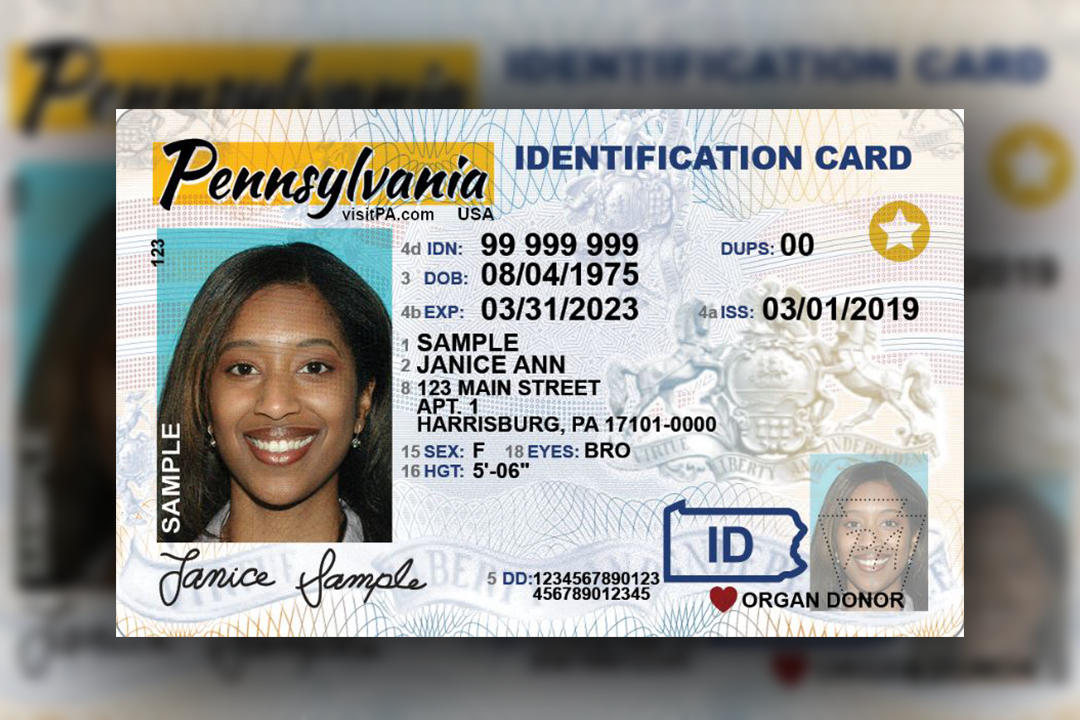
A missing or unverified document is exactly where fraud slips in. Your team should collect and check off each item below before closing day, chasing down whichever party holds it. Confirming everything is in hand ahead of time removes the last-minute loopholes fraudsters count on.
- Government-issued photo ID for every signer runs through identity verification, not just a visual check
- Wiring instructions, delivered through a secure channel, sent and validated through a platform like CertifID, never open email.
- Final closing disclosure, reviewed against the loan estimate; a mismatch here is one of the clearest fraud signals
- Payoff statement and lender bank details validated directly or through PayoffProtect, since payoff fraud is FRS's largest loss category
- Cashier's check or validated wire receipt for any remaining funds confirmed once funds are sent or received
- Copy of the purchase agreement and any signed addenda on file from the start of the transaction
- Updated contact list for agent, lender, title team, and attorney, the only numbers your team calls to verify anything that looks off
Once your team has checked off everything on this list, closing day is about signatures and funds, not paperwork chasing. There's no rushed step for a fraudster to exploit.
Closing day: The highest-risk window
Closing day is when fraud attempts spike.
Multiple files closing at once, everyone under time pressure, and a rushed Friday afternoon is exactly when fraudsters strike. Build a few minutes of buffer into the day's schedule so no one on your team is tempted to skip a verification step.
Verify the identity of every party in the file
On closing day, verify the identity of buyers, sellers, and any newly introduced party before releasing funds.
This step catches seller impersonation and vacant-land fraud, where someone poses as a property owner who isn't actually part of the closing. Treat a vacant or out-of-state property, an unsolicited offer, or a layered LLC ownership structure as reasons to slow down and verify further before the file moves forward.
Run a documented, repeatable wire process
ALTA best practices call for a written, repeatable wire verification procedure, not one that depends on an individual employee's memory. CertifID customers follow a similar sequence:
- Send instructions through a verified channel
- Validate the receiving account
- Require a second team member to approve high-value transfers before they go out
- Call to validate the wire was sent and received
Once a wire is sent, call the receiving party to validate the amount and reference number. Don't assume it arrived. Banks can't reverse a wire transfer once it clears, so calling to close the loop matters more here than in almost any other part of the file. It catches errors while there's still time to act.
Watch for last-minute payoff changes too
With a median loss of $389,125, payoff fraud is one of real estate’s costliest scams (State of Wire Fraud Report). Fraudsters target the payoff step specifically because it lands late in the file, when the team is racing the clock and least likely to slow down for a callback.
A fabricated payoff letter that arrives the day before or the day of closing exploits that exact pressure, banking on urgency to override a second look. It can easily slip past a rushing closing agent
CertifID's PayoffProtect automates payoff statement and lender account verification before funds are disbursed, backed by a 97% verification success rate, eliminating the rushed manual callback step where most payoff errors occur.
After closing day: Don't let your guard down
Payment fraud risk doesn't end when documents are signed. Build a few final validation sweeps into your team's post-closing routine.
Confirm receipt of final funds from all parties
Validate with the receiving institution that funds have arrived and the file is fully funded. Confirm with the sending party that proceeds were credited to the correct account. Then close out any remaining items so the file wraps cleanly.
Document the file for compliance
Record the verification steps, wire confirmations, and any flagged changes directly in your title production software. A documented trail protects your firm during an ALTA audit or an underwriter review, and it gives the next person who touches the file a clear record of what was checked.
Watch client accounts for several weeks
Fraud attempts sometimes continue after closing if a party's email was compromised earlier in the process. Advise clients to monitor bank accounts and credit cards for unusual activity.
If something looks wrong, act within minutes, not days. Time is the single biggest factor in fund recovery. Contact the bank immediately to request a wire recall, then file a report with the FBI's Internet Crime Complaint Center.
The FBI advises reporting as soon as possible, since recovery odds drop sharply after the first 24 hours. CertifID's Fraud Recovery Services team works directly with the U.S. Secret Service to trace and freeze stolen funds when notified quickly. If a loss has already happened, here's what to do next.
A pre-wire verification habit worth standardizing
Before any money tied to a closing moves, run the file through this short checklist:
- Call the phone number already on file, not one in the email
- Validate the exact dollar amount against the closing disclosure
- Verify the receiving bank name and account details verbally or through a secure verification platform
- Send a small test amount if the bank supports it, for very large wires
- Call again after sending to validate receipt
This five-step habit takes minutes to run per file. Standardized across your team, it closes off the easiest ways fraudsters divert closing funds.
Where technology fits into your closing checklist
A checklist built on memory and manual phone calls still misses details at scale. Title companies handling dozens of closings a week can't manually call every bank on every file.
That's the protection one connected platform like CertifID adds: secure wire instruction delivery, identity and account verification, and up to $5M in direct insurance per verified wire and payoff, backed by an A-rated carrier. Every wire is validated. Every identity is checked. Every step happens in a secure environment.
The deeper the integration with your existing title production system, the less manual work your team carries. Fewer manual steps mean fewer chances of one getting skipped under time pressure. If a loss does happen, our Fraud Recovery Services team uses its Secret Service relationship to move fast and pursue stolen funds.
Closing with confidence
A real estate closing checklist is more than paperwork. It protects the largest financial exchange most clients will ever make, and it protects your firm's standing with every file you close. Every task and touchpoint should run through a single, secure environment.
Validate every wire by phone. Flag every last-minute change. Build secure verification into the workflow, so your team stays a step ahead of fraudsters.
Ready to add wire and payoff protection to your closing process? Book a demo.

FAQ
What's the single most important step on a closing checklist?

Verifying wiring instructions by phone using a number already on file. Most closing fraud starts with a spoofed or intercepted email, and a verbal confirmation catches it before funds move.
Who is responsible for payment fraud losses at closing?
Responsibility varies by circumstance and state law. Most standard insurance policies exclude losses from closing fraud, which is why dedicated wire verification and insurance products exist for title companies and their clients.
What should our team do if a client reports they may have wired money to a fraudster?
This is the moment everything you've built into your process gets tested, so move fast and stay calm. Contact the bank immediately to request a wire recall, then file a report at ic3.gov. Speed matters, recovery odds fall sharply after the first 24 hours, but acting now still gives your client a real chance.
Does CertifID slow down the closing process?
No. Verification typically takes minutes and runs alongside the existing closing workflow inside title production systems such as SoftPro, Qualia, and RamQuest.
How much insurance coverage should I expect at a CertifID-protected closing?
Up to $5M in direct insurance per verified wire and per verified payoff, underwritten by Lloyd's of London.

VP of Customer Success

Katie's background combines both IT and education. Her degree is in Management Information Systems, and she spent her first four years in the workforce as an IT business analyst. Katie took a career turn and joined Teach for America and worked in inner-city schools in Indianapolis as a math teacher and eventually an assistant principal. Today she combines her IT nerdiness and love of teaching, helping customers find success every day.
A real estate closing checklist for title and escrow teams covers document prep, deadline tracking, and fund protection at every stage of the file. Wiring money is the highest-risk step, so validate instructions by phone and verify receiving accounts through a secure platform like CertifID before releasing funds. This guide covers what your team should verify before, during, and after every closing.
Why a closing checklist is a must for serious closing teams
Closing day means signatures, funds, and deadlines converging at once across every file your team is running.
One missed step can delay a closing. One skipped verification can cost a client their life savings and cost your firm its reputation. Real estate buyer cash-to-close fraud had a median loss of $239,850 in 2025, accounting for 30% of all FRS cases that year (2026 State of Wire Fraud Report). Most of these losses trace back to one unverified email or one rushed phone call that never happened.
With the right payment fraud systems in place, title companies can avoid most of these losses. A structured checklist protects the file and all parties involved in the closing. The rest of this guide outlines how to build that checklist into your team's closing process.
Why Listen to Us
In 2025, CertifID verified more than 1.46 million wire transfers for title companies, law firms, and lenders nationwide. We prevented $283 million in fraud loss across those verified wires and blocked 1,018 fraudulent transactions before funds moved. That's documented, file-level defense, not theoretical protection. We know firsthand what it takes to protect a closing team from sophisticated, modern payoff fraud.
Weeks before closing: Set the foundation
Most closing problems start early, well before closing week. Fix the most important issues first by setting up protective measures your team will rely on later.
Verify identities when the file opens, not at closing
Verify the identities of buyers, sellers, and any newly introduced party as soon as the file is opened, not on closing day. By the time closing day arrives, your team is under time pressure and less likely to push back on questionable documentation. Early verification gives you room to dig deeper, request additional documents, or contact a property owner through an independently verified channel without derailing the timeline.
Map your title production system integrations
First, identify which title production system your office runs on. SoftPro, Qualia, and RamQuest are the most common platforms, and each connects directly with wire and payoff identity verification platforms. When your system integrates with a service like CertifID, wiring instructions and payoff requests move through a secure, verified channel instead of open email.
Some integrations go further. CertifID's PayoffProtect runs directly inside SoftPro. The payoff verification step happens without your team leaving the title production workflow or re-keying account numbers by hand.
Put contact protocols in writing, early
Next, give clients the names, direct phone numbers, and email addresses of everyone on the file.
That includes the real estate agent, lender, closing attorney, and your own team's escrow officer. Keep the list together in one place your client can reference. Tell them clearly: use these numbers to verify anything that looks off later, never a number pulled from an email.
Set expectations on wiring instructions upfront
Afterward, tell every client, in writing, before the file gets close to closing:
- How we'll send wiring instructions
- How to verify them
- What to do if the instructions change
- Who to call if anything looks different
If your process still relies on emailing instructions, define the verification step that follows, and put it in front of the client before you send anything.
Turn on multi-factor authentication everywhere
Email compromise is how most payment fraud starts. Enable multi-factor authentication on every email account tied to the file, both on your team's side and your clients'. Activate it well before closing week.
It's a five-minute setting change that shuts off the easiest way fraudsters get in.
Review the purchase agreement and build the file timeline
Next up, read the purchase agreement in full before building the file timeline. Note every deadline it creates: inspection period, financing contingency, appraisal contingency, and the target closing date.
Load each deadline into a shared calendar your whole team can see, not just the closing file. Assign an owner to each one. Financing contingencies belong to the lender relationship, inspection deadlines usually sit with the agent, and the closing date is yours to protect.
Set a reminder several days ahead of every deadline, not on the day it falls due. A missed deadline can jeopardize earnest money or delay the whole file, and a same-day scramble is how that happens. If the agreement is amended later, treat it as a new timeline. Update the calendar and confirm the revised dates with every party before moving on.
Before closing day: Verify everything twice
This is peak fraud season. Criminals monitor closing email threads for weeks and wait until the closing date approaches before striking. Build verification into the file now, while there's still time.
Start pre-closing verification three to five days out
Don't wait until the day of closing to run verification.
Starting three to five days ahead gives your team a buffer to resolve red flags without holding up the closing itself. A rushed same-day verification is exactly the scenario fraudsters count on.
Treat last-minute changes to wiring instructions as a red flag
A change to wiring instructions in the final days before closing is one of the clearest signs of fraud in real estate. Flag any unexpected change for manual review, even if it looks official and cites accurate closing details.
ALTA's Outgoing Wire Preparation Checklist recommends validating the source of any wiring instructions and confirming delivery once funds are sent. Call the client or counterparty using a number already on file, not one included in the email, and validate the change verbally before releasing funds.
Validate bank account details through a secure platform, not email
Email is not a safe channel for sending or receiving banking details. Fraudsters spoof addresses that look nearly identical to the real one, changing a single character that's easy to miss.
CertifID's purpose-built account verification platform sends the account holder a request by email and text, then verifies identity through device checks and knowledge-based questions before the account is used. The system validates the routing number in real time and flags devices located outside the country or recently activated, a common signal of a fraudulent claimant.
That removes the risk tied to opening email-based instructions. Verification is built into the title workflow, not a separate step your team has to remember.
Train staff to check the sender's full email address, not the display name
Display names are easy to fake. The address underneath is what matters.
Watch for extra letters, swapped characters, or a slightly different domain, like a lowercase "l" replaced with a capital "I." Fraudsters also register lookalike domains that add a hyphen or an extra character, such as "title-c0mpany.com" instead of "titlecompany.com." That small change slips past a glance and most spam filters.
Make it standard practice to expand the full sender address before trusting anything in a message. If the domain doesn't match what's on file, don't reply. Call the contact on file instead.
Watch for urgency language
Watch for urgent language in wire instructions.
Words like "urgent," "immediately," or "kindly act now" are common pressure tactics. Fraudsters want your team to move before anyone thinks it through.
The FBI's guidance on business email compromise specifically warns to be wary when a requestor presses you to act quickly, especially paired with a request to skip normal verification steps. Build a "slow down and call" rule into your process.
A legitimate request will never penalize the extra step.
Validate the exact wire amount against the closing disclosure
Compare the closing disclosure's final cash-to-close figure against any wire request tied to the file. A mismatch, even a small one, is worth a phone call before funds move.
Fraudsters sometimes request an amount close to the real figure, hoping no one checks closely. Others request the full amount to a different account. Matching the dollar figure isn't enough on its own. Validate the account and routing details too. If a lender or your team sends a revised closing disclosure late in the process, treat the new figure with the same scrutiny as a first-time request.
Cash-to-close is often the single largest wire in the file, and the one fraudsters target hardest. Routing it through a dedicated cash-to-close workflow keeps the amount, account, and identity checks tied together instead of scattered across email and phone calls.
Documents to gather before closing day
A missing or unverified document is exactly where fraud slips in. Your team should collect and check off each item below before closing day, chasing down whichever party holds it. Confirming everything is in hand ahead of time removes the last-minute loopholes fraudsters count on.
- Government-issued photo ID for every signer runs through identity verification, not just a visual check
- Wiring instructions, delivered through a secure channel, sent and validated through a platform like CertifID, never open email.
- Final closing disclosure, reviewed against the loan estimate; a mismatch here is one of the clearest fraud signals
- Payoff statement and lender bank details validated directly or through PayoffProtect, since payoff fraud is FRS's largest loss category
- Cashier's check or validated wire receipt for any remaining funds confirmed once funds are sent or received
- Copy of the purchase agreement and any signed addenda on file from the start of the transaction
- Updated contact list for agent, lender, title team, and attorney, the only numbers your team calls to verify anything that looks off
Once your team has checked off everything on this list, closing day is about signatures and funds, not paperwork chasing. There's no rushed step for a fraudster to exploit.
Closing day: The highest-risk window
Closing day is when fraud attempts spike.
Multiple files closing at once, everyone under time pressure, and a rushed Friday afternoon is exactly when fraudsters strike. Build a few minutes of buffer into the day's schedule so no one on your team is tempted to skip a verification step.
Verify the identity of every party in the file
On closing day, verify the identity of buyers, sellers, and any newly introduced party before releasing funds.
This step catches seller impersonation and vacant-land fraud, where someone poses as a property owner who isn't actually part of the closing. Treat a vacant or out-of-state property, an unsolicited offer, or a layered LLC ownership structure as reasons to slow down and verify further before the file moves forward.
Run a documented, repeatable wire process
ALTA best practices call for a written, repeatable wire verification procedure, not one that depends on an individual employee's memory. CertifID customers follow a similar sequence:
- Send instructions through a verified channel
- Validate the receiving account
- Require a second team member to approve high-value transfers before they go out
- Call to validate the wire was sent and received
Once a wire is sent, call the receiving party to validate the amount and reference number. Don't assume it arrived. Banks can't reverse a wire transfer once it clears, so calling to close the loop matters more here than in almost any other part of the file. It catches errors while there's still time to act.
Watch for last-minute payoff changes too
With a median loss of $389,125, payoff fraud is one of real estate’s costliest scams (State of Wire Fraud Report). Fraudsters target the payoff step specifically because it lands late in the file, when the team is racing the clock and least likely to slow down for a callback.
A fabricated payoff letter that arrives the day before or the day of closing exploits that exact pressure, banking on urgency to override a second look. It can easily slip past a rushing closing agent
CertifID's PayoffProtect automates payoff statement and lender account verification before funds are disbursed, backed by a 97% verification success rate, eliminating the rushed manual callback step where most payoff errors occur.
After closing day: Don't let your guard down
Payment fraud risk doesn't end when documents are signed. Build a few final validation sweeps into your team's post-closing routine.
Confirm receipt of final funds from all parties
Validate with the receiving institution that funds have arrived and the file is fully funded. Confirm with the sending party that proceeds were credited to the correct account. Then close out any remaining items so the file wraps cleanly.
Document the file for compliance
Record the verification steps, wire confirmations, and any flagged changes directly in your title production software. A documented trail protects your firm during an ALTA audit or an underwriter review, and it gives the next person who touches the file a clear record of what was checked.
Watch client accounts for several weeks
Fraud attempts sometimes continue after closing if a party's email was compromised earlier in the process. Advise clients to monitor bank accounts and credit cards for unusual activity.
If something looks wrong, act within minutes, not days. Time is the single biggest factor in fund recovery. Contact the bank immediately to request a wire recall, then file a report with the FBI's Internet Crime Complaint Center.
The FBI advises reporting as soon as possible, since recovery odds drop sharply after the first 24 hours. CertifID's Fraud Recovery Services team works directly with the U.S. Secret Service to trace and freeze stolen funds when notified quickly. If a loss has already happened, here's what to do next.
A pre-wire verification habit worth standardizing
Before any money tied to a closing moves, run the file through this short checklist:
- Call the phone number already on file, not one in the email
- Validate the exact dollar amount against the closing disclosure
- Verify the receiving bank name and account details verbally or through a secure verification platform
- Send a small test amount if the bank supports it, for very large wires
- Call again after sending to validate receipt
This five-step habit takes minutes to run per file. Standardized across your team, it closes off the easiest ways fraudsters divert closing funds.
Where technology fits into your closing checklist
A checklist built on memory and manual phone calls still misses details at scale. Title companies handling dozens of closings a week can't manually call every bank on every file.
That's the protection one connected platform like CertifID adds: secure wire instruction delivery, identity and account verification, and up to $5M in direct insurance per verified wire and payoff, backed by an A-rated carrier. Every wire is validated. Every identity is checked. Every step happens in a secure environment.
The deeper the integration with your existing title production system, the less manual work your team carries. Fewer manual steps mean fewer chances of one getting skipped under time pressure. If a loss does happen, our Fraud Recovery Services team uses its Secret Service relationship to move fast and pursue stolen funds.
Closing with confidence
A real estate closing checklist is more than paperwork. It protects the largest financial exchange most clients will ever make, and it protects your firm's standing with every file you close. Every task and touchpoint should run through a single, secure environment.
Validate every wire by phone. Flag every last-minute change. Build secure verification into the workflow, so your team stays a step ahead of fraudsters.
Ready to add wire and payoff protection to your closing process? Book a demo.
VP of Customer Success
Katie's background combines both IT and education. Her degree is in Management Information Systems, and she spent her first four years in the workforce as an IT business analyst. Katie took a career turn and joined Teach for America and worked in inner-city schools in Indianapolis as a math teacher and eventually an assistant principal. Today she combines her IT nerdiness and love of teaching, helping customers find success every day.
Sign up for The Wire to join the conversation.






Austin
3601 South Congress Ave.
Ste D200, Austin, Texas 78704

Grand Rapids
124 Fulton Street E
Grand Rapids, MI 49503

