


5 Payload alternatives for real estate closing payments
A side-by-side look at five payment platforms for real estate closings, including where each one fits and what it leaves to your team.
Share article:


Tyler Nickel
6 minutes
Digital Payments
Sep 8, 2026
Sep 8, 2026
Quick summary
Payload is a solid choice for real estate teams looking to handle earnest money, commissions, and cash-to-close digitally. But depending on your biggest headaches, other platforms might serve you better.
Some alternatives focus strictly on moving funds fast. Others offer extra security like identity checks, payoff verification, payment fraud insurance, or tight connections with your title software.
To help you pick the right fit for your workflow, we compared five top Payload alternatives. Here are the top three choices.
Why listen to us?
We see what happens when payment security fails because we deal with it every single day. In 2025 alone, CertifID protected over 900,000 real estate deals representing $1.46 billion in funds. Beyond prevention, our recovery team has helped victims get back more than $126 million after an attack.
That's the lens we bring to Payload alternatives. Fast payments are the easy part. What matters more is what happens before money moves. A platform needs to verify identities, validate bank accounts, and catch red flags before funds go out. It also needs a plan for what happens if something still gets through.
What is Payload?
Payload is a payments platform for real estate brokerages, title companies, and property managers. It automates earnest money collection, agent commission payouts, and vendor payments from a single dashboard, on ACH, Same Day ACH, Real Time Payments, and FedNow rails.
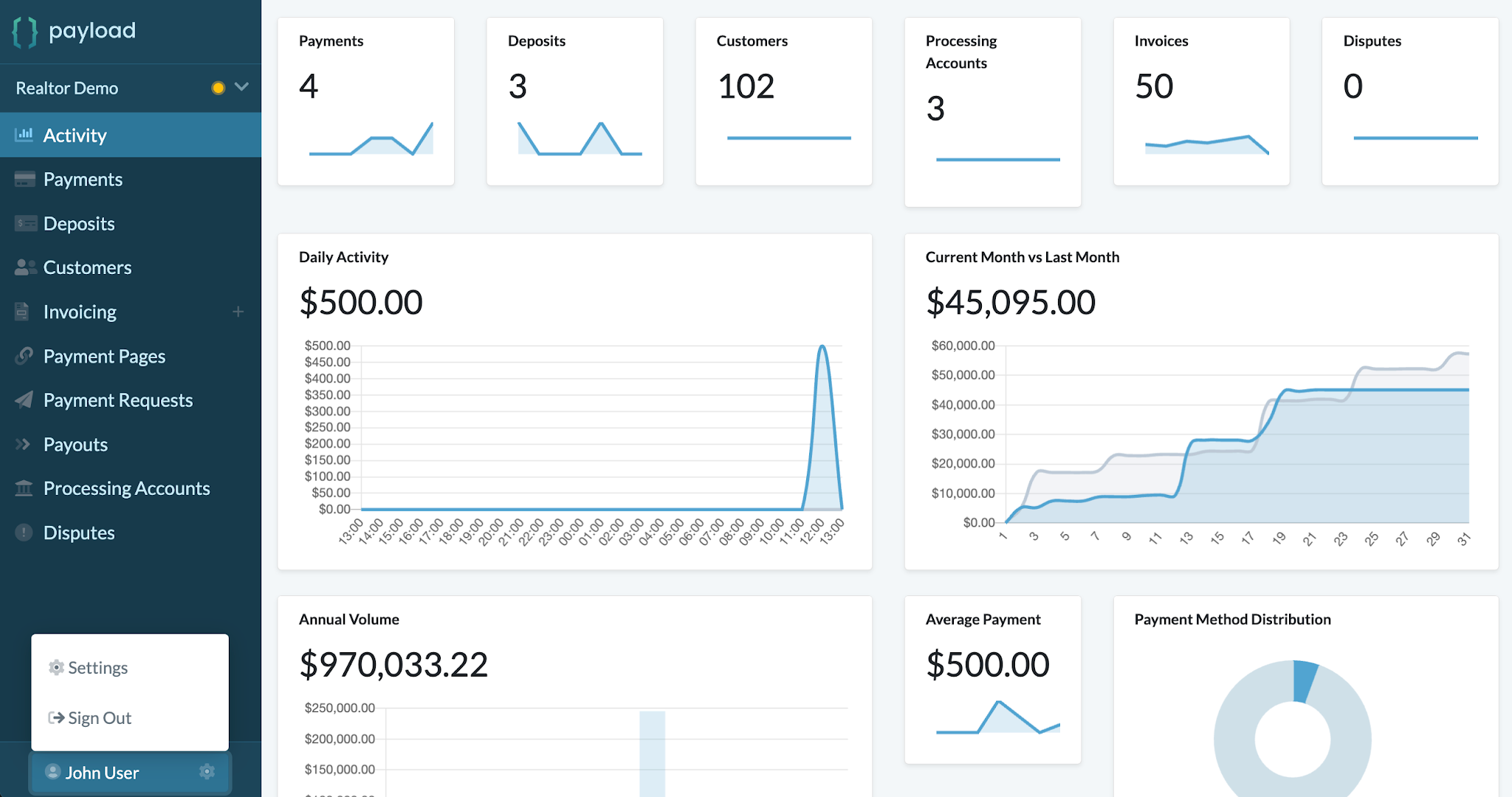
Its core fraud tool is called Payload Protect. Instead of verifying a wire before it goes out, Payload Protect replaces the wire entirely with a Good Funds transfer, guaranteed irrevocable once it lands. That keeps an escrow holder from getting stuck with a bounced check or an ACH clawback. It follows NACHA and Regulation E rules, and it's built into a number of real estate platforms brokerages already use, including Lone Wolf, Dotloop, BrokerMint, and DocuSign.
That makes Payload useful for the everyday payment traffic around a closing. Whether it fits the highest-risk payment on the file is a separate question.
Why seek alternatives to Payload?
Payload covers a broad range of real estate payments, but some teams may need deeper functionality in specific parts of the closing workflow.
- You need stronger payment fraud protection: Dedicated fraud platforms can add identity verification, payoff verification, insured transactions, and recovery support around high-risk payments.
- You need deeper title workflow integrations: Depending on your production system, another provider may offer a tighter connection to the tools your closers already use every day.
- You only need one part of the payment stack: If your main need is EMD collection, payoff verification, or secure wire delivery, a more specialized platform may be simpler and more cost-effective.
The best alternative depends less on who moves money fastest and more on which risks and workflow gaps you need the platform to solve.
5 best Payload alternatives for real estate payments
The table below shows how the five alternatives on this list stack up.
Now let's look at each Payload alternative in detail.
1. CertifID
Best for: Title and escrow teams looking for a Payload alternative that combines digital payments with broader payment fraud and closing protection in a simple, intuitive user experience.

CertifID is a real estate fraud prevention and payments platform built specifically for title and escrow teams. It supports earnest money, cash-to-close, and other closing payments, but moving money is only one part of the workflow. Teams can also verify identities and bank accounts, securely collect and share wire instructions, verify mortgage payoffs, and protect eligible files with insurance.
For earnest money deposits, CertifID adds verification and fraud controls before funds are submitted, including bank-account validation and available-funds checks. Buyers can then complete the payment through a secure digital experience, while title teams get visibility into payment status and transaction details.
More broadly, CertifID connects payments with the other high-risk steps surrounding a real estate closing. Rather than treating earnest money collection as a standalone workflow, title teams can manage identity verification, wire instructions, payoff verification, business verification, payments, and fraud protection through the same platform.
There is also a meaningful difference in how CertifID approaches risk. For qualifying payments, CertifID takes on subsequent return risk instead of passing that exposure back to the title company. And if fraud does happen, the wider platform includes Fraud Recovery Services alongside up to $5 million in direct insurance on eligible verified payments and files.
Key features
- Digital Payments: Collect EMD and cash-to-close through a secure digital payment experience.
- Identity verification: Verify buyers, sellers, and other transaction parties using identity, device, and fraud-risk signals.
- Client Experience: Give buyers, sellers, and agents one guided, branded place to complete key closing tasks, including identity verification, document signing, payments, and wire instructions, with automated reminders and real-time visibility for title teams.
- Collect: Securely collect and verify seller wiring instructions without relying on ordinary email.
- Confirm: Deliver verified wiring instructions to buyers through a secure, co-branded experience.
- Payoff Protect: Verify mortgage payoff statements and wiring instructions directly with lenders, with human callback support when needed.
- Payoff Ordering: Automated payoff requests in under 30 seconds with no calls or faxes needed, and track every order in a single dashboard.
- Business verification: Verify bank-account details for businesses involved in the transaction, including other title companies and 1031 exchanges.
- Insurance and recovery: Eligible verified transactions can be backed by up to $5 million in first-party insurance, with Fraud Recovery Services available when fraud occurs.
Pros
- No clawback guarantee. CertifID absorbs post-settlement returns rather than taking the funds back from escrow.
- More payment rails than Keybox. Supports ACH, RTP/FedNow, and wire rather than an ACH-only EMD workflow.
- Plaid balance checks help prevent insufficient-funds payments from being submitted.
- Explicit insurance protection: Up to $5 million in first-party insurance for payments made through CertifID.
- Goes beyond payments and adds identity, wire, business, and payoff verification alongside the payment workflow.
Cons
- May be more comprehensive than teams need if their only requirement is basic digital EMD collection.
Pricing: CertifID’s broader fraud-prevention platform uses per-file pricing which includes the Digital Payments tool, but payments made through CertifID carry separate transaction fees for the buyer (which title companies have the option to cover). Custom enterprise plans are available for underwriters and national lenders.
G2 Rating: 4.8 out of 5
2. Closinglock
Best For: Firms wanting EMD collection and secure wiring-instruction delivery from a single login.

Closinglock is a fraud-prevention platform built for title companies, escrow teams, and real estate attorneys. Beyond digital payments, it handles identity checks, secure wire instructions, payoff verification, document sharing, and eSignatures.
If you're considering it over Payload, Closinglock is ideal for teams that want payment collection built directly into a larger security workflow. Its SecurePay feature lets buyers digitally send earnest money, option fees, and cash-to-close, while verifying bank details and protecting qualifying transfers with up to $5 million in insurance coverage.
Key Features:
- SecurePay: Collect earnest money, option fees, and closing costs before a file even opens.
- EMD returns: Refund a buyer's deposit to a pre-verified bank account by the next business day.
- Send wiring instructions: Deliver your firm's instructions to buyers through a secure, no-login link.
- Business verification: Confirm the wiring instructions of any business party on the file.
Pros:
- EMD collection and wiring-instruction delivery both live in the same platform
- Next-business-day EMD refunds reduce the back-and-forth on a cancelled contract
- Strong brand recognition means a buyer may already recognize the interface from a previous closing
Cons:
- Could be more platform than teams need if they only want basic EMD collection.
- Public pricing isn't transparent enough to compare costs without speaking to sales.
Pricing: Closinglock doesn't publish usable standard pricing online. Contact the company for a quote.
G2 Rating: 4.8 out of 5
3. Qualia Shield
Best For: Qualia Core or Qualia Connect users wanting fraud checks built into their existing closing room.

Qualia Shield is Qualia’s fraud-prevention platform built directly into the Qualia closing workflow. It automatically checks wire instructions as they’re added or changed, verifies identity and bank-account information, and helps title teams assess risk before funds move.
Shield now covers more than EMD and basic wire monitoring. It supports identity, wire, and payoff verification, while eligible low-risk wires can receive up to $2 million in insurance coverage. For teams already running their closing process in Qualia, the main advantage is that these checks happen inside the same system rather than through a separate fraud platform.
Key Features:
- Automatic wire checks: Review wire instructions whenever they’re added or changed.
- Identity verification: Cross-reference identity information against public records and other data sources.
- Bank-account verification: Confirm account ownership before funds are sent.
- Payoff verification: Verify mortgage payoff information as part of the closing workflow.
Pricing: Qualia lists Shield separately from its core platform and does not publish a standard price. Contact Qualia for a quote.
Pros:
- No separate login or tab, since it runs inside the existing Qualia workflow
- AI name matching adds a layer of identity checking most standalone EMD tools skip
- Buyer-facing fraud education is built into the collection flow
Cons:
- Locked to firms already running Qualia as their production system
- No standalone insurance product on the funds it helps verify
G2 Rating: 4.7 out of 5 (339-plus reviews, reflects the full Qualia platform)
4. Earnnest
Best for: Agents and title teams that mainly want a simple digital earnest money collection experience without adopting a broader fraud-prevention platform.
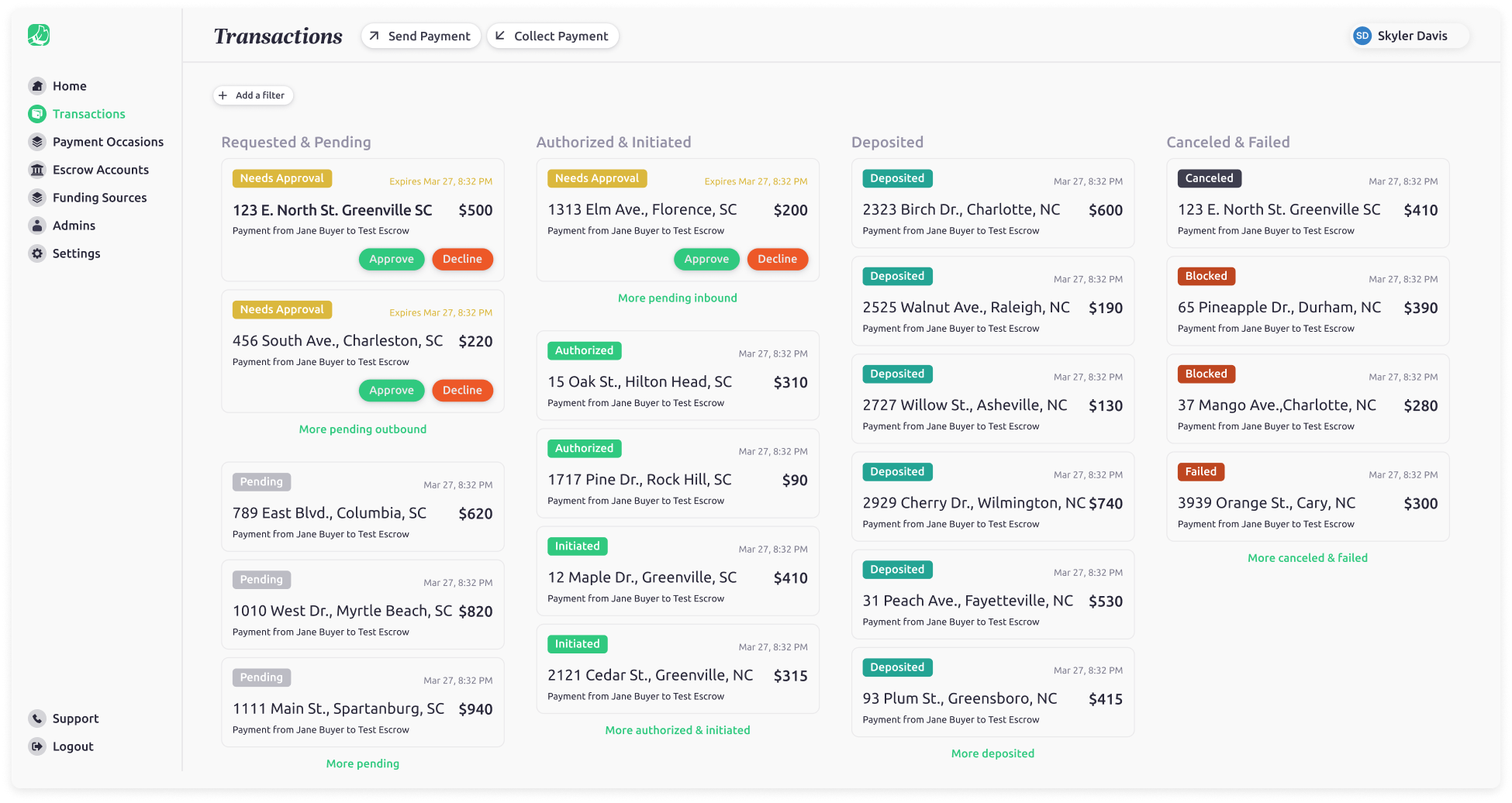
Earnnest is best known for its digital earnest money platform, which lets buyers move EMD directly from their bank account to the escrow holder without using a wire or paper check.
It's free for agents and escrow holders, with the buyer paying a flat convenience fee for the transfer. Earnnest is also one of the few digital EMD services with SOC 2 Type 2 certification.
Key Features:
- Bank-to-bank transfer: Move EMD directly from the buyer's account with no wire or check.
- Real-time notifications: Alert every party on the file when a payment status changes.
- SOC 2 Type 2 certification: Meet a recognized data-security standard for handling buyer financial information.
- Mobile-friendly setup: Let a buyer send funds without downloading an app.
Pros:
- No cost to the agent or title company at any point in the process
- Reports zero instances of fraud across more than 180,000 transactions
- Simple enough that most buyers complete it without support
Cons:
- No wire-instruction delivery or seller identity verification
Pricing: Free for agents and escrow-holding businesses, with a flat fee charged to the homebuyer per transaction.
G2 Rating: Not listed on G2
5. Zoccam
Best for: Title companies that want direct-to-escrow digital deposits with identity verification and integrations into systems such as SoftPro and RamQuest.
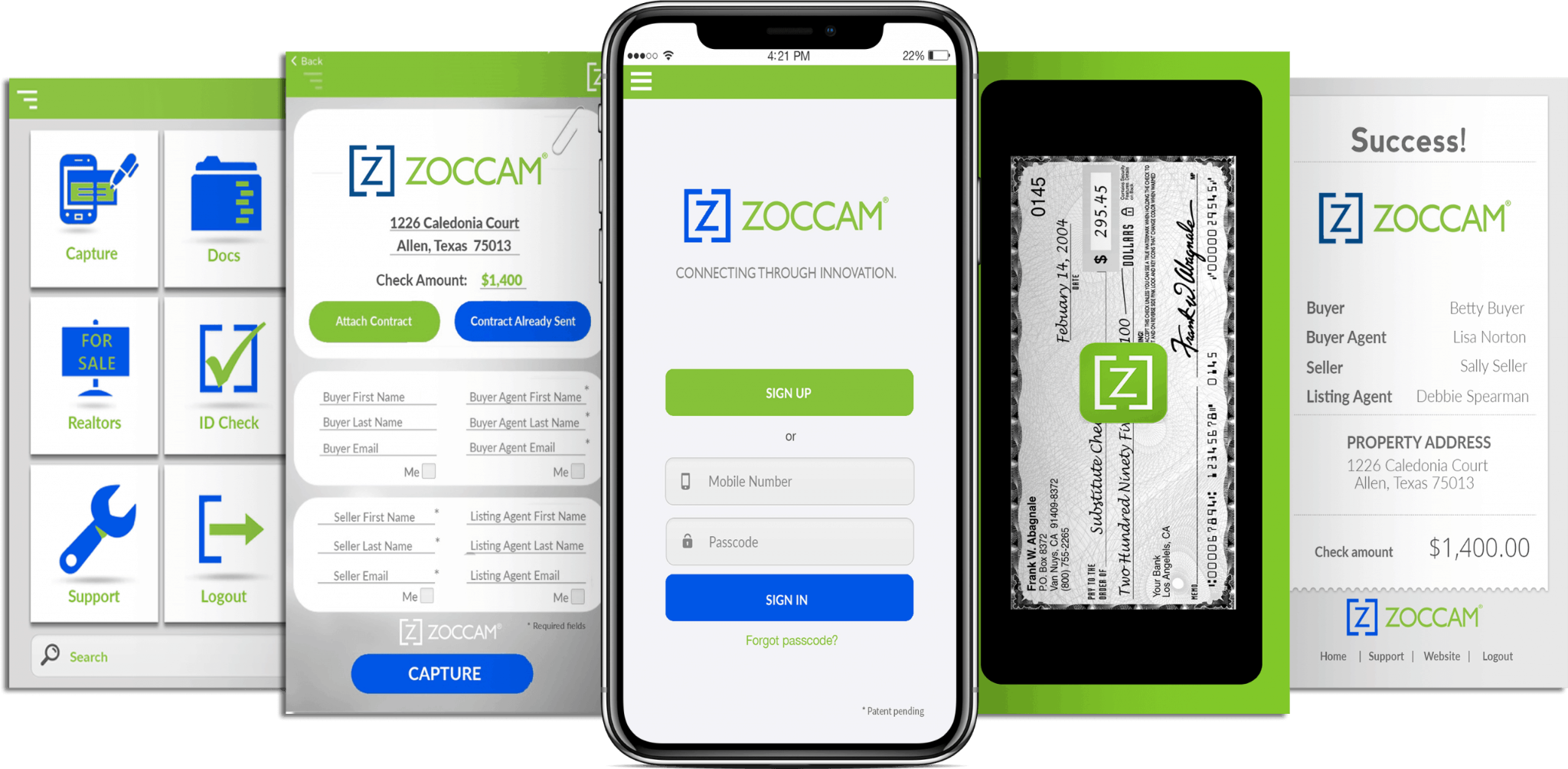
Zoccam is a digital earnest money platform designed to move escrow deposits directly from the homebuyer to the title company's bank account.
Zoccam acts as the payment gateway and routes the transaction, but it never holds the funds in an intermediary account. Money moves directly from the buyer to the title company’s escrow account. There is no middleman account involved in the process, and sensitive banking details are never exposed or swapped between parties. Zoccam is free for real estate agents and buyers, while title companies should contact the company for implementation and pricing details.
Key Features:
- Direct-to-escrow transfer: Send funds straight from a buyer's account to the title company's escrow account.
- Identity verification: Confirm every payor's identity through Mitek ID Verify before a transfer completes.
- Production integrations: Connect with SoftPro, RamQuest, and existing CRM systems.
- No app required: Complete a transfer from any device without downloading anything.
Pros:
- No bank information changes hands between buyer and title company
- Free for agents and buyers, which keeps the consumer-facing payment experience simple.
- Direct integrations into SoftPro and RamQuest keep it inside existing production tools
Cons:
- Covers escrow deposits only, with no wire or payoff protection
- No dedicated insurance product on the funds it transfers
Pricing: Free for real estate agents and buyers; title companies should contact Zoccam for implementation/pricing details.
G2 Rating: Not listed on G2
How to choose the right Payload alternative
The right choice depends on what you actually want to improve. Payload is primarily a payments platform, while several alternatives on this list solve much broader closing and fraud-prevention problems.
- Choose CertifID if you want digital payments alongside identity verification, payoff protection, multiple payment rails, insurance, and protection against qualifying payment returns.
- Choose Closinglock if you want payments, secure wire instructions, identity verification, and payoff verification bundled into one closing platform.
- Choose Qualia Shield if your team already runs on Qualia and wants fraud and payoff checks built directly into that existing workflow.
- Choose Earnnest if your main priority is a simple way to collect earnest money digitally without adding a broader fraud platform.
- Choose Zoccam if you want direct-to-escrow digital deposits with identity verification and connections to title production systems.
The key is to decide whether you’re replacing Payload simply for payment collection or because you need better protection around the money itself. If payment fraud, payoff fraud, payment returns, and identity verification are part of the problem, a broader platform such as CertifID or Closinglock will usually make more sense than an EMD-only tool.
Get closing protection Payload doesn't cover
Payload handles a wide range of real estate payments and includes its own fraud and Good Funds protections. But if your team also needs dedicated identity and account verification, mortgage payoff protection, direct insurance, and fraud recovery support, CertifID goes further around the highest-risk parts of the closing.
FAQ
What is the best Payload alternative for title companies?

CertifID is the strongest fit if wire and payoff protection is the priority. It pairs identity verification and payoff checks with up to $5 million in insurance per file. That's coverage Payload's own fraud tools don't offer on funds sent by wire.
Does Payload prevent payment fraud?
Yes. Payload includes account verification, identity and compliance controls, fraud monitoring, and Payload Protect for Good Funds protection. Where dedicated fraud-prevention platforms differ is in the additional protections they may provide around a closing, such as mortgage payoff verification, wire-instruction verification, direct fraud insurance, and recovery services.
Is Payload built for title companies, or just brokerages?
Payload serves both brokerages and title companies and supports workflows including EMD, cash-to-close, and closing disbursements. Its integration footprint varies by product, though, so title teams should confirm how deeply Payload connects with their specific production system before choosing it.
Can I use more than one of these tools together?
Yes. Some firms pair a free EMD tool like Earnnest or Zoccam with a dedicated wire and payoff protection layer like CertifID. That covers both the everyday deposit and the highest-risk payment on the file.

Head of Product Marketing

Tyler brings over 15 years across SaaS and AI, he specializes in turning complex technology into clear, differentiated stories for audiences from startup to enterprise. At CertifID he leads the positioning, messaging, and go-to-market strategy behind the company's work to make real estate closings safe and simple.
Quick summary
Payload is a solid choice for real estate teams looking to handle earnest money, commissions, and cash-to-close digitally. But depending on your biggest headaches, other platforms might serve you better.
Some alternatives focus strictly on moving funds fast. Others offer extra security like identity checks, payoff verification, payment fraud insurance, or tight connections with your title software.
To help you pick the right fit for your workflow, we compared five top Payload alternatives. Here are the top three choices.
Why listen to us?
We see what happens when payment security fails because we deal with it every single day. In 2025 alone, CertifID protected over 900,000 real estate deals representing $1.46 billion in funds. Beyond prevention, our recovery team has helped victims get back more than $126 million after an attack.
That's the lens we bring to Payload alternatives. Fast payments are the easy part. What matters more is what happens before money moves. A platform needs to verify identities, validate bank accounts, and catch red flags before funds go out. It also needs a plan for what happens if something still gets through.
What is Payload?
Payload is a payments platform for real estate brokerages, title companies, and property managers. It automates earnest money collection, agent commission payouts, and vendor payments from a single dashboard, on ACH, Same Day ACH, Real Time Payments, and FedNow rails.
Its core fraud tool is called Payload Protect. Instead of verifying a wire before it goes out, Payload Protect replaces the wire entirely with a Good Funds transfer, guaranteed irrevocable once it lands. That keeps an escrow holder from getting stuck with a bounced check or an ACH clawback. It follows NACHA and Regulation E rules, and it's built into a number of real estate platforms brokerages already use, including Lone Wolf, Dotloop, BrokerMint, and DocuSign.
That makes Payload useful for the everyday payment traffic around a closing. Whether it fits the highest-risk payment on the file is a separate question.
Why seek alternatives to Payload?
Payload covers a broad range of real estate payments, but some teams may need deeper functionality in specific parts of the closing workflow.
- You need stronger payment fraud protection: Dedicated fraud platforms can add identity verification, payoff verification, insured transactions, and recovery support around high-risk payments.
- You need deeper title workflow integrations: Depending on your production system, another provider may offer a tighter connection to the tools your closers already use every day.
- You only need one part of the payment stack: If your main need is EMD collection, payoff verification, or secure wire delivery, a more specialized platform may be simpler and more cost-effective.
The best alternative depends less on who moves money fastest and more on which risks and workflow gaps you need the platform to solve.
5 best Payload alternatives for real estate payments
The table below shows how the five alternatives on this list stack up.
Now let's look at each Payload alternative in detail.
1. CertifID
Best for: Title and escrow teams looking for a Payload alternative that combines digital payments with broader payment fraud and closing protection in a simple, intuitive user experience.
CertifID is a real estate fraud prevention and payments platform built specifically for title and escrow teams. It supports earnest money, cash-to-close, and other closing payments, but moving money is only one part of the workflow. Teams can also verify identities and bank accounts, securely collect and share wire instructions, verify mortgage payoffs, and protect eligible files with insurance.
For earnest money deposits, CertifID adds verification and fraud controls before funds are submitted, including bank-account validation and available-funds checks. Buyers can then complete the payment through a secure digital experience, while title teams get visibility into payment status and transaction details.
More broadly, CertifID connects payments with the other high-risk steps surrounding a real estate closing. Rather than treating earnest money collection as a standalone workflow, title teams can manage identity verification, wire instructions, payoff verification, business verification, payments, and fraud protection through the same platform.
There is also a meaningful difference in how CertifID approaches risk. For qualifying payments, CertifID takes on subsequent return risk instead of passing that exposure back to the title company. And if fraud does happen, the wider platform includes Fraud Recovery Services alongside up to $5 million in direct insurance on eligible verified payments and files.
Key features
- Digital Payments: Collect EMD and cash-to-close through a secure digital payment experience.
- Identity verification: Verify buyers, sellers, and other transaction parties using identity, device, and fraud-risk signals.
- Client Experience: Give buyers, sellers, and agents one guided, branded place to complete key closing tasks, including identity verification, document signing, payments, and wire instructions, with automated reminders and real-time visibility for title teams.
- Collect: Securely collect and verify seller wiring instructions without relying on ordinary email.
- Confirm: Deliver verified wiring instructions to buyers through a secure, co-branded experience.
- Payoff Protect: Verify mortgage payoff statements and wiring instructions directly with lenders, with human callback support when needed.
- Payoff Ordering: Automated payoff requests in under 30 seconds with no calls or faxes needed, and track every order in a single dashboard.
- Business verification: Verify bank-account details for businesses involved in the transaction, including other title companies and 1031 exchanges.
- Insurance and recovery: Eligible verified transactions can be backed by up to $5 million in first-party insurance, with Fraud Recovery Services available when fraud occurs.
Pros
- No clawback guarantee. CertifID absorbs post-settlement returns rather than taking the funds back from escrow.
- More payment rails than Keybox. Supports ACH, RTP/FedNow, and wire rather than an ACH-only EMD workflow.
- Plaid balance checks help prevent insufficient-funds payments from being submitted.
- Explicit insurance protection: Up to $5 million in first-party insurance for payments made through CertifID.
- Goes beyond payments and adds identity, wire, business, and payoff verification alongside the payment workflow.
Cons
- May be more comprehensive than teams need if their only requirement is basic digital EMD collection.
Pricing: CertifID’s broader fraud-prevention platform uses per-file pricing which includes the Digital Payments tool, but payments made through CertifID carry separate transaction fees for the buyer (which title companies have the option to cover). Custom enterprise plans are available for underwriters and national lenders.
G2 Rating: 4.8 out of 5
2. Closinglock
Best For: Firms wanting EMD collection and secure wiring-instruction delivery from a single login.
Closinglock is a fraud-prevention platform built for title companies, escrow teams, and real estate attorneys. Beyond digital payments, it handles identity checks, secure wire instructions, payoff verification, document sharing, and eSignatures.
If you're considering it over Payload, Closinglock is ideal for teams that want payment collection built directly into a larger security workflow. Its SecurePay feature lets buyers digitally send earnest money, option fees, and cash-to-close, while verifying bank details and protecting qualifying transfers with up to $5 million in insurance coverage.
Key Features:
- SecurePay: Collect earnest money, option fees, and closing costs before a file even opens.
- EMD returns: Refund a buyer's deposit to a pre-verified bank account by the next business day.
- Send wiring instructions: Deliver your firm's instructions to buyers through a secure, no-login link.
- Business verification: Confirm the wiring instructions of any business party on the file.
Pros:
- EMD collection and wiring-instruction delivery both live in the same platform
- Next-business-day EMD refunds reduce the back-and-forth on a cancelled contract
- Strong brand recognition means a buyer may already recognize the interface from a previous closing
Cons:
- Could be more platform than teams need if they only want basic EMD collection.
- Public pricing isn't transparent enough to compare costs without speaking to sales.
Pricing: Closinglock doesn't publish usable standard pricing online. Contact the company for a quote.
G2 Rating: 4.8 out of 5
3. Qualia Shield
Best For: Qualia Core or Qualia Connect users wanting fraud checks built into their existing closing room.
Qualia Shield is Qualia’s fraud-prevention platform built directly into the Qualia closing workflow. It automatically checks wire instructions as they’re added or changed, verifies identity and bank-account information, and helps title teams assess risk before funds move.
Shield now covers more than EMD and basic wire monitoring. It supports identity, wire, and payoff verification, while eligible low-risk wires can receive up to $2 million in insurance coverage. For teams already running their closing process in Qualia, the main advantage is that these checks happen inside the same system rather than through a separate fraud platform.
Key Features:
- Automatic wire checks: Review wire instructions whenever they’re added or changed.
- Identity verification: Cross-reference identity information against public records and other data sources.
- Bank-account verification: Confirm account ownership before funds are sent.
- Payoff verification: Verify mortgage payoff information as part of the closing workflow.
Pricing: Qualia lists Shield separately from its core platform and does not publish a standard price. Contact Qualia for a quote.
Pros:
- No separate login or tab, since it runs inside the existing Qualia workflow
- AI name matching adds a layer of identity checking most standalone EMD tools skip
- Buyer-facing fraud education is built into the collection flow
Cons:
- Locked to firms already running Qualia as their production system
- No standalone insurance product on the funds it helps verify
G2 Rating: 4.7 out of 5 (339-plus reviews, reflects the full Qualia platform)
4. Earnnest
Best for: Agents and title teams that mainly want a simple digital earnest money collection experience without adopting a broader fraud-prevention platform.
Earnnest is best known for its digital earnest money platform, which lets buyers move EMD directly from their bank account to the escrow holder without using a wire or paper check.
It's free for agents and escrow holders, with the buyer paying a flat convenience fee for the transfer. Earnnest is also one of the few digital EMD services with SOC 2 Type 2 certification.
Key Features:
- Bank-to-bank transfer: Move EMD directly from the buyer's account with no wire or check.
- Real-time notifications: Alert every party on the file when a payment status changes.
- SOC 2 Type 2 certification: Meet a recognized data-security standard for handling buyer financial information.
- Mobile-friendly setup: Let a buyer send funds without downloading an app.
Pros:
- No cost to the agent or title company at any point in the process
- Reports zero instances of fraud across more than 180,000 transactions
- Simple enough that most buyers complete it without support
Cons:
- No wire-instruction delivery or seller identity verification
Pricing: Free for agents and escrow-holding businesses, with a flat fee charged to the homebuyer per transaction.
G2 Rating: Not listed on G2
5. Zoccam
Best for: Title companies that want direct-to-escrow digital deposits with identity verification and integrations into systems such as SoftPro and RamQuest.
Zoccam is a digital earnest money platform designed to move escrow deposits directly from the homebuyer to the title company's bank account.
Zoccam acts as the payment gateway and routes the transaction, but it never holds the funds in an intermediary account. Money moves directly from the buyer to the title company’s escrow account. There is no middleman account involved in the process, and sensitive banking details are never exposed or swapped between parties. Zoccam is free for real estate agents and buyers, while title companies should contact the company for implementation and pricing details.
Key Features:
- Direct-to-escrow transfer: Send funds straight from a buyer's account to the title company's escrow account.
- Identity verification: Confirm every payor's identity through Mitek ID Verify before a transfer completes.
- Production integrations: Connect with SoftPro, RamQuest, and existing CRM systems.
- No app required: Complete a transfer from any device without downloading anything.
Pros:
- No bank information changes hands between buyer and title company
- Free for agents and buyers, which keeps the consumer-facing payment experience simple.
- Direct integrations into SoftPro and RamQuest keep it inside existing production tools
Cons:
- Covers escrow deposits only, with no wire or payoff protection
- No dedicated insurance product on the funds it transfers
Pricing: Free for real estate agents and buyers; title companies should contact Zoccam for implementation/pricing details.
G2 Rating: Not listed on G2
How to choose the right Payload alternative
The right choice depends on what you actually want to improve. Payload is primarily a payments platform, while several alternatives on this list solve much broader closing and fraud-prevention problems.
- Choose CertifID if you want digital payments alongside identity verification, payoff protection, multiple payment rails, insurance, and protection against qualifying payment returns.
- Choose Closinglock if you want payments, secure wire instructions, identity verification, and payoff verification bundled into one closing platform.
- Choose Qualia Shield if your team already runs on Qualia and wants fraud and payoff checks built directly into that existing workflow.
- Choose Earnnest if your main priority is a simple way to collect earnest money digitally without adding a broader fraud platform.
- Choose Zoccam if you want direct-to-escrow digital deposits with identity verification and connections to title production systems.
The key is to decide whether you’re replacing Payload simply for payment collection or because you need better protection around the money itself. If payment fraud, payoff fraud, payment returns, and identity verification are part of the problem, a broader platform such as CertifID or Closinglock will usually make more sense than an EMD-only tool.
Get closing protection Payload doesn't cover
Payload handles a wide range of real estate payments and includes its own fraud and Good Funds protections. But if your team also needs dedicated identity and account verification, mortgage payoff protection, direct insurance, and fraud recovery support, CertifID goes further around the highest-risk parts of the closing.
Head of Product Marketing
Tyler brings over 15 years across SaaS and AI, he specializes in turning complex technology into clear, differentiated stories for audiences from startup to enterprise. At CertifID he leads the positioning, messaging, and go-to-market strategy behind the company's work to make real estate closings safe and simple.
Sign up for The Wire to join the conversation.




Austin
3601 South Congress Ave.
Ste D200, Austin, Texas 78704

Grand Rapids
124 Fulton Street E
Grand Rapids, MI 49503

