


Real estate fraud losses more than doubled in Q3 to $50.3M at risk
FRS tracked $50.3M in at-risk funds across 274 submissions in Q3. Submissions climbed nearly 50%, and mortgage payoff fraud, just 15.9% of accepted cases, carried more than half of all reported losses.
Share article:


Michelle Artreche
4 minutes
Fraud Recovery
Oct 9, 2026
Oct 9, 2026
In Q2, the biggest shift was in fraud type. Seller net proceeds fraud jumped from 4% to 14% of cases.
In Q3, the biggest shift was in dollars.
CertifID's Fraud Recovery Services (FRS) team tracked $50.3M in at-risk funds across 274 Q3 submissions. That's more than double Q2's $22M, on nearly 50% more submissions. The average reported loss per accepted case more than tripled, from $202K to $650K.
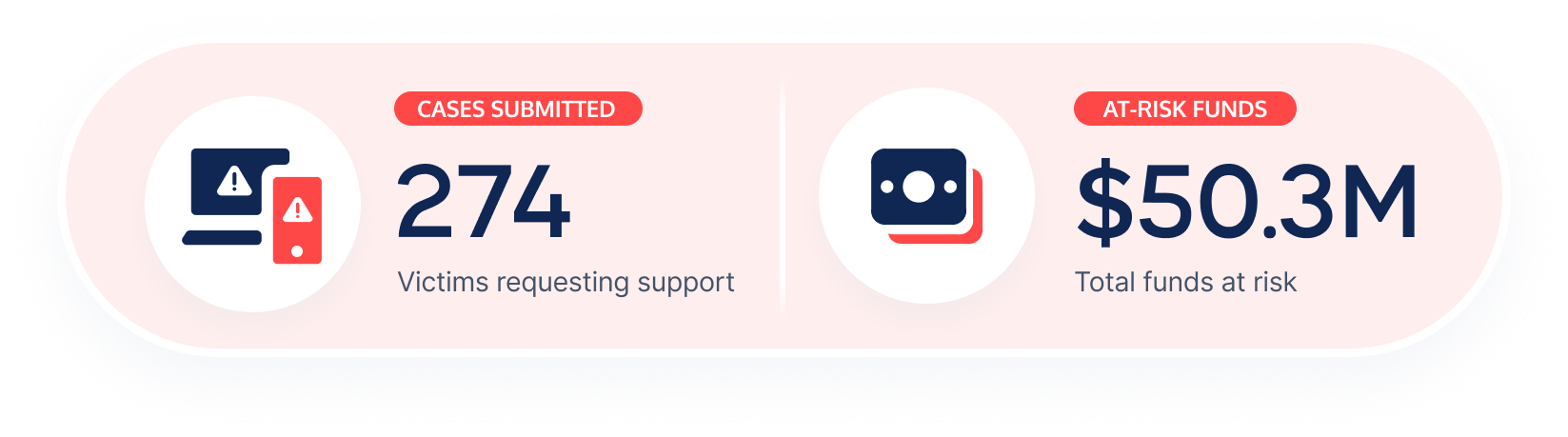
Here's a breakdown of the key findings from the Q3 2026 FRS Report.
Mortgage payoff fraud carried more than half of Q3 losses
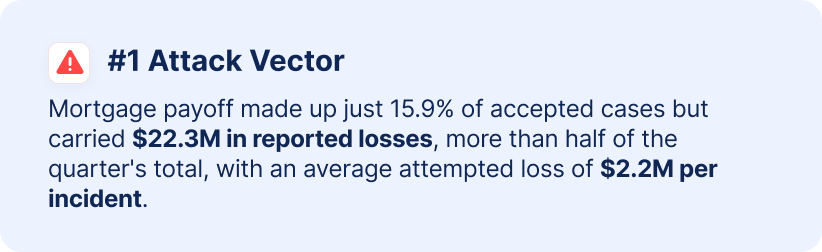
Mortgage payoff fraud made up 15.9% of accepted cases in Q3. It accounted for $22.3M in reported losses, more than half of the $41M reported across all accepted cases.
The average reported loss was $2.2M per case, more than three times any other fraud type this quarter.
Payoff fraud targets the funds sent to pay off the seller's existing mortgage. A fraudster impersonates the lender or servicer and sends a payoff statement with altered payment instructions. The payoff is often the largest single disbursement in the closing, and the request looks routine to the person processing it. That combination is why a small number of files produced the largest share of Q3 losses.
Account takeover nearly doubled
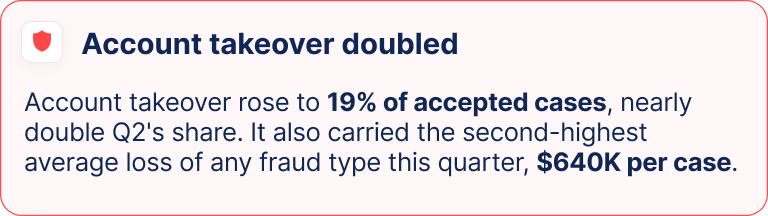
Account takeover rose to 19% of accepted cases in Q3, up from 10% in Q2. That's 12 cases and $7.7M in reported losses. At $640K per case, it carried the second-highest average loss of any fraud type this quarter.
The monthly count held at exactly four cases in July, August, and September. Three identical months suggest account takeover has settled in as a steady threat.
In an account takeover, a bad actor gains access to a real email or financial account belonging to someone in the closing and redirects funds. Because the messages come from a legitimate account, they can pass the checks designed to detect spoofed addresses.
Buyer cash to close is still the most common target
Buyer cash to close led all fraud types at 39.7% of accepted cases, up from 35% in Q2. It remains the fraud type that closing teams are most likely to encounter.
It was not the most expensive. Buyer cash to close cases carried $6.1M in reported losses, third behind mortgage payoff and account takeover. Volume and dollar losses pointed in different directions this quarter, and protecting the closing means watching both.
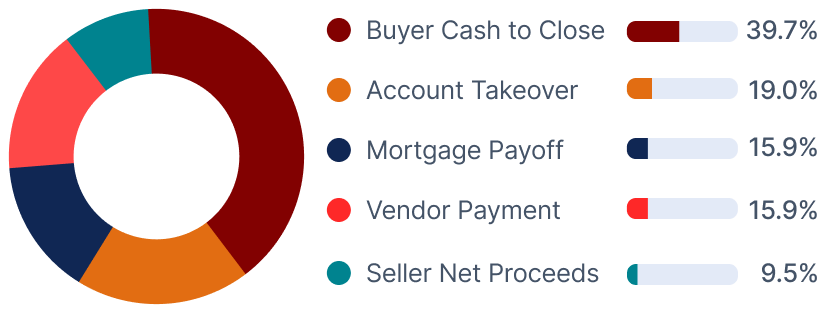
Seller net proceeds, Q2's fastest-growing fraud type, fell back to single digits in Q3. Vendor payment fraud held at 15.9% of accepted cases for the quarter, though September stood out. Vendor payment cases tripled that month, from two in August to six.
Submissions peaked in July, accepted cases in September
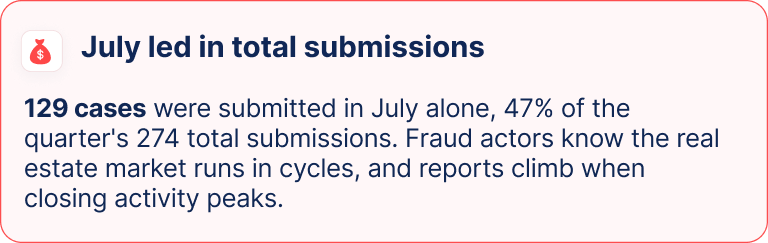
July alone brought in 129 submissions, 47% of the quarter's 274. Fraud actors know the real estate market runs in cycles, and reports climb when closing activity peaks.
Accepted cases followed a different curve. September led in accepted cases with 37% of the quarter’s total, just ahead of July at 35% and August at 28%. Submissions show how many people reached out for help. Accepted cases show where FRS took on active recovery work.
Fraud reached 30 states
Accepted cases came from 30 states in Q3, from Maine to Utah. Florida recorded the highest concentration of submissions, followed by Texas and Virginia. Georgia, Illinois, Massachusetts, and Nebraska also showed elevated activity.
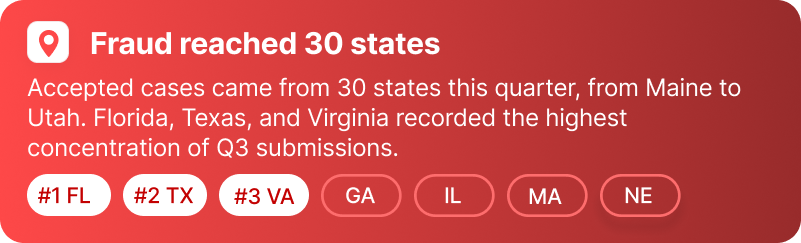
Virginia's move into the top three is the geographic shift to watch. A footprint this wide also means fraud risk isn't confined to any one regional market.
What this means for your closings
The Q3 data shows fraud growing in volume and in size at the same time.
Submissions rose 50%, and the average loss per accepted case more than tripled. The two most damaging fraud types this quarter, mortgage payoff and account takeover, are also the ones that look most like routine closing activity.
Every fraud type in the data targets the same moment, when funds are about to move. A payoff statement, a seller disbursement, a vendor invoice, and a buyer's wire all carry instructions that can be altered. Validating those instructions immediately before disbursement, and verifying payoff details directly with the lender, is the step that changes outcomes.
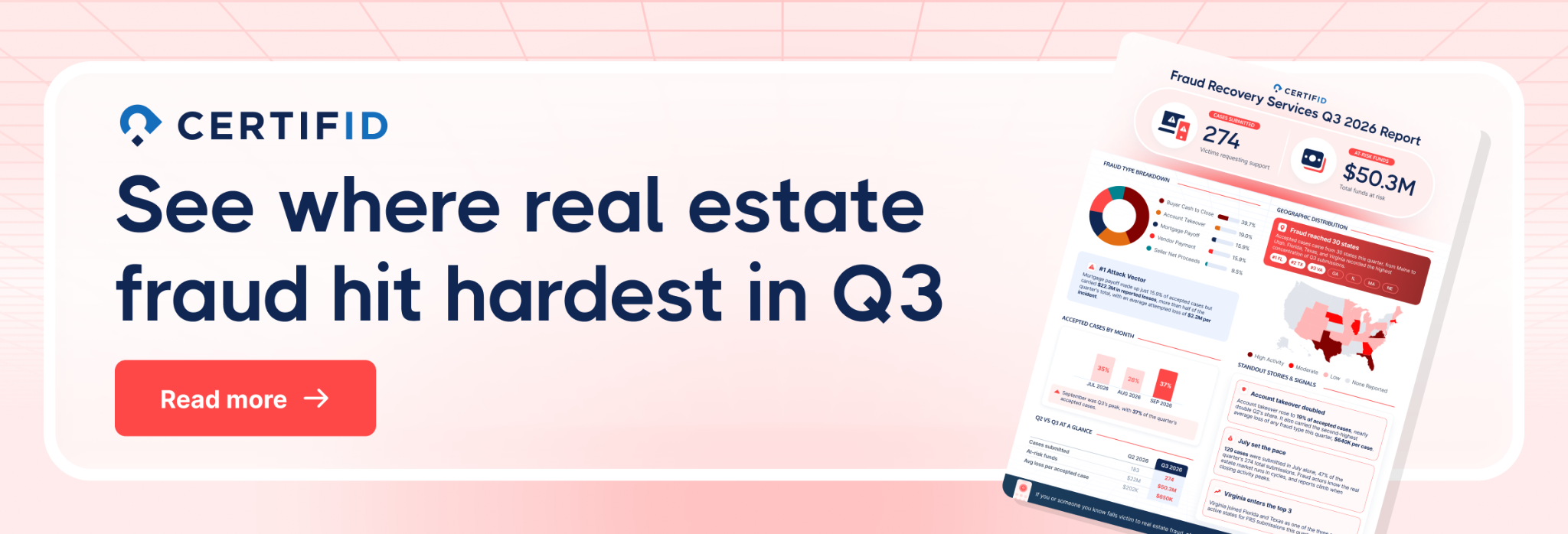
The infographic breaks down every fraud type, the full geographic distribution, and the monthly volume for Q3.
Fraud Recovery Services exists for the moments after fraud is detected, when the window to recover funds is measured in hours, not days. If you suspect funds from a closing were sent to a fraudster, contact the FRS hotline right away.
FAQ

Content Marketer

Michelle has spent her career in B2B SaaS startups leading content marketing, strategy, and social media efforts that help teams grow and audiences stay informed. At CertifID, she applies that expertise to help title and real estate professionals understand fraud risks and stay ahead of emerging threats.
In Q2, the biggest shift was in fraud type. Seller net proceeds fraud jumped from 4% to 14% of cases.
In Q3, the biggest shift was in dollars.
CertifID's Fraud Recovery Services (FRS) team tracked $50.3M in at-risk funds across 274 Q3 submissions. That's more than double Q2's $22M, on nearly 50% more submissions. The average reported loss per accepted case more than tripled, from $202K to $650K.
Here's a breakdown of the key findings from the Q3 2026 FRS Report.
Mortgage payoff fraud carried more than half of Q3 losses
Mortgage payoff fraud made up 15.9% of accepted cases in Q3. It accounted for $22.3M in reported losses, more than half of the $41M reported across all accepted cases.
The average reported loss was $2.2M per case, more than three times any other fraud type this quarter.
Payoff fraud targets the funds sent to pay off the seller's existing mortgage. A fraudster impersonates the lender or servicer and sends a payoff statement with altered payment instructions. The payoff is often the largest single disbursement in the closing, and the request looks routine to the person processing it. That combination is why a small number of files produced the largest share of Q3 losses.
Account takeover nearly doubled
Account takeover rose to 19% of accepted cases in Q3, up from 10% in Q2. That's 12 cases and $7.7M in reported losses. At $640K per case, it carried the second-highest average loss of any fraud type this quarter.
The monthly count held at exactly four cases in July, August, and September. Three identical months suggest account takeover has settled in as a steady threat.
In an account takeover, a bad actor gains access to a real email or financial account belonging to someone in the closing and redirects funds. Because the messages come from a legitimate account, they can pass the checks designed to detect spoofed addresses.
Buyer cash to close is still the most common target
Buyer cash to close led all fraud types at 39.7% of accepted cases, up from 35% in Q2. It remains the fraud type that closing teams are most likely to encounter.
It was not the most expensive. Buyer cash to close cases carried $6.1M in reported losses, third behind mortgage payoff and account takeover. Volume and dollar losses pointed in different directions this quarter, and protecting the closing means watching both.
Seller net proceeds, Q2's fastest-growing fraud type, fell back to single digits in Q3. Vendor payment fraud held at 15.9% of accepted cases for the quarter, though September stood out. Vendor payment cases tripled that month, from two in August to six.
Submissions peaked in July, accepted cases in September
July alone brought in 129 submissions, 47% of the quarter's 274. Fraud actors know the real estate market runs in cycles, and reports climb when closing activity peaks.
Accepted cases followed a different curve. September led in accepted cases with 37% of the quarter’s total, just ahead of July at 35% and August at 28%. Submissions show how many people reached out for help. Accepted cases show where FRS took on active recovery work.
Fraud reached 30 states
Accepted cases came from 30 states in Q3, from Maine to Utah. Florida recorded the highest concentration of submissions, followed by Texas and Virginia. Georgia, Illinois, Massachusetts, and Nebraska also showed elevated activity.
Virginia's move into the top three is the geographic shift to watch. A footprint this wide also means fraud risk isn't confined to any one regional market.
What this means for your closings
The Q3 data shows fraud growing in volume and in size at the same time.
Submissions rose 50%, and the average loss per accepted case more than tripled. The two most damaging fraud types this quarter, mortgage payoff and account takeover, are also the ones that look most like routine closing activity.
Every fraud type in the data targets the same moment, when funds are about to move. A payoff statement, a seller disbursement, a vendor invoice, and a buyer's wire all carry instructions that can be altered. Validating those instructions immediately before disbursement, and verifying payoff details directly with the lender, is the step that changes outcomes.
The infographic breaks down every fraud type, the full geographic distribution, and the monthly volume for Q3.
Fraud Recovery Services exists for the moments after fraud is detected, when the window to recover funds is measured in hours, not days. If you suspect funds from a closing were sent to a fraudster, contact the FRS hotline right away.
Content Marketer
Michelle has spent her career in B2B SaaS startups leading content marketing, strategy, and social media efforts that help teams grow and audiences stay informed. At CertifID, she applies that expertise to help title and real estate professionals understand fraud risks and stay ahead of emerging threats.
Sign up for The Wire to join the conversation.







Austin
3601 South Congress Ave.
Ste D200, Austin, Texas 78704

Grand Rapids
124 Fulton Street E
Grand Rapids, MI 49503

