


Why eSignatures via Docusign belong in your closing workflow
Send secure eSignatures via Docusign directly in CertifID with experience your team and clients already trust.
Share article:


Tyler George
4 minutes
eSigning
Feb 13, 2026
Apr 27, 2026
eSignatures solved the speed problem in real estate closings. But speed without security creates new risks, especially when wire verification happens in one platform and document execution in another.
That's why we built eSignatures via Docusign directly into CertifID. Now the same platform that protects your wire transfers also handles document execution. Wire instructions verified through CertifID can trigger Docusign signature requests automatically. Documents signed, funds verified, all within one secure workflow.
The result: your team works faster without trading security for convenience. No gaps between verification and execution. Just streamlined closings with CertifID's fraud protection extended to your entire document workflow.
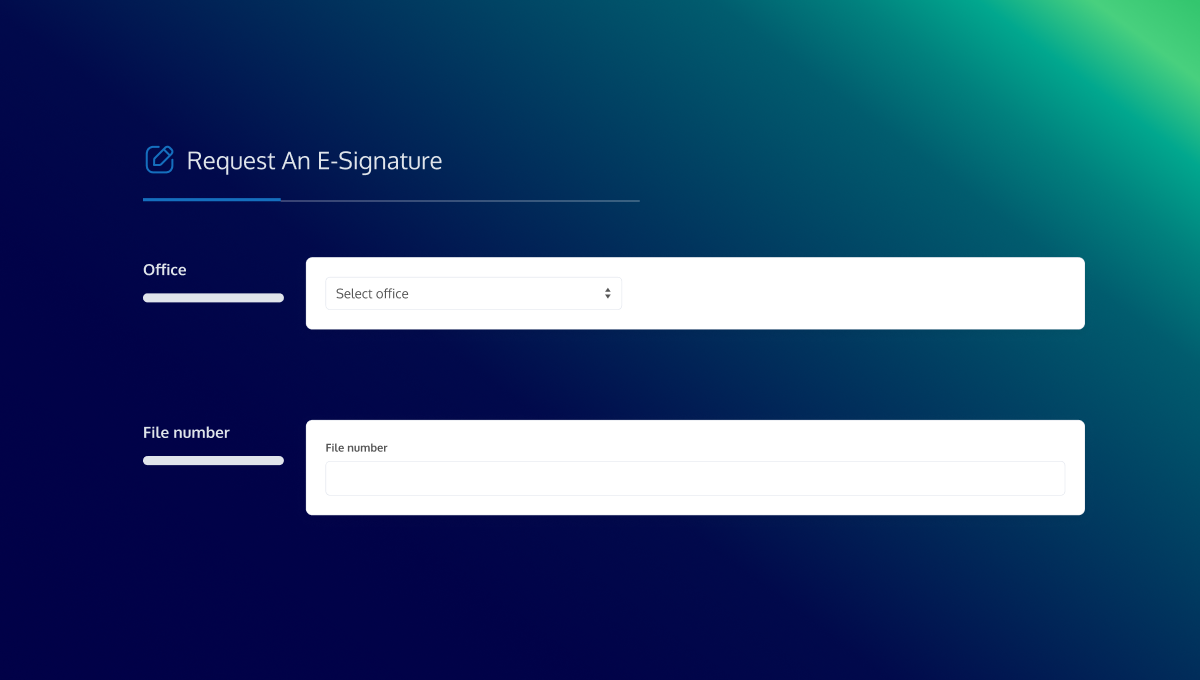
What is an electronic signature in real estate?
An electronic signature in real estate is a legally binding digital mark that replaces a handwritten signature on closing documents, disclosures, authorizations, and agreements.
Under the federal ESIGN Act (2000) and the Uniform Electronic Transactions Act (UETA), an eSignature carries the same legal weight as a wet-ink signature for most real estate transactions, as long as the signer demonstrates intent to sign and consent to do business electronically.
For title companies and law firms, eSignatures typically show up in three places:
- Buyer and seller documents: disclosures, buyer info sheets, closing statements, and authorizations
- Wire and payoff verification: signed acknowledgments confirming wire instructions before funds move
- Attorney and notary-facing documents: powers of attorney, affidavits, and certifications (with remote online notarization, or RON, where permitted by state law)
Not every document is eligible. Wills, trusts, and certain court-ordered documents are excluded under UETA in most states, and some jurisdictions still require wet signatures on the deed itself.
But for the overwhelming majority of closing paperwork, electronic signatures are not only legal — they've become the expected standard.
Why electronic signatures matter for title companies and law firms
Wire fraud losses in real estate hit record levels in 2025, with the median mortgage payoff fraud case reaching $389,125 according to CertifID's 2026 State of Wire Fraud Report.
Most of those attacks start with a spoofed email, a fraudulent document, or a signature collected through a channel that never verified who was actually signing.
That's why the signature matters as much as the wire.
If your wire verification is locked down but your documents are floating around in email attachments, you've left the front door open.
A fraudster who can impersonate a seller long enough to sign a disbursement authorization can redirect proceeds without ever needing to compromise your wire platform. The signature is the moment of consent — and if that moment isn't protected, everything downstream is at risk.
Electronic signatures purpose-built for real estate give you three things email-based or standalone eSignature tools can't:
- Identity verification before the signature — device profiling, one-time passcodes, and KYC checks that confirm the person signing is who they say they are
- A single audit trail across the closing — wire verification, document signing, and payoff confirmation all tied to the same file
- Compliance-grade record retention — tamper-evident logs that hold up in underwriter reviews, state audits, and litigation
For firms processing 100+ closings monthly, the operational case is just as strong. Every minute your team spends chasing signatures across three platforms is a minute not spent on revenue-generating work.
The hidden cost of e-signature vendor sprawl
Most title companies and law firms are using five to seven different platforms just to get one closing across the finish line. Each one comes with its own contract, pricing model, support team, and learning curve. Over time, that creates real friction for your team and a lot of unnecessary complexity behind the scenes.
It also creates risk. While wire transfers are usually well protected, signatures often aren’t. Documents get sent over email or through systems that don’t offer the same level of identity verification. With fraud getting more sophisticated, those gaps are harder to ignore.
The cost adds up, too. With per-envelope fees typically ranging from $0.75 to $5+, a firm processing just 20 closings monthly with 15 signature requests per closing faces annual eSignature costs of $2,700 - $18,000 or more.
Electronic signature title company requirements: what to look for
Once you accept that the signature itself is a fraud vector, and that vendor sprawl is making the problem worse, the question becomes what to look for in a tool built to protect it.
Not every eSignature tool is built for the realities of a title or law firm workflow. Generic tools handle the signing event well, but they treat it in isolation — disconnected from wire verification, payoff confirmation, and the identity checks that matter most in a closing.
When you're evaluating an electronic signature tool for a title company or law firm, these are the non-negotiables:
- ESIGN and UETA compliance with documented audit trails for every signed document
- Identity verification options that match the risk level of the document (basic device checks for routine disclosures, full KYC for high-value authorizations)
- Integration with your title production software SoftPro, Resware, RamQuest, AIM+, and Settlor — so signatures flow back into the file without manual uploads
- Unlimited signature requests per file instead of per-envelope pricing that punishes high-volume firms
- Connection to wire verification so the same platform that confirms where funds go also captures who approved the transfer
- Mobile-friendly signing experience a growing share of buyers now complete closing documents on their phone
- White-labeled or co-branded portals so clients stay inside your brand experience from first document to final wire
- SOC 2 Type II certification as a baseline, not a feature
Compliance note: In attorney-only closing states like Georgia, North Carolina, and South Carolina, the platform must also support attorney-supervised workflows where the closing attorney (not the notary or the title agent ) controls signature routing and approval.
How electronic signatures fit into the closing workflow
A typical residential closing involves 15 to 25 signature requests across buyer, seller, lender, and attorney documents.
Without an integrated eSignature tool, that means at least three handoffs: wire instructions go through one platform, disclosures through another, and payoff authorizations through a third — often over email.
Here's what the integrated workflow looks like when signatures live inside the same platform as wire and identity verification:
- File opens: buyer and seller identity verified through device profiling and KYC
- Documents sent: buyer info sheet, disclosures, and authorizations routed for eSignature, tied to the verified identity from step 1
- Wire instructions shared: secured through the same platform, with the signed authorization already on file
- Payoff confirmed: signed disbursement authorization pulled directly into the payoff verification step
- File closed: one audit trail covering identity, signatures, wire instructions, and payoff confirmation
Instead of treating eSignatures as a separate product, signatures become the connective tissue between identity verification and wire protection.
A simpler approach through CertifID e-signature product
CertifID eSignatures bring the Docusign experience directly into the CertifID platform. It's fully integrated and designed to extend CertifID's fraud protection to the documents that matter most in your closing process.
You get the signing experience your clients already recognize and trust, with the added benefit of centralized tracking and stronger security. See what this means in practice:
1. Fewer vendors, less overhead
You can send unlimited signature requests within a file, all included in your existing per-file pricing. No per-envelope fees. No separate Docusign contract to manage. One platform, one vendor relationship, and one place to go for support.
Your finance team will thank you. One invoice instead of multiple vendor payments to reconcile.
2. Stronger security for every document
CertifID's identity verification capabilities now protect document signing just as rigorously as wire transfers. Depending on the sensitivity of your documents, you can choose:
- Basic security: Standard device profiling and one-time passcode verification
- Enhanced security: Multi-layered protection including device profiling, OTP, identity verification (Match), and KYC checks—all automatically triggered when needed
The best part is that identity verification features that typically cost Docusign users an extra $2.50 per attempt are included with CertifID at no additional cost.
3. A smoother workflow for your team
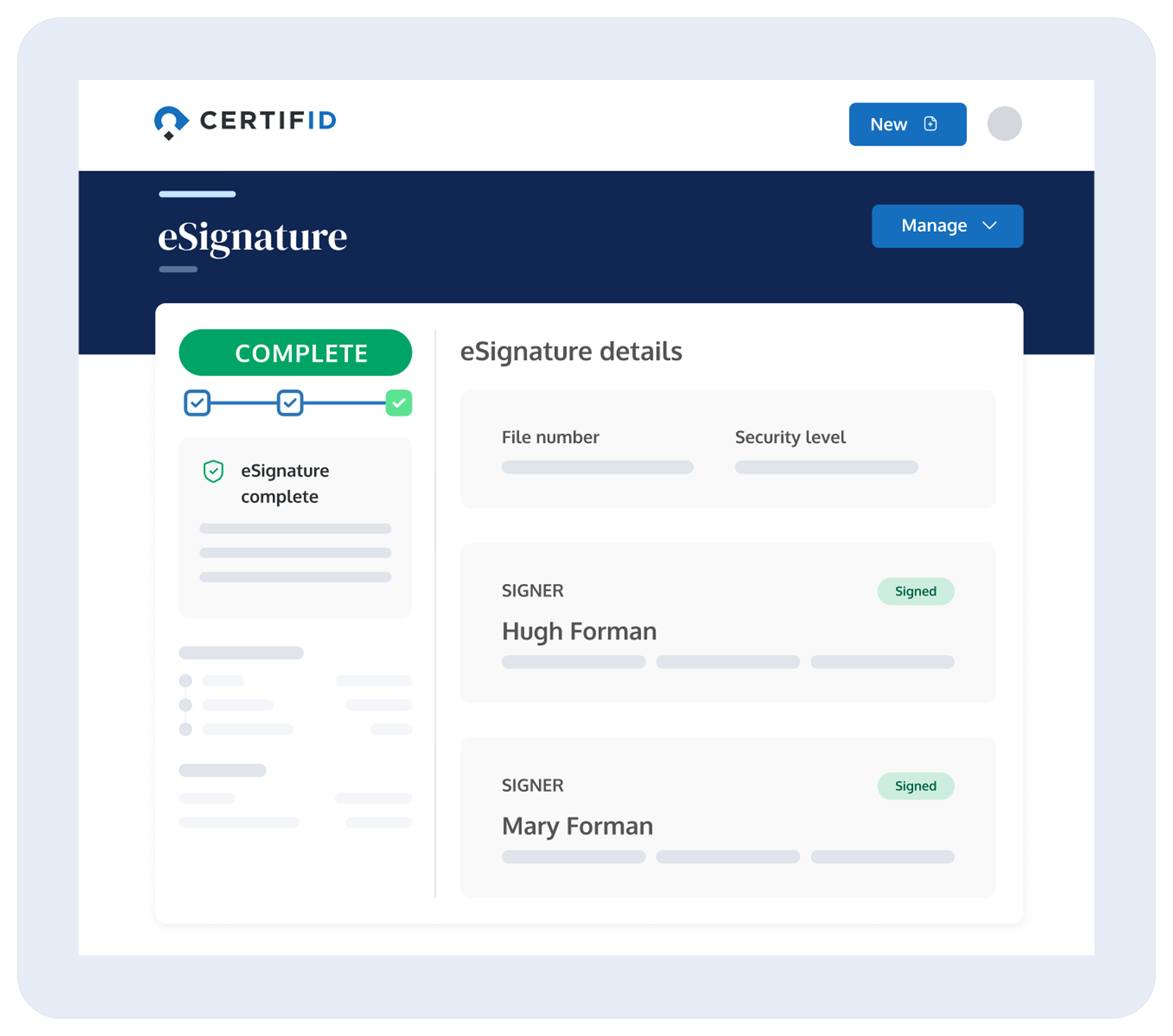
Everything lives in one dashboard. Your team can verify identities, send wire instructions, request signatures, and track progress without jumping between systems. Create templates to make it easy to standardize common documents like buyer info sheets, disclosures, and authorizations. Automatic reminders help keep things moving, and signed documents are stored securely with full audit trails.
The impact across your business
For your operations team: Eliminate 5-10 minutes of platform switching per closing. That's 3-5 hours monthly for a team processing 20 closings.
For your buyers and sellers: A professional experience you can count on. Clients can securely access wire instructions and sign documents in one branded space, avoiding the confusion of email attachments and different platforms. They can complete documents anytime and anywhere, thanks to the mobile-friendly design.
For your bottom line: Enterprise customers managing 300+ closings monthly with an average of 15 signature requests per closing are looking at 4,500+ annual envelopes. At typical Docusign rates, that's at least $3,000 annually, now included in your existing per-file pricing.
Getting started with CertifID e-signature product
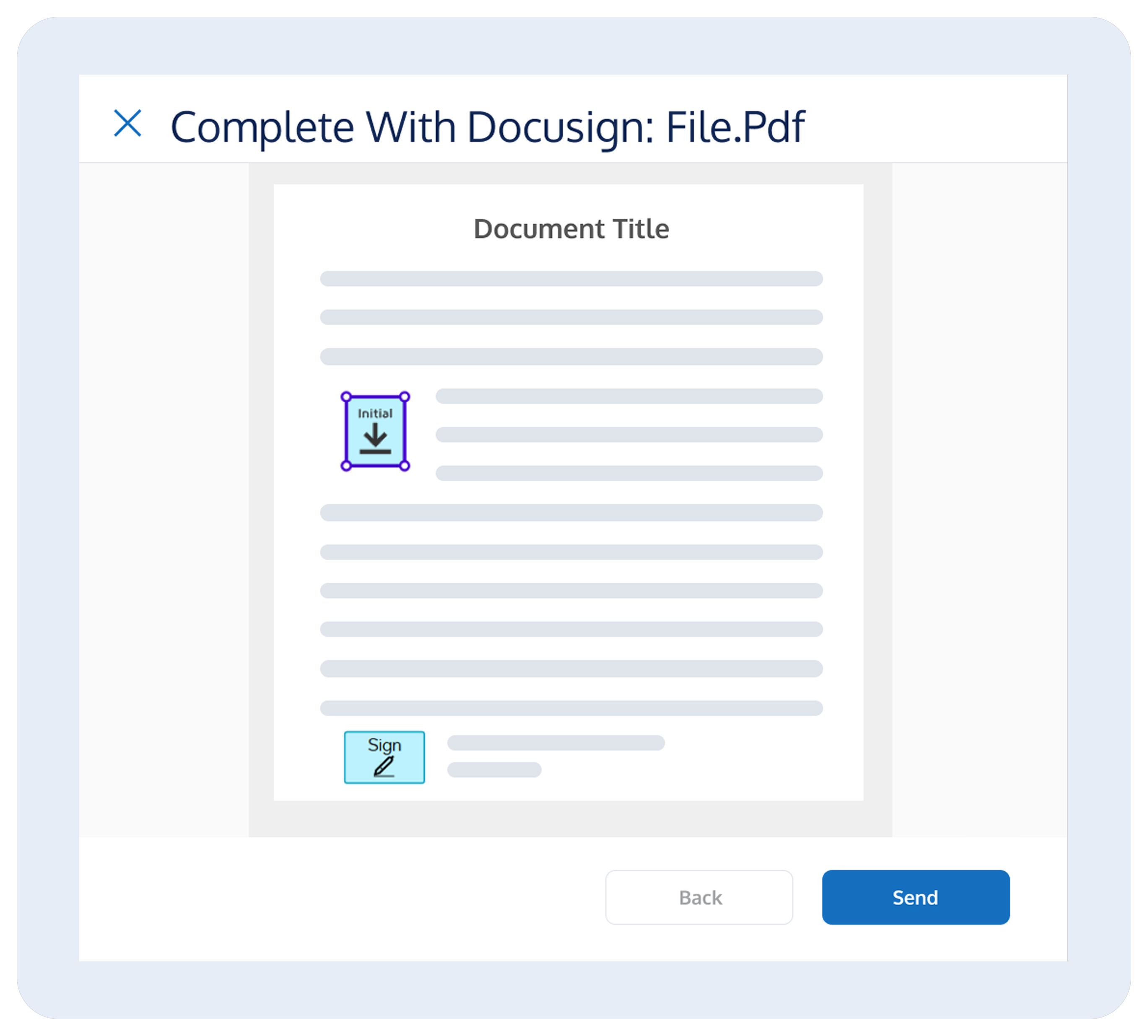
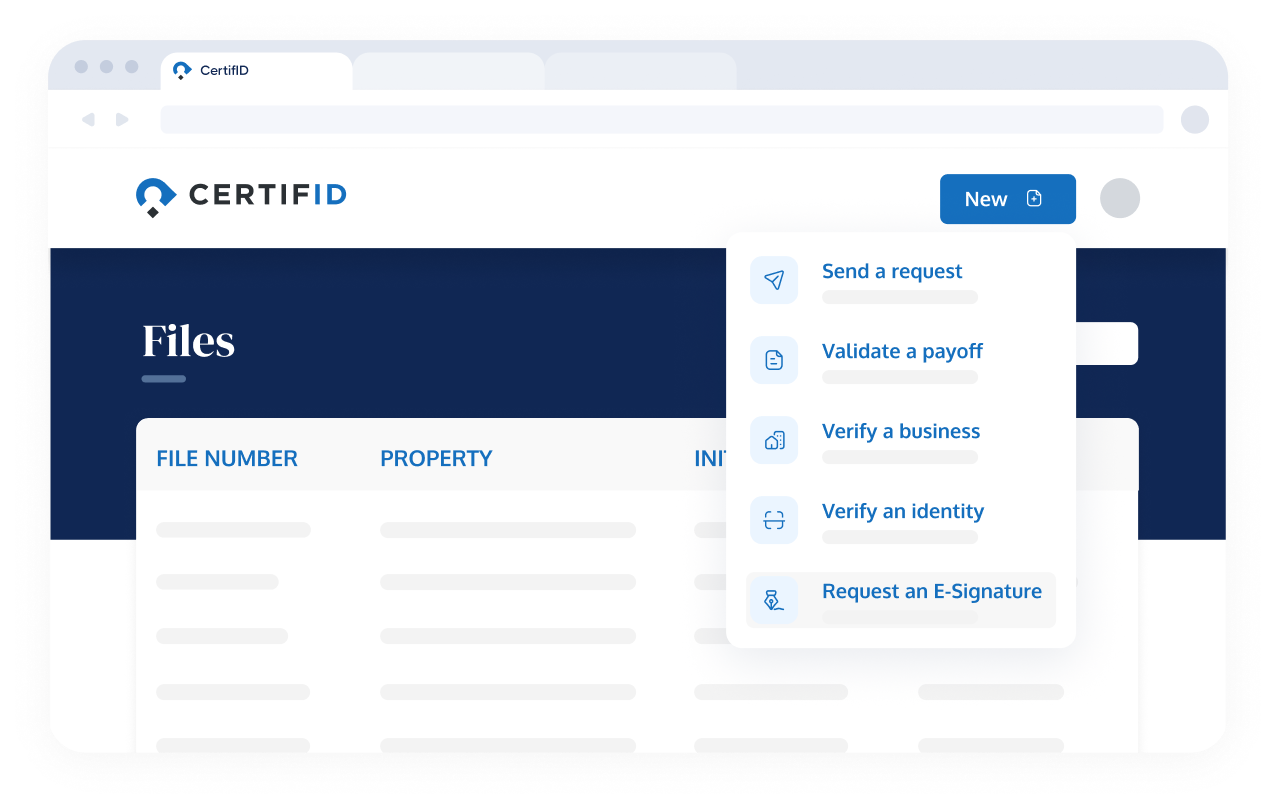
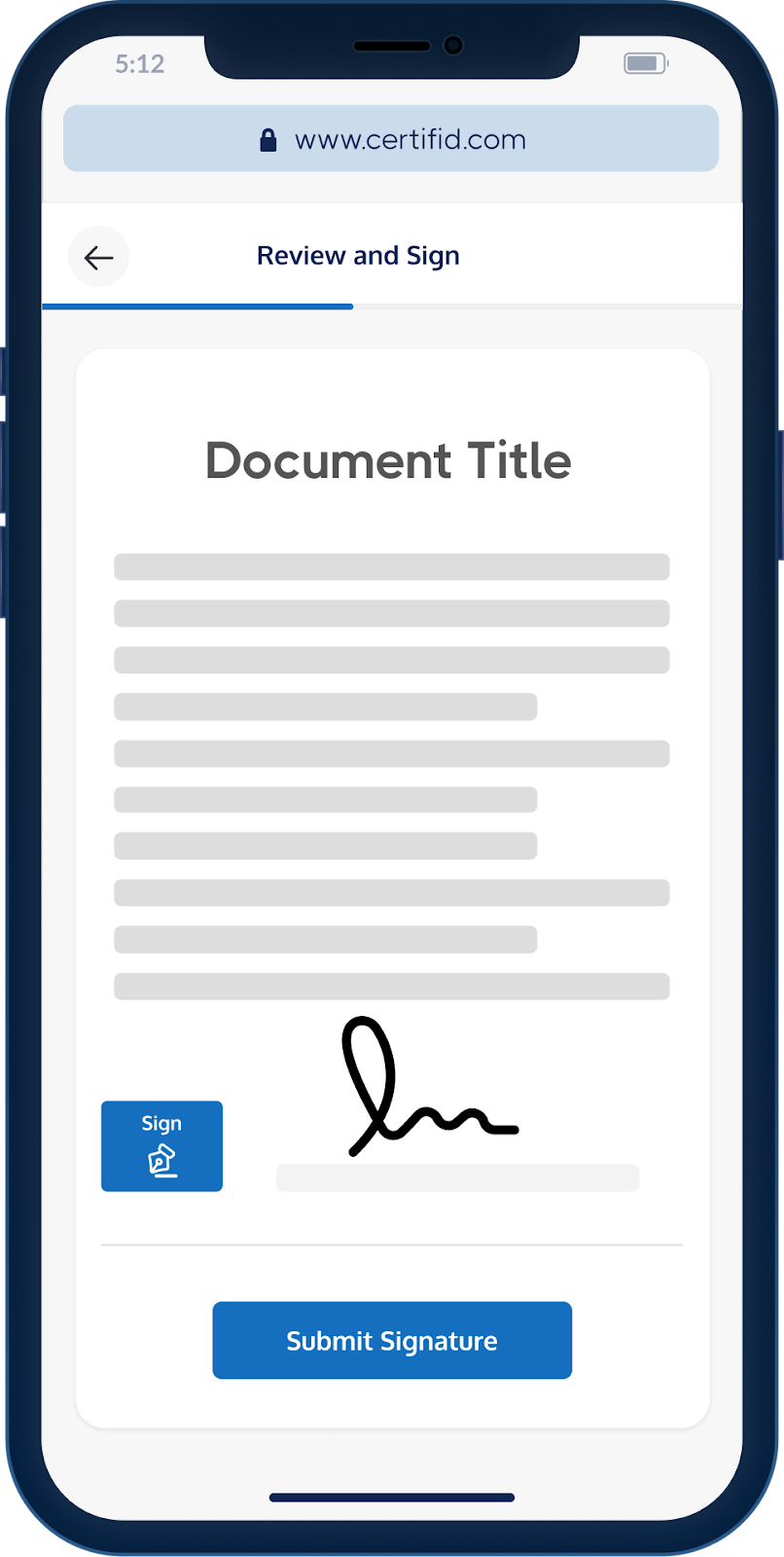
The solution is designed for immediate use with a minimal learning curve. Upload your documents, select your security level, add recipients, and send. The embedded Docusign interface means your clients will recognize and trust the signing experience, while you benefit from centralized tracking, complete audit trails, and secure document storage.
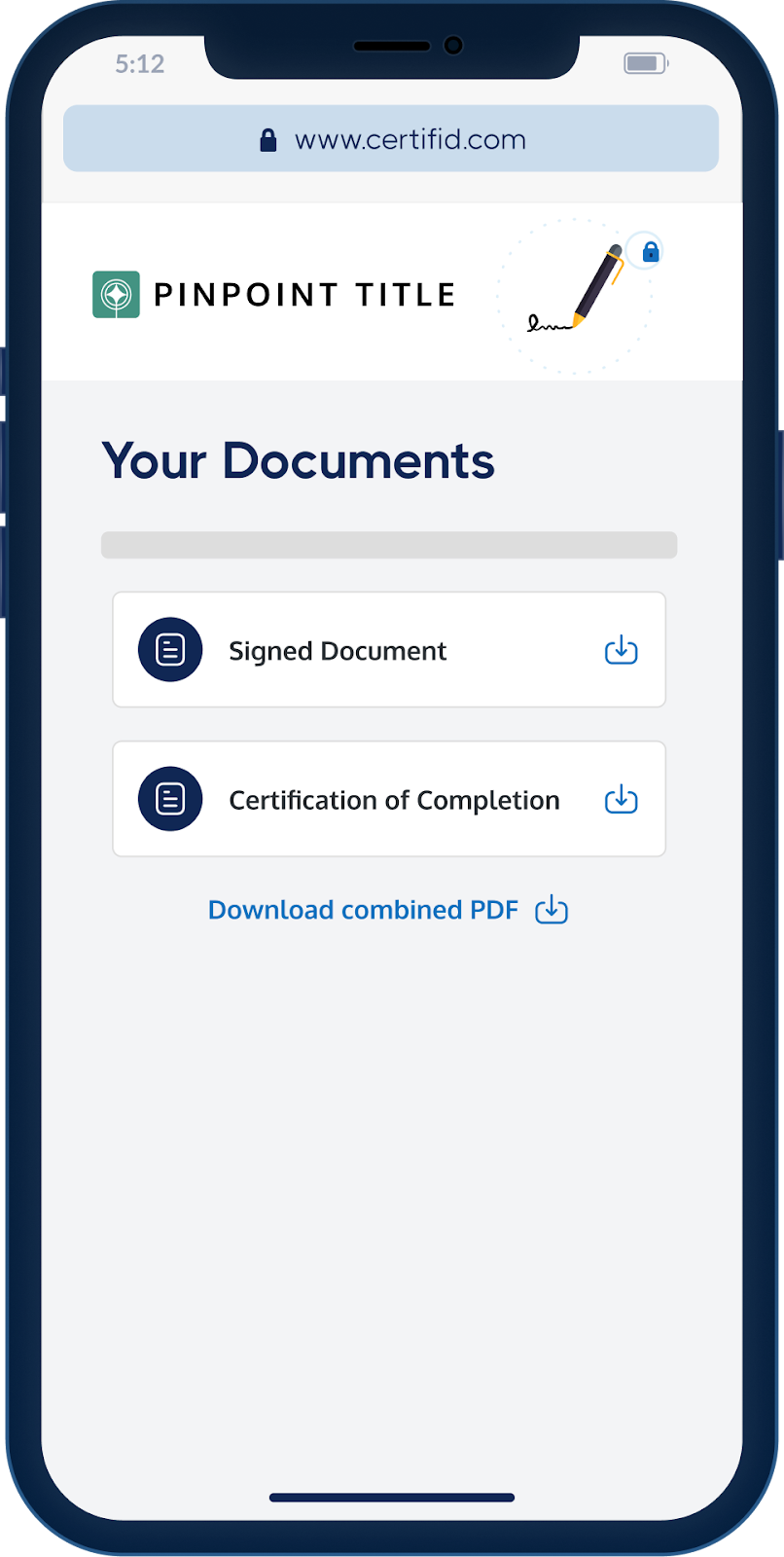
Templates can be created for common workflows, and automatic reminders ensure documents don't sit unsigned. When completed, you'll receive the signed documents, Docusign's Certificate of Completion, or a combined PDF packet, all stored securely within CertifID.
The bottom line: e-signature as a part of your secure closing platform
Bringing eSignatures via Docusign into CertifID closes an important gap in the closing process. Instead of toggling between platforms for wire verification and document execution, everything flows through a single interface.
Wire instructions verified through CertifID can trigger Docusign signature requests automatically. When documents are signed, that completion status feeds back into your workflow without manual updates. You're eliminating the platform switching that creates both security vulnerabilities and wasted time.
For escrow teams juggling multiple logins and tracking document status across systems, this consolidation matters. You're not adding another tool to manage. You're removing steps from your daily workflow while maintaining CertifID's fraud prevention and Docusign's reliable document execution.
Ready to simplify your tech stack and strengthen your security posture? Contact your CertifID representative to see how eSignatures via Docusign can transform your closing workflow.

FAQ
Do I need a separate Docusign account or login?

Not at all. You'll access everything through your existing CertifID login. We've provisioned a dedicated Docusign account for you behind the scenes, so you get the full Docusign signing experience without managing another login or subscription. This account is completely independent from any personal or company Docusign accounts you might already have.
Can I send signature requests to multiple people at once?
Yes. You can add multiple signers to a single document and control the signing order (sequential or all at once). You can also designate certain people as recipients-only if they need visibility but don't need to sign.
What file types can I send for signature?
Most common formats are supported, including PDF, Word, Excel, PowerPoint, PNG, JPEG, and more. Other common file types will be automatically converted into PDF while maintaining the original formatting.

Associate Product Manager

Tyler has worked for a number of SaaS start-ups, in roles ranging from support to customer success and advocacy. He believes advocating for customers includes solving problems, making sure their voices are heard, and providing them with the resources to help themselves.
eSignatures solved the speed problem in real estate closings. But speed without security creates new risks, especially when wire verification happens in one platform and document execution in another.
That's why we built eSignatures via Docusign directly into CertifID. Now the same platform that protects your wire transfers also handles document execution. Wire instructions verified through CertifID can trigger Docusign signature requests automatically. Documents signed, funds verified, all within one secure workflow.
The result: your team works faster without trading security for convenience. No gaps between verification and execution. Just streamlined closings with CertifID's fraud protection extended to your entire document workflow.
What is an electronic signature in real estate?
An electronic signature in real estate is a legally binding digital mark that replaces a handwritten signature on closing documents, disclosures, authorizations, and agreements.
Under the federal ESIGN Act (2000) and the Uniform Electronic Transactions Act (UETA), an eSignature carries the same legal weight as a wet-ink signature for most real estate transactions, as long as the signer demonstrates intent to sign and consent to do business electronically.
For title companies and law firms, eSignatures typically show up in three places:
- Buyer and seller documents: disclosures, buyer info sheets, closing statements, and authorizations
- Wire and payoff verification: signed acknowledgments confirming wire instructions before funds move
- Attorney and notary-facing documents: powers of attorney, affidavits, and certifications (with remote online notarization, or RON, where permitted by state law)
Not every document is eligible. Wills, trusts, and certain court-ordered documents are excluded under UETA in most states, and some jurisdictions still require wet signatures on the deed itself.
But for the overwhelming majority of closing paperwork, electronic signatures are not only legal — they've become the expected standard.
Why electronic signatures matter for title companies and law firms
Wire fraud losses in real estate hit record levels in 2025, with the median mortgage payoff fraud case reaching $389,125 according to CertifID's 2026 State of Wire Fraud Report.
Most of those attacks start with a spoofed email, a fraudulent document, or a signature collected through a channel that never verified who was actually signing.
That's why the signature matters as much as the wire.
If your wire verification is locked down but your documents are floating around in email attachments, you've left the front door open.
A fraudster who can impersonate a seller long enough to sign a disbursement authorization can redirect proceeds without ever needing to compromise your wire platform. The signature is the moment of consent — and if that moment isn't protected, everything downstream is at risk.
Electronic signatures purpose-built for real estate give you three things email-based or standalone eSignature tools can't:
- Identity verification before the signature — device profiling, one-time passcodes, and KYC checks that confirm the person signing is who they say they are
- A single audit trail across the closing — wire verification, document signing, and payoff confirmation all tied to the same file
- Compliance-grade record retention — tamper-evident logs that hold up in underwriter reviews, state audits, and litigation
For firms processing 100+ closings monthly, the operational case is just as strong. Every minute your team spends chasing signatures across three platforms is a minute not spent on revenue-generating work.
The hidden cost of e-signature vendor sprawl
Most title companies and law firms are using five to seven different platforms just to get one closing across the finish line. Each one comes with its own contract, pricing model, support team, and learning curve. Over time, that creates real friction for your team and a lot of unnecessary complexity behind the scenes.
It also creates risk. While wire transfers are usually well protected, signatures often aren’t. Documents get sent over email or through systems that don’t offer the same level of identity verification. With fraud getting more sophisticated, those gaps are harder to ignore.
The cost adds up, too. With per-envelope fees typically ranging from $0.75 to $5+, a firm processing just 20 closings monthly with 15 signature requests per closing faces annual eSignature costs of $2,700 - $18,000 or more.
Electronic signature title company requirements: what to look for
Once you accept that the signature itself is a fraud vector, and that vendor sprawl is making the problem worse, the question becomes what to look for in a tool built to protect it.
Not every eSignature tool is built for the realities of a title or law firm workflow. Generic tools handle the signing event well, but they treat it in isolation — disconnected from wire verification, payoff confirmation, and the identity checks that matter most in a closing.
When you're evaluating an electronic signature tool for a title company or law firm, these are the non-negotiables:
- ESIGN and UETA compliance with documented audit trails for every signed document
- Identity verification options that match the risk level of the document (basic device checks for routine disclosures, full KYC for high-value authorizations)
- Integration with your title production software SoftPro, Resware, RamQuest, AIM+, and Settlor — so signatures flow back into the file without manual uploads
- Unlimited signature requests per file instead of per-envelope pricing that punishes high-volume firms
- Connection to wire verification so the same platform that confirms where funds go also captures who approved the transfer
- Mobile-friendly signing experience a growing share of buyers now complete closing documents on their phone
- White-labeled or co-branded portals so clients stay inside your brand experience from first document to final wire
- SOC 2 Type II certification as a baseline, not a feature
Compliance note: In attorney-only closing states like Georgia, North Carolina, and South Carolina, the platform must also support attorney-supervised workflows where the closing attorney (not the notary or the title agent ) controls signature routing and approval.
How electronic signatures fit into the closing workflow
A typical residential closing involves 15 to 25 signature requests across buyer, seller, lender, and attorney documents.
Without an integrated eSignature tool, that means at least three handoffs: wire instructions go through one platform, disclosures through another, and payoff authorizations through a third — often over email.
Here's what the integrated workflow looks like when signatures live inside the same platform as wire and identity verification:
- File opens: buyer and seller identity verified through device profiling and KYC
- Documents sent: buyer info sheet, disclosures, and authorizations routed for eSignature, tied to the verified identity from step 1
- Wire instructions shared: secured through the same platform, with the signed authorization already on file
- Payoff confirmed: signed disbursement authorization pulled directly into the payoff verification step
- File closed: one audit trail covering identity, signatures, wire instructions, and payoff confirmation
Instead of treating eSignatures as a separate product, signatures become the connective tissue between identity verification and wire protection.
A simpler approach through CertifID e-signature product
CertifID eSignatures bring the Docusign experience directly into the CertifID platform. It's fully integrated and designed to extend CertifID's fraud protection to the documents that matter most in your closing process.
You get the signing experience your clients already recognize and trust, with the added benefit of centralized tracking and stronger security. See what this means in practice:
1. Fewer vendors, less overhead
You can send unlimited signature requests within a file, all included in your existing per-file pricing. No per-envelope fees. No separate Docusign contract to manage. One platform, one vendor relationship, and one place to go for support.
Your finance team will thank you. One invoice instead of multiple vendor payments to reconcile.
2. Stronger security for every document
CertifID's identity verification capabilities now protect document signing just as rigorously as wire transfers. Depending on the sensitivity of your documents, you can choose:
- Basic security: Standard device profiling and one-time passcode verification
- Enhanced security: Multi-layered protection including device profiling, OTP, identity verification (Match), and KYC checks—all automatically triggered when needed
The best part is that identity verification features that typically cost Docusign users an extra $2.50 per attempt are included with CertifID at no additional cost.
3. A smoother workflow for your team
Everything lives in one dashboard. Your team can verify identities, send wire instructions, request signatures, and track progress without jumping between systems. Create templates to make it easy to standardize common documents like buyer info sheets, disclosures, and authorizations. Automatic reminders help keep things moving, and signed documents are stored securely with full audit trails.
The impact across your business
For your operations team: Eliminate 5-10 minutes of platform switching per closing. That's 3-5 hours monthly for a team processing 20 closings.
For your buyers and sellers: A professional experience you can count on. Clients can securely access wire instructions and sign documents in one branded space, avoiding the confusion of email attachments and different platforms. They can complete documents anytime and anywhere, thanks to the mobile-friendly design.
For your bottom line: Enterprise customers managing 300+ closings monthly with an average of 15 signature requests per closing are looking at 4,500+ annual envelopes. At typical Docusign rates, that's at least $3,000 annually, now included in your existing per-file pricing.
Getting started with CertifID e-signature product
The solution is designed for immediate use with a minimal learning curve. Upload your documents, select your security level, add recipients, and send. The embedded Docusign interface means your clients will recognize and trust the signing experience, while you benefit from centralized tracking, complete audit trails, and secure document storage.
Templates can be created for common workflows, and automatic reminders ensure documents don't sit unsigned. When completed, you'll receive the signed documents, Docusign's Certificate of Completion, or a combined PDF packet, all stored securely within CertifID.
The bottom line: e-signature as a part of your secure closing platform
Bringing eSignatures via Docusign into CertifID closes an important gap in the closing process. Instead of toggling between platforms for wire verification and document execution, everything flows through a single interface.
Wire instructions verified through CertifID can trigger Docusign signature requests automatically. When documents are signed, that completion status feeds back into your workflow without manual updates. You're eliminating the platform switching that creates both security vulnerabilities and wasted time.
For escrow teams juggling multiple logins and tracking document status across systems, this consolidation matters. You're not adding another tool to manage. You're removing steps from your daily workflow while maintaining CertifID's fraud prevention and Docusign's reliable document execution.
Ready to simplify your tech stack and strengthen your security posture? Contact your CertifID representative to see how eSignatures via Docusign can transform your closing workflow.
Associate Product Manager
Tyler has worked for a number of SaaS start-ups, in roles ranging from support to customer success and advocacy. He believes advocating for customers includes solving problems, making sure their voices are heard, and providing them with the resources to help themselves.
Sign up for The Wire to join the conversation.


.png)


Austin
3601 South Congress Ave.
Ste D200, Austin, Texas 78704

Grand Rapids
124 Fulton Street E
Grand Rapids, MI 49503

