


How title companies can stop escrow fraud before it starts
The scams are patient. The defense has to be, too.
Share article:


Michelle Artreche
4 minutes
Fraud Prevention
Aug 21, 2026
Aug 21, 2026
Closing day is the moment fraudsters wait for. Funds are moving, deadlines are real, and everyone in the file, buyer, seller, agent, lender, is focused on getting to the finish line. That combination of urgency and money in motion is exactly what payment fraud schemes are built to exploit.
Most title companies already know fraud is a risk. Fewer have looked closely at how it happens in practice, which is the part that determines whether a team catches it in time.
The tactics behind escrow fraud
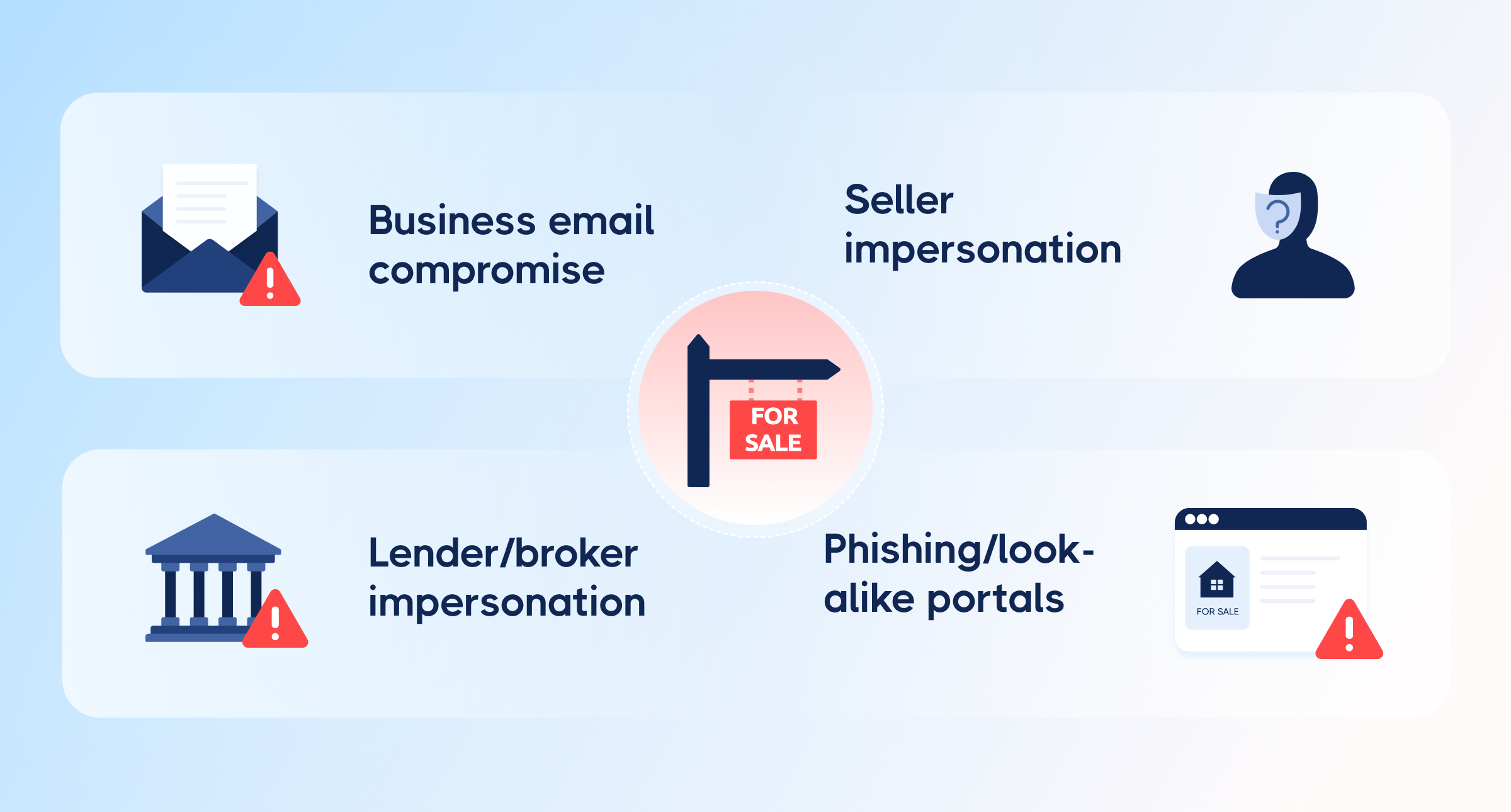
Business email compromise, often shortened to BEC, is the most common version. A fraudster gains access to an email account somewhere in the transaction chain, often through a phishing link, then watches the conversation until the right moment to send fraudulent wiring instructions from what looks like a legitimate address.
Seller impersonation works differently, but ends the same way. It shows up most often on vacant land or non-owner-occupied properties, where a fraudster poses as the seller using a forged ID, lists the property, and diverts the closing proceeds once the sale goes through.
Lender and broker impersonation targets the other side of the file. Someone poses as a lender or broker and sends a false payoff statement or a last-minute change to disbursement instructions, counting on the request looking routine enough that no one double-checks it.
Underneath all three is usually a phishing attempt or a look-alike portal, a fake title company login page built to harvest credentials or redirect a payment before anyone notices the site isn't real.
The red flags most teams miss
None of these tactics requires breaking into a system. They rely on someone not noticing a detail under time pressure.
A sudden change to wiring instructions, especially one paired with pressure to act immediately, is the single most common warning sign. So is a sender's email address that's almost right, a writing style that doesn't match previous messages, or a request for sensitive information sent over text or email instead of a secure channel.
The pattern worth training a team to notice isn't any one of these signs alone. It's when a request arrives that can't be verbally confirmed with someone the team already knows and trusts.
What prevention looks like in practice
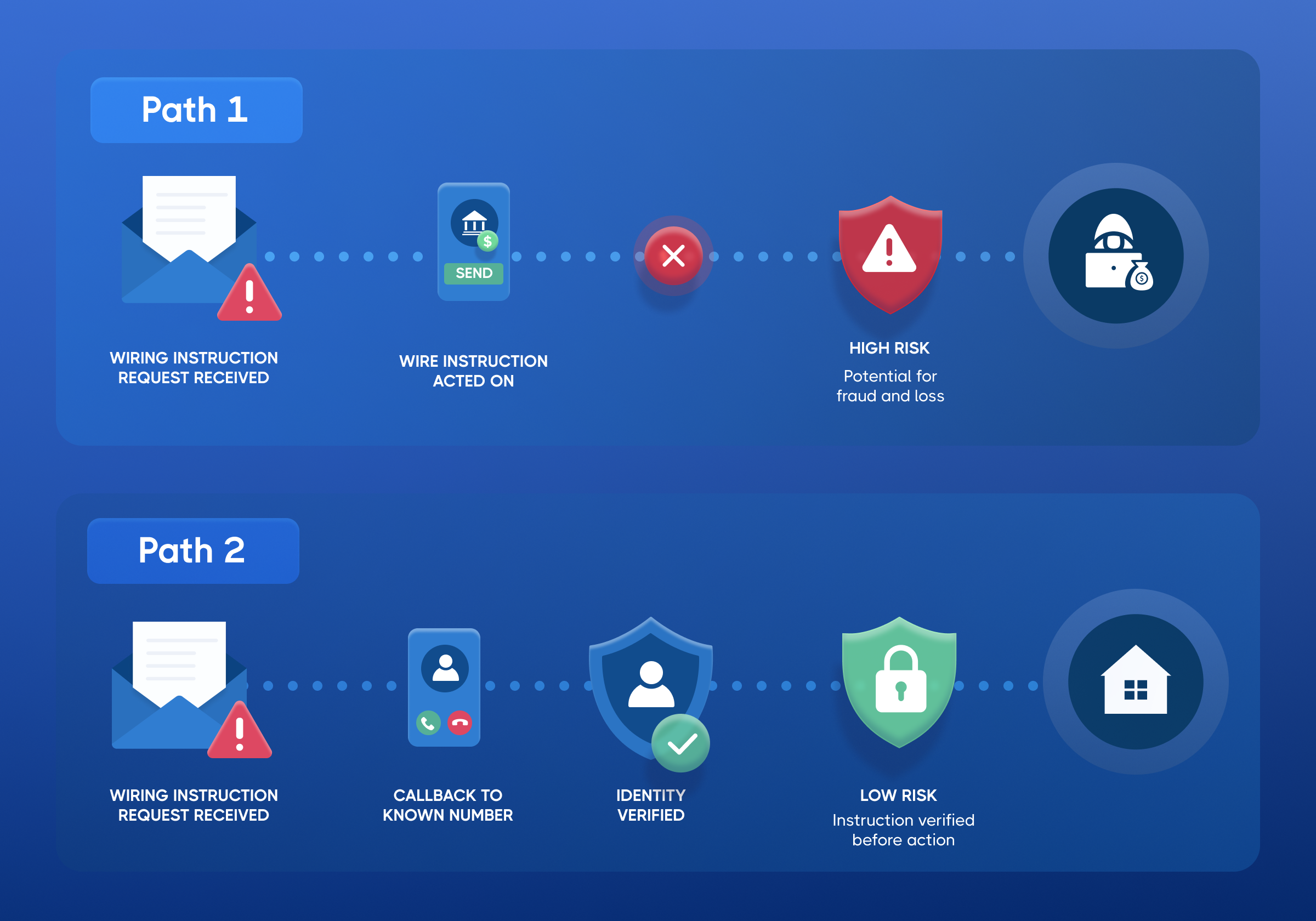
The most effective habit in escrow fraud prevention is also the simplest: independently verify wiring instructions by calling a phone number the team already has on file, never one provided in the message itself. That single habit closes off the majority of BEC and payoff redirection attempts, because it removes the fraudster's only advantage, which is controlling the channel the request arrives through.
Secure client portals extend that same principle to buyers and sellers. When wiring instructions are exchanged through an encrypted portal instead of email, there's no inbox for a fraudster to compromise in the first place.
Multi-factor authentication on internal email and closing systems closes a second entry point, and ongoing staff training keeps the red flags fresh instead of something covered once during onboarding.
Client education matters just as much as internal process. Telling buyers and sellers on day one that wiring instructions will never change at the last minute, and that any change should be treated as suspicious by default, turns clients into an additional line of defense instead of the easiest target in the file.
Why built-in verification matters more than training alone
Training reduces risk. It doesn't eliminate it, because it depends on a person catching something in the middle of a busy day. That's the argument for verification and insurance being part of the platform a closing runs on, not a separate habit someone has to remember.
CertifID validates identity and wiring instructions at the moment a file opens and again before funds move, and backs every verified wire with up to $5 million in insurance.
In 2025, CertifID protected 1.46 million real estate closings this way. When something does slip through despite all of that, Fraud Recovery Services has recovered $140+ million for victims, because how fast a team responds after a misdirected wire determines whether the funds can be recovered at all.
Internal protocols worth documenting before you need them
Every title company should have a written protocol that requires verbal verification for any change to disbursement details, no exceptions. It should include an escalation process for when a fraud attempt is suspected, and an incident response plan that spells out who calls the bank and the FBI, and how fast, if a wire has already gone out.
None of this needs to be complicated. It needs to exist before the day it's tested, because that's not a day anyone gets to plan for in advance. The protocol handles what happens after something goes wrong. Everything above it is about making that day less likely to come at all.

FAQ
What is escrow fraud?

Escrow fraud describes any scheme that targets the movement of funds during a real estate closing, most often through fraudulent wiring instructions. It shows up in a few recurring forms, including business email compromise, seller impersonation, and lender or broker impersonation, all built around the urgency of closing day.
What is business email compromise (BEC) in a real estate closing?
Business email compromise happens when a fraudster gains access to an email account somewhere in the transaction chain, often through a phishing link, then sends fraudulent wiring instructions from what looks like a legitimate address at the moment funds are about to move. It's the most common form of payment fraud in real estate closings today.
How can a title company verify wiring instructions safely?
The most reliable method is calling a phone number the team already has on file, never one provided in the message that raised a change, and verbally confirming the recipient name, account number, bank name, and amount. A secure, encrypted client portal reduces the risk further by removing email entirely from how instructions get exchanged.
What should a client do if wiring instructions change unexpectedly?
Treat any last-minute change to wiring instructions as suspicious by default, and call the title company using a known phone number before sending funds, not one included in the message that raised the change. A reputable title company will never change disbursement instructions at the last minute without a verifiable, verbal confirmation process behind it.
Does title insurance cover losses from payment fraud?
Standard title insurance protects against defects in a property's title, not against funds lost to a fraudulent wire. That's a separate category of protection entirely, which is why CertifID backs every verified wire with dedicated insurance, up to $5 million per file, rather than leaving a title policy to cover a payment fraud loss it was never built to handle.

Content Marketer

Michelle has spent her career in B2B SaaS startups leading content marketing, strategy, and social media efforts that help teams grow and audiences stay informed. At CertifID, she applies that expertise to help title and real estate professionals understand fraud risks and stay ahead of emerging threats.
Closing day is the moment fraudsters wait for. Funds are moving, deadlines are real, and everyone in the file, buyer, seller, agent, lender, is focused on getting to the finish line. That combination of urgency and money in motion is exactly what payment fraud schemes are built to exploit.
Most title companies already know fraud is a risk. Fewer have looked closely at how it happens in practice, which is the part that determines whether a team catches it in time.
The tactics behind escrow fraud
Business email compromise, often shortened to BEC, is the most common version. A fraudster gains access to an email account somewhere in the transaction chain, often through a phishing link, then watches the conversation until the right moment to send fraudulent wiring instructions from what looks like a legitimate address.
Seller impersonation works differently, but ends the same way. It shows up most often on vacant land or non-owner-occupied properties, where a fraudster poses as the seller using a forged ID, lists the property, and diverts the closing proceeds once the sale goes through.
Lender and broker impersonation targets the other side of the file. Someone poses as a lender or broker and sends a false payoff statement or a last-minute change to disbursement instructions, counting on the request looking routine enough that no one double-checks it.
Underneath all three is usually a phishing attempt or a look-alike portal, a fake title company login page built to harvest credentials or redirect a payment before anyone notices the site isn't real.
The red flags most teams miss
None of these tactics requires breaking into a system. They rely on someone not noticing a detail under time pressure.
A sudden change to wiring instructions, especially one paired with pressure to act immediately, is the single most common warning sign. So is a sender's email address that's almost right, a writing style that doesn't match previous messages, or a request for sensitive information sent over text or email instead of a secure channel.
The pattern worth training a team to notice isn't any one of these signs alone. It's when a request arrives that can't be verbally confirmed with someone the team already knows and trusts.
What prevention looks like in practice
The most effective habit in escrow fraud prevention is also the simplest: independently verify wiring instructions by calling a phone number the team already has on file, never one provided in the message itself. That single habit closes off the majority of BEC and payoff redirection attempts, because it removes the fraudster's only advantage, which is controlling the channel the request arrives through.
Secure client portals extend that same principle to buyers and sellers. When wiring instructions are exchanged through an encrypted portal instead of email, there's no inbox for a fraudster to compromise in the first place.
Multi-factor authentication on internal email and closing systems closes a second entry point, and ongoing staff training keeps the red flags fresh instead of something covered once during onboarding.
Client education matters just as much as internal process. Telling buyers and sellers on day one that wiring instructions will never change at the last minute, and that any change should be treated as suspicious by default, turns clients into an additional line of defense instead of the easiest target in the file.
Why built-in verification matters more than training alone
Training reduces risk. It doesn't eliminate it, because it depends on a person catching something in the middle of a busy day. That's the argument for verification and insurance being part of the platform a closing runs on, not a separate habit someone has to remember.
CertifID validates identity and wiring instructions at the moment a file opens and again before funds move, and backs every verified wire with up to $5 million in insurance.
In 2025, CertifID protected 1.46 million real estate closings this way. When something does slip through despite all of that, Fraud Recovery Services has recovered $140+ million for victims, because how fast a team responds after a misdirected wire determines whether the funds can be recovered at all.
Internal protocols worth documenting before you need them
Every title company should have a written protocol that requires verbal verification for any change to disbursement details, no exceptions. It should include an escalation process for when a fraud attempt is suspected, and an incident response plan that spells out who calls the bank and the FBI, and how fast, if a wire has already gone out.
None of this needs to be complicated. It needs to exist before the day it's tested, because that's not a day anyone gets to plan for in advance. The protocol handles what happens after something goes wrong. Everything above it is about making that day less likely to come at all.
Content Marketer
Michelle has spent her career in B2B SaaS startups leading content marketing, strategy, and social media efforts that help teams grow and audiences stay informed. At CertifID, she applies that expertise to help title and real estate professionals understand fraud risks and stay ahead of emerging threats.
Sign up for The Wire to join the conversation.






Austin
3601 South Congress Ave.
Ste D200, Austin, Texas 78704

Grand Rapids
124 Fulton Street E
Grand Rapids, MI 49503

