


Live Wire 2025: What real estate leaders need to know about scaling security
A look at the biggest takeaways from Live Wire 2025 and what real estate teams can do now to stay ahead of fast-moving fraud.
Share article:


Michelle Artreche
9 minutes
Live Wire
Dec 5, 2025
Dec 9, 2025
The conversations at Live Wire this year made one thing clear: fraud has industrialized, and security has to keep pace.
Live Wire, our annual cybersecurity and fraud prevention conference, landed at a time when losses are skyrocketing and AI-driven impersonation schemes are evolving by the week. Sponsored by Stewart Title, the event brought leaders together to zero in on what matters most: tighter collaboration, smarter processes, and stronger protection for every transaction.
Here are the themes and takeaways shaping the year ahead.
Fraud is getting smarter and so are we
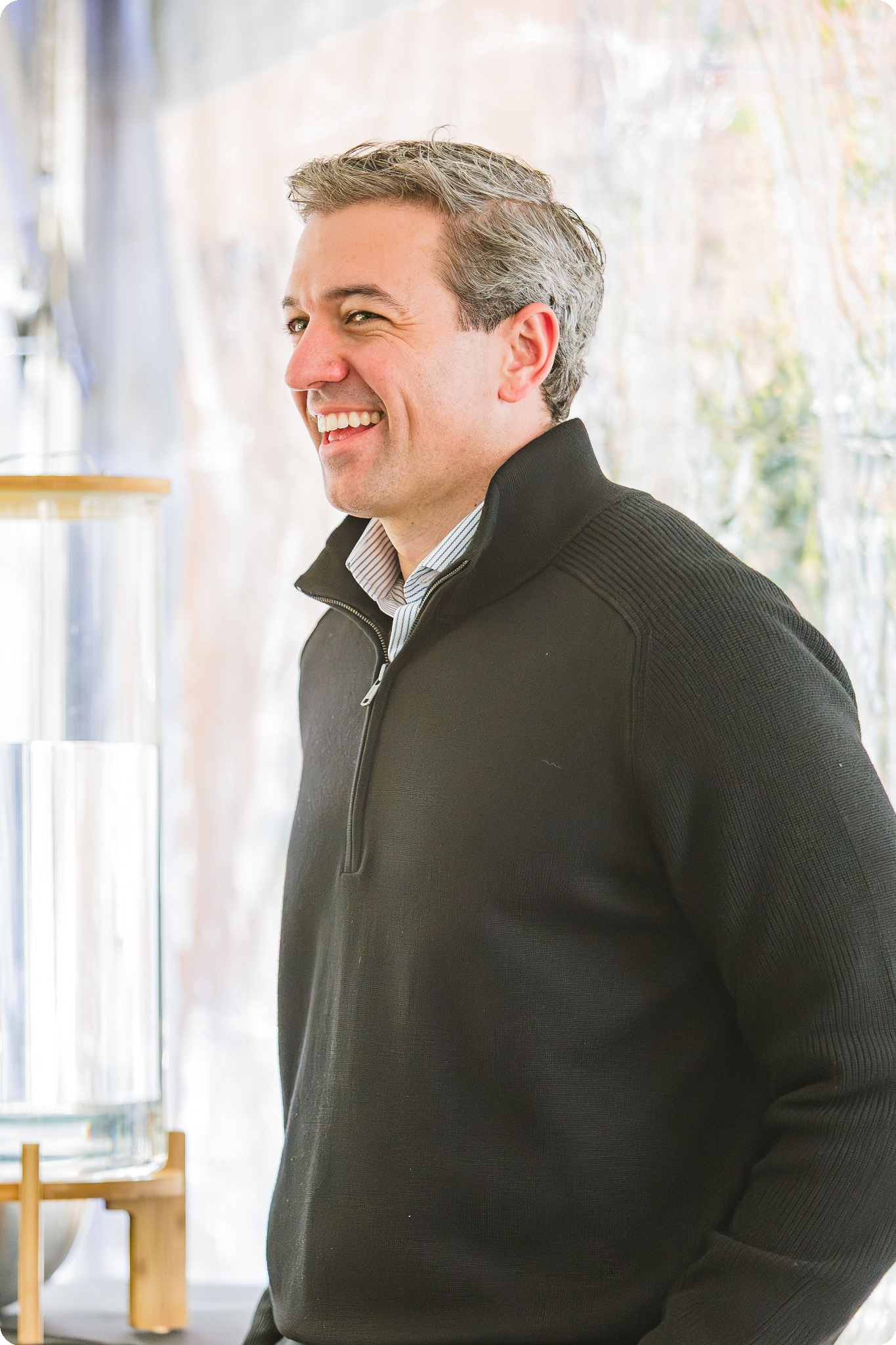
CertifID’s CEO and Co-founder, Tyler Adams, set the tone early. Fraud is no longer an occasional disruption. It has turned into a global business. It is now organized, automated, and highly efficient. Criminal groups operate with the same sophistication as legitimate companies. They use automation and AI to scale operations and test out new attack methods.
Tyler pointed out the trends that the industry has seen over the past two years. Reports of fraud are increasing. Financial losses are rising. Attacks are becoming harder to spot with traditional methods.
Even as attacks increase, CertifID customers continue to demonstrate that prevention works. Hundreds of millions of dollars have been recovered for victims. Even more, attempted fraud has been stopped before it ever reached the closing table. More than a million transactions have been verified, protected, and kept on track.
Tyler emphasized that scaling security is really about scaling trust. Business only moves as fast as people feel safe moving. And in a world where you can no longer trust every email, every document, or even every voice on the phone, organizations need stronger systems in place to protect the relationships that drive their business.
He encouraged the industry to approach scaling security through three simple but powerful actions:
First, listen for what you can scale. Not every solution has to be large or complex. Often it begins with consistent habits, aligned workflow checkpoints, and protections that run quietly in the background.
Second, challenge assumptions. The processes that felt good enough five years ago may not hold up today. Attackers move quickly, and internal operations need to be able to withstand that momentum.
Finally, commit to one tangible improvement for 2026. Something that creates real change for your team and sends a signal that security is not a project. It is a posture.
That set the stage for one of the most eye-opening moments of the event.
Inside the billion-dollar criminal machine
One of the most memorable sessions was led by keynote speaker Erin West, Founder and President of Operation Shamrock. Erin took the audience inside the global criminal networks behind the scams dominating headlines. Her stories were not abstract. They were grounded in real tragedies affecting real people.
She explained how scam compounds operate overseas and how victims of human trafficking are forced to carry out fraud at scale. These are not isolated bad actors. These are multinational organizations with distribution pipelines, technical teams, conversion systems, and operational playbooks.
Pig butchering scams have exploded in size and volume. The rapid conversion of USD to USDT has accelerated money laundering. The pace and reach of these operations have grown far beyond what most people imagine when they think of online fraud.
Her message reframed the conversation most professionals are having about wire fraud. We are not dealing with opportunistic individuals. We are dealing with global criminal enterprises—and the human impact is devastating.
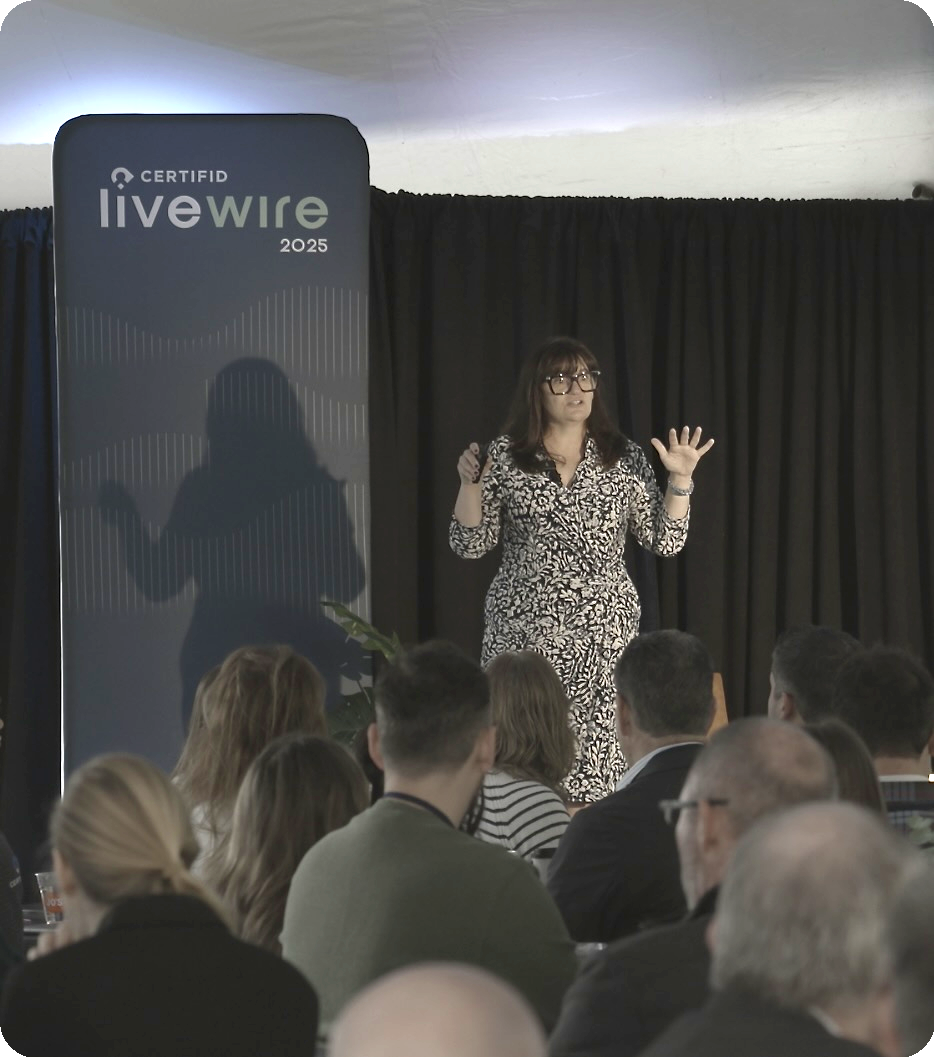
Erin urged leaders to speak up. Fraud thrives in silence. When professionals talk openly about what they are seeing, when they educate clients, and when they bring visibility to these patterns, the entire ecosystem becomes more resilient.
Her closing words echoed through the conversations that followed: make noise. Awareness is one of the simplest and most powerful tools the industry has.
With that reality in mind, the conversation shifted to what teams can do together to stay ahead.
Partnerships as a security advantage
Our panel on real estate partnerships brought together title leaders Whit Wood and Shannon Brandy alongside their real estate partners, Sherri Conrad and Maggie Barrett Campbell. The conversation centered on how to close the gap between title and agents and make security a shared effort across the whole transaction. The core theme was collective action. No single party can fully protect a deal alone, especially when buyers and sellers are navigating a digital process that does not always feel safe.
They talked about what changes when security becomes a joint responsibility. Communication gets cleaner, handoffs are smoother, and clients feel like everyone is on the same team. When title and agents reinforce the same protections early and often, fraud attempts have a much harder time taking hold.
Right after the panel, we carried that idea into a workshop focused on operationalizing security and engaging referral partners. Attendees compared what is working in their markets, where they are stuck, and who on their teams could champion the next step.
The discussion was equal parts honest and optimistic, and you could feel people leaving with practical ways to bring their real estate partners further into the security conversation.

Regulatory momentum and real-world adoption
Another theme that surfaced throughout the event was the pace of regulatory change. With new requirements emerging from organizations like FinCEN, firms can no longer rely on manual processes or inconsistent documentation to stay compliant.
Charles Wismer, CEO of FincenRealEstateReport.com, shared how automation is helping them stay ahead of these requirements. By integrating secure workflows into their operations, they are reducing human error, improving reporting accuracy, and giving clients confidence that their data and funds are safe.

That operational focus connected naturally to a bigger question: what today’s consumers expect.
Stewart Title on scaling security profitably
Stewart Title leaders Iain Bryant, President of Agency Services, and Ryan Swed, President of Direct Operations, delivered one of the most practical sessions of the day.
They walked through how they have built security into the transaction in a way that protects clients, while still supporting the business’s bottom line. Framed as protection and service, this security and cost framework builds trust and helps Stewart stand out in a crowded market.
This unique Stewart programming began in 2025, starting in high-volume states like Florida and Texas. After showing strong pilot adoption, they operationalized it and began a full national rollout, which will be completed in early 2026.
They explained how making it work was simple, repeatable talk tracks for escrow teams that explain the “why,” connect to real fraud risk, and highlight the Stewart plus CertifID partnership.
We wrapped Iain and Ryan’s session with a workshop to help attendees plan how to roll out a similar model in their own workflows.

Generation AI and the new consumer mindset
Matt Britton, CEO and founder of Suzy, talked about how AI is shaping the way consumers think, make decisions, and move through the world. His session focused on the bigger picture of how consumer behavior is shifting as AI becomes a part of everyday life.
As AI becomes routine, consumers are faster, more informed, and more selective, with little patience for friction. They expect clear answers immediately and trust experiences that feel simple, efficient, and secure. When a process feels confusing or risky, confidence drops quickly, and rebuilding trust is difficult.
Matt pointed out that consumers learned from e-commerce, fintech, and on-demand services now carry into major life moments like buying a home. Real estate has to meet people where they are today, not where the industry has traditionally been.
For teams in real estate, this comes down to building smoother digital workflows, visible transparency at every step, and making security easy for every client.

All of these conversations led to a clear takeaway: leaders have a real opportunity to drive meaningful change with AI (and whatever technology comes next).
Your next three moves
Tom Cronkright, CEO of Sun Title and Cofounder and Executive Chairman of CertifID, closed Live Wire with a direct leadership challenge. His point was that security only scales when leaders are consistent and intentional about it, not when it is treated like a side project.
He laid out three moves every team can act on right away:
First, pick one security gap you can close in the next 30 days. He shared examples like tightening password management, keeping applications updated, or making sure backups are actually tested and ready to use. Small, concrete wins like that build momentum fast.
Second, adopt one new security habit that is repeatable. Think weekly employee phishing training, upgrading email monitoring, or enforcing MFA so there is no access without it. The goal is to make good security muscle memory part of the routine.
Third, make “safer closings” part of your brand. Tom tied this to real consumer data showing people want protection even if they are not fully aware of the risks, and most are willing to pay more for a secure experience.
He also connected this to how Sun Title works with real estate agents. Their approach is to treat agents as force multipliers by giving them simple co-branded collateral, partner trainings, and “Close with Confidence” style messaging so agents can confidently explain the security value to clients. Security becomes a shared story that agents can carry into every deal.
Sun Title’s agent partnership playbook
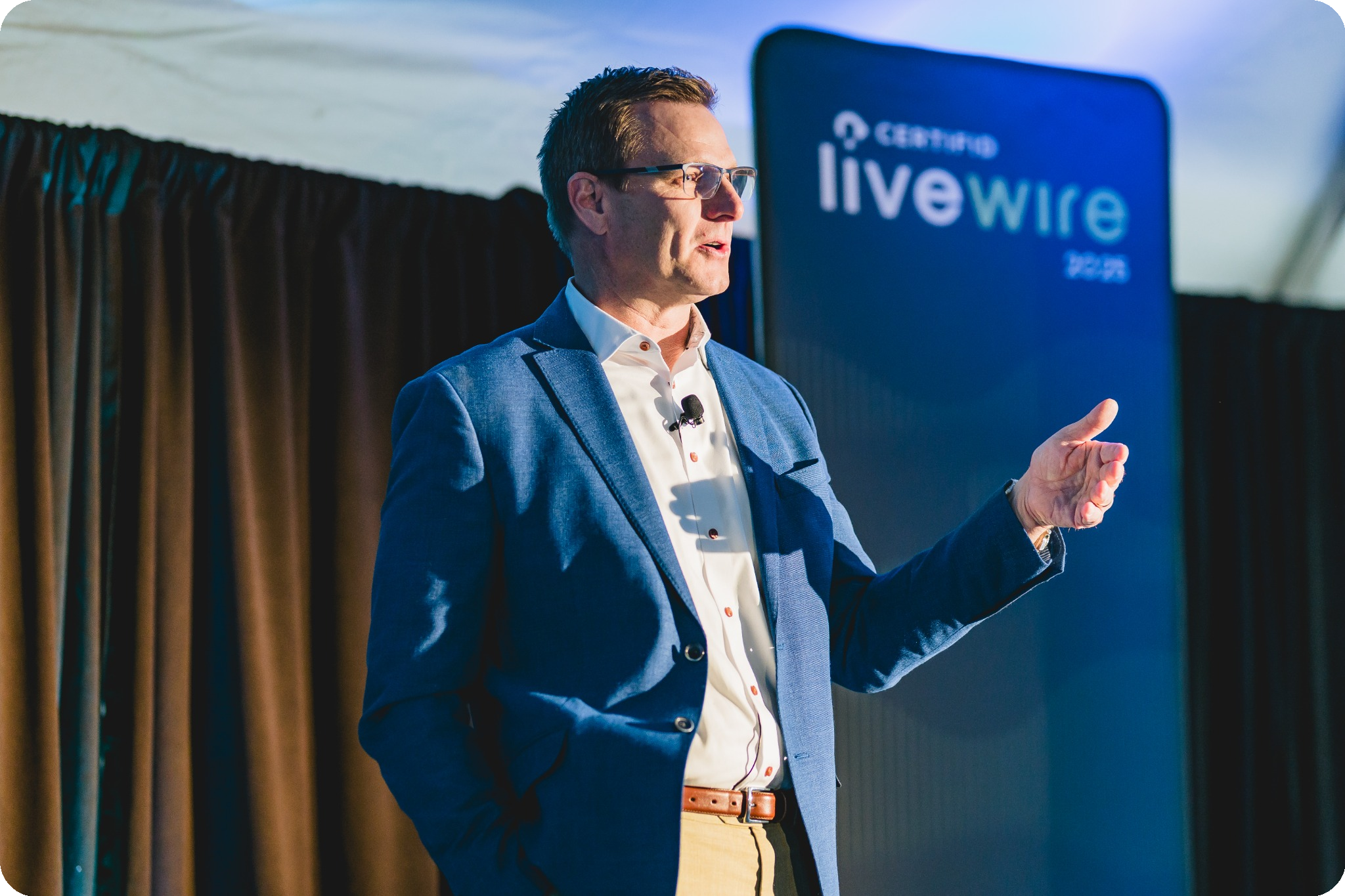
After that leadership close, Tom zoomed in on how Sun Title is pulling real estate agents into the security effort. Instead of keeping security as a “title-only” thing, his team gives agents clear, co-branded collateral and simple training they can plug into their own client conversations.
The goal is to make it easy for agents to explain why secure funds and verified wiring matter, and to reinforce those protections early, not at the last second. Security works best when title agents and real estate agents show up as one team, telling the same story to buyers and sellers.
The ideas that connected us
Across every conversation and session, leaders kept coming back to the same priorities:
- Fraud is scaling, but the industry’s ability to prevent it is scaling too.
- Partnerships across sectors strengthen everyone involved.
- Clear, standardized processes reduce risk and speed up transactions.
- Security fuels trust, and trust fuels business.
- A prevention mindset is becoming one of the strongest competitive advantages of 2025.
If your team wants to build consumer trust, lower fraud risk, or modernize security, now is the time to take action.
Learn more about how CertifID protects life’s biggest transactions.

FAQ

Content Marketer

Michelle has spent her career in B2B SaaS startups leading content marketing, strategy, and social media efforts that help teams grow and audiences stay informed. At CertifID, she applies that expertise to help title and real estate professionals understand fraud risks and stay ahead of emerging threats.
The conversations at Live Wire this year made one thing clear: fraud has industrialized, and security has to keep pace.
Live Wire, our annual cybersecurity and fraud prevention conference, landed at a time when losses are skyrocketing and AI-driven impersonation schemes are evolving by the week. Sponsored by Stewart Title, the event brought leaders together to zero in on what matters most: tighter collaboration, smarter processes, and stronger protection for every transaction.
Here are the themes and takeaways shaping the year ahead.
Fraud is getting smarter and so are we
CertifID’s CEO and Co-founder, Tyler Adams, set the tone early. Fraud is no longer an occasional disruption. It has turned into a global business. It is now organized, automated, and highly efficient. Criminal groups operate with the same sophistication as legitimate companies. They use automation and AI to scale operations and test out new attack methods.
Tyler pointed out the trends that the industry has seen over the past two years. Reports of fraud are increasing. Financial losses are rising. Attacks are becoming harder to spot with traditional methods.
Even as attacks increase, CertifID customers continue to demonstrate that prevention works. Hundreds of millions of dollars have been recovered for victims. Even more, attempted fraud has been stopped before it ever reached the closing table. More than a million transactions have been verified, protected, and kept on track.
Tyler emphasized that scaling security is really about scaling trust. Business only moves as fast as people feel safe moving. And in a world where you can no longer trust every email, every document, or even every voice on the phone, organizations need stronger systems in place to protect the relationships that drive their business.
He encouraged the industry to approach scaling security through three simple but powerful actions:
First, listen for what you can scale. Not every solution has to be large or complex. Often it begins with consistent habits, aligned workflow checkpoints, and protections that run quietly in the background.
Second, challenge assumptions. The processes that felt good enough five years ago may not hold up today. Attackers move quickly, and internal operations need to be able to withstand that momentum.
Finally, commit to one tangible improvement for 2026. Something that creates real change for your team and sends a signal that security is not a project. It is a posture.
That set the stage for one of the most eye-opening moments of the event.
Inside the billion-dollar criminal machine
One of the most memorable sessions was led by keynote speaker Erin West, Founder and President of Operation Shamrock. Erin took the audience inside the global criminal networks behind the scams dominating headlines. Her stories were not abstract. They were grounded in real tragedies affecting real people.
She explained how scam compounds operate overseas and how victims of human trafficking are forced to carry out fraud at scale. These are not isolated bad actors. These are multinational organizations with distribution pipelines, technical teams, conversion systems, and operational playbooks.
Pig butchering scams have exploded in size and volume. The rapid conversion of USD to USDT has accelerated money laundering. The pace and reach of these operations have grown far beyond what most people imagine when they think of online fraud.
Her message reframed the conversation most professionals are having about wire fraud. We are not dealing with opportunistic individuals. We are dealing with global criminal enterprises—and the human impact is devastating.
Erin urged leaders to speak up. Fraud thrives in silence. When professionals talk openly about what they are seeing, when they educate clients, and when they bring visibility to these patterns, the entire ecosystem becomes more resilient.
Her closing words echoed through the conversations that followed: make noise. Awareness is one of the simplest and most powerful tools the industry has.
With that reality in mind, the conversation shifted to what teams can do together to stay ahead.
Partnerships as a security advantage
Our panel on real estate partnerships brought together title leaders Whit Wood and Shannon Brandy alongside their real estate partners, Sherri Conrad and Maggie Barrett Campbell. The conversation centered on how to close the gap between title and agents and make security a shared effort across the whole transaction. The core theme was collective action. No single party can fully protect a deal alone, especially when buyers and sellers are navigating a digital process that does not always feel safe.
They talked about what changes when security becomes a joint responsibility. Communication gets cleaner, handoffs are smoother, and clients feel like everyone is on the same team. When title and agents reinforce the same protections early and often, fraud attempts have a much harder time taking hold.
Right after the panel, we carried that idea into a workshop focused on operationalizing security and engaging referral partners. Attendees compared what is working in their markets, where they are stuck, and who on their teams could champion the next step.
The discussion was equal parts honest and optimistic, and you could feel people leaving with practical ways to bring their real estate partners further into the security conversation.
Regulatory momentum and real-world adoption
Another theme that surfaced throughout the event was the pace of regulatory change. With new requirements emerging from organizations like FinCEN, firms can no longer rely on manual processes or inconsistent documentation to stay compliant.
Charles Wismer, CEO of FincenRealEstateReport.com, shared how automation is helping them stay ahead of these requirements. By integrating secure workflows into their operations, they are reducing human error, improving reporting accuracy, and giving clients confidence that their data and funds are safe.
That operational focus connected naturally to a bigger question: what today’s consumers expect.
Stewart Title on scaling security profitably
Stewart Title leaders Iain Bryant, President of Agency Services, and Ryan Swed, President of Direct Operations, delivered one of the most practical sessions of the day.
They walked through how they have built security into the transaction in a way that protects clients, while still supporting the business’s bottom line. Framed as protection and service, this security and cost framework builds trust and helps Stewart stand out in a crowded market.
This unique Stewart programming began in 2025, starting in high-volume states like Florida and Texas. After showing strong pilot adoption, they operationalized it and began a full national rollout, which will be completed in early 2026.
They explained how making it work was simple, repeatable talk tracks for escrow teams that explain the “why,” connect to real fraud risk, and highlight the Stewart plus CertifID partnership.
We wrapped Iain and Ryan’s session with a workshop to help attendees plan how to roll out a similar model in their own workflows.
Generation AI and the new consumer mindset
Matt Britton, CEO and founder of Suzy, talked about how AI is shaping the way consumers think, make decisions, and move through the world. His session focused on the bigger picture of how consumer behavior is shifting as AI becomes a part of everyday life.
As AI becomes routine, consumers are faster, more informed, and more selective, with little patience for friction. They expect clear answers immediately and trust experiences that feel simple, efficient, and secure. When a process feels confusing or risky, confidence drops quickly, and rebuilding trust is difficult.
Matt pointed out that consumers learned from e-commerce, fintech, and on-demand services now carry into major life moments like buying a home. Real estate has to meet people where they are today, not where the industry has traditionally been.
For teams in real estate, this comes down to building smoother digital workflows, visible transparency at every step, and making security easy for every client.
All of these conversations led to a clear takeaway: leaders have a real opportunity to drive meaningful change with AI (and whatever technology comes next).
Your next three moves
Tom Cronkright, CEO of Sun Title and Cofounder and Executive Chairman of CertifID, closed Live Wire with a direct leadership challenge. His point was that security only scales when leaders are consistent and intentional about it, not when it is treated like a side project.
He laid out three moves every team can act on right away:
First, pick one security gap you can close in the next 30 days. He shared examples like tightening password management, keeping applications updated, or making sure backups are actually tested and ready to use. Small, concrete wins like that build momentum fast.
Second, adopt one new security habit that is repeatable. Think weekly employee phishing training, upgrading email monitoring, or enforcing MFA so there is no access without it. The goal is to make good security muscle memory part of the routine.
Third, make “safer closings” part of your brand. Tom tied this to real consumer data showing people want protection even if they are not fully aware of the risks, and most are willing to pay more for a secure experience.
He also connected this to how Sun Title works with real estate agents. Their approach is to treat agents as force multipliers by giving them simple co-branded collateral, partner trainings, and “Close with Confidence” style messaging so agents can confidently explain the security value to clients. Security becomes a shared story that agents can carry into every deal.
Sun Title’s agent partnership playbook
After that leadership close, Tom zoomed in on how Sun Title is pulling real estate agents into the security effort. Instead of keeping security as a “title-only” thing, his team gives agents clear, co-branded collateral and simple training they can plug into their own client conversations.
The goal is to make it easy for agents to explain why secure funds and verified wiring matter, and to reinforce those protections early, not at the last second. Security works best when title agents and real estate agents show up as one team, telling the same story to buyers and sellers.
The ideas that connected us
Across every conversation and session, leaders kept coming back to the same priorities:
- Fraud is scaling, but the industry’s ability to prevent it is scaling too.
- Partnerships across sectors strengthen everyone involved.
- Clear, standardized processes reduce risk and speed up transactions.
- Security fuels trust, and trust fuels business.
- A prevention mindset is becoming one of the strongest competitive advantages of 2025.
If your team wants to build consumer trust, lower fraud risk, or modernize security, now is the time to take action.
Learn more about how CertifID protects life’s biggest transactions.
Content Marketer
Michelle has spent her career in B2B SaaS startups leading content marketing, strategy, and social media efforts that help teams grow and audiences stay informed. At CertifID, she applies that expertise to help title and real estate professionals understand fraud risks and stay ahead of emerging threats.
Sign up for The Wire to join the conversation.





Austin
3601 South Congress Ave.
Ste D200, Austin, Texas 78704

Grand Rapids
124 Fulton Street E
Grand Rapids, MI 49503

