


How to spot a fake ID by state: A complete guide for title and escrow pros
Seller impersonation fraud cost the industry $262 million last year. It starts with an ID. This guide helps you catch it there.
Share article:


Luis Palomares
6 minutes
Fraud Prevention
Apr 10, 2026
Apr 22, 2026
Lisa held the California driver's license under her desk lamp, tilting it back and forth. The hologram shifted. The photo looked right.
But something about the texture felt wrong — slightly too thin, the edges a fraction too smooth. She was 20 minutes from opening escrow on a $172,000 seller proceeds disbursement, and her gut told her to slow down.
But gut feelings don't create audit trails. If she was wrong, she risked letting a fraudster through or offending a legitimate seller without documentation to back her up. This guide replaces that guesswork with a reliable state-by-state framework.
What is a fake ID?
A fake ID is any document used to fraudulently misrepresent someone's identity, age, or residency to gain access to transaction funds. They fall into three categories:
- Forged IDs. Completely fabricated documents produced with commercial-grade printers, often sourced from dark web template marketplaces.
- Altered IDs. Legitimate government-issued documents modified with new photos, names, or addresses.
- Borrowed IDs. Real, unaltered documents used by lookalikes who physically resemble the actual holder.
The stakes are enormous. Seller impersonation losses exceeded $262 million according to the FBI Internet Crime Complaint Center's 2025 public service announcement. That fraud starts at the transaction opening, when a fake ID is presented as the first tool in a seller impersonation scheme.
Why state-specific knowledge matters in real estate
Every US state designs its driver's licenses and ID cards with unique security features, materials, and layouts.
A one-size-fits-all approach to verification fails because the tactile feel of an Arizona polycarbonate card is nothing like a pre-2020 Georgia laminate overlay.
This creates a specific challenge for you. Title and escrow professionals regularly verify documents from dozens of states without specialized training in any of them.
Out-of-state transactions deserve higher scrutiny precisely because unfamiliar documents are harder to authenticate. And the consequences of failure — regulatory penalties, liability for fraudulent disbursements, and reputational damage — make this knowledge operationally essential.
Universal red flags: How to spot a fake ID regardless of state
Before you examine state-specific features, apply these universal checks as your first line of defense:
- Physical feel. A genuine US driver's license is approximately 30-mil thick and made from polycarbonate or Teslin material. If the card feels flimsy, has rough edges, or bends too easily (or not enough), flag it immediately
- Photo irregularities. Look for shadows that don't match the background lighting, pixelation around the edges of the portrait, or images that appear pasted on rather than laser-engraved
- Text and font errors. Misspellings, inconsistent letter spacing, incorrect typefaces, or blurred microprinting are strong indicators of forgery. Genuine state IDs use precise, consistent typography
- Hologram defects. Authentic holograms shift color and image when tilted at different angles. Counterfeit holograms often appear flat, static, or display incorrect symbols
- Barcode failures. Run every barcode through a scanner. Failures to scan or mismatches between encoded data and printed text are immediate red flags
- Behavioral indicators. Watch the person presenting the ID. Nervousness, hesitation when asked basic questions (date of birth, address, middle name), or pressure to rush the process can signal fraud
If an ID passes these physical checks, the next step is examining the security features unique to the issuing state.
How to spot a fake ID by state in 2026: Key security features
This is where identity verification shifts from general instinct to systematic authentication. The following 12 states cover the majority of transactions most title professionals encounter.
California ID
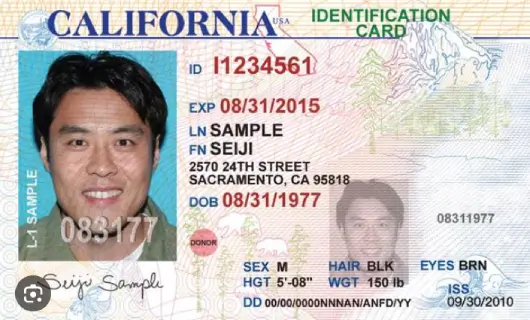
California introduced several advanced features in its 2025 redesign. Check for the raised signature and tactile birth date — you should feel them with your fingertip.
Under UV light, a bear and bridge design fluoresces. Hold the card up to a light source to see laser-perforated "CA" lettering. Fine-line printing across the card surface should be crisp and unbroken. The new design also includes a digital security signature embedded in the back barcode that older counterfeits won't replicate.
New York ID
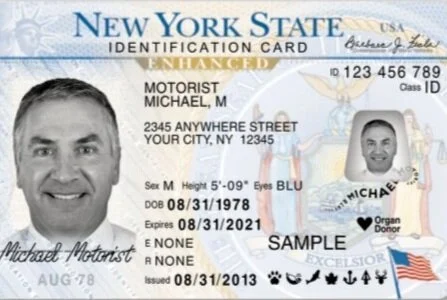
New York uses polycarbonate construction with a laser-engraved transparent window containing a secondary portrait. To see the Statue of Liberty image, use UV light.
The word "Excelsior" features color-shifting ink that changes hue when tilted. Multiple ghost images appear at different locations on the card, so verify that all match the primary photo.
Texas ID
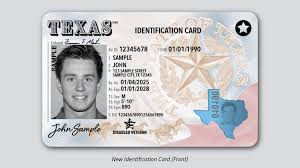
Texas IDs feature a UV-reactive state outline and lone star that fluoresces under blacklight. Extensive microprinting runs along borders and within design elements.
Use magnification to confirm it reads as actual text, not a blurred line. Raised lettering provides a tactile check, and a laser-engraved ghost image should be visible on the card surface.
Florida ID
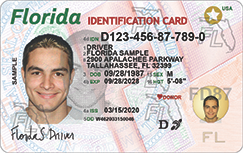
Florida's current design uses a polycarbonate core with an embedded ghost image that cannot be peeled or separated.
Under UV, the state seal and sunshine imagery fluoresce. The laser-engraved signature is embedded into the card material.
A color-shifting palm tree changes appearance at different angles. Note the 2024 update: Florida license numbers now require at least four randomly generated numbers. Older counterfeits may not reflect this format change.
Illinois ID
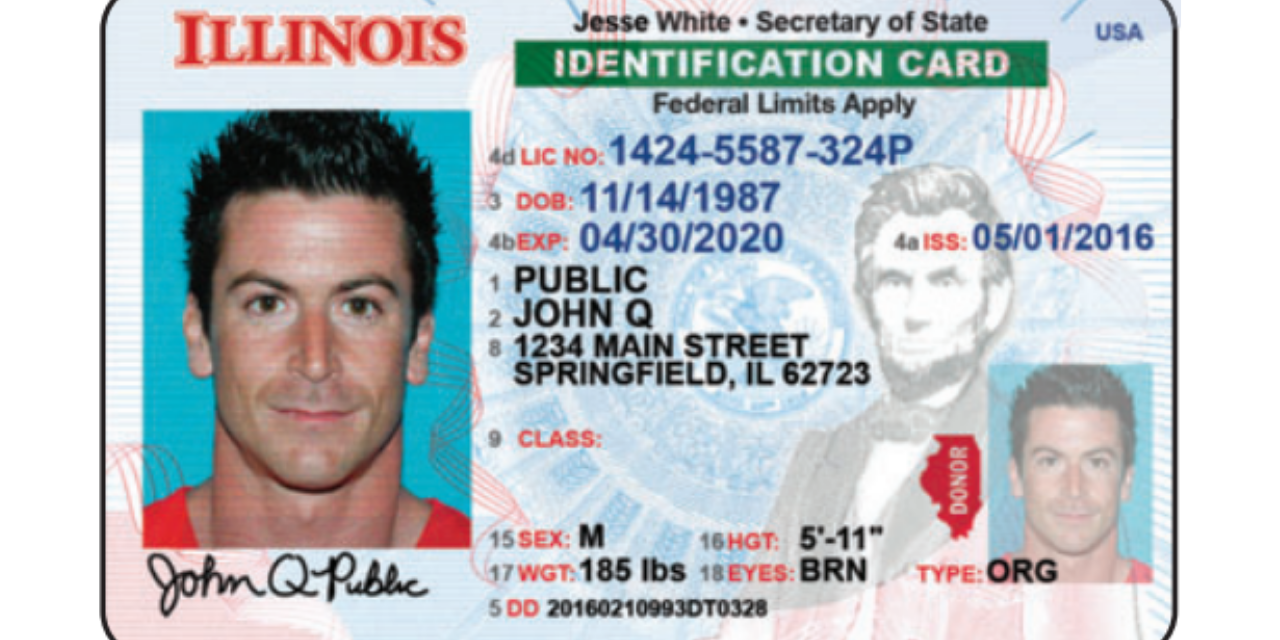
Illinois places a laser-engraved portrait on the back of the card — a feature many counterfeiters overlook entirely. Under UV light, the Capitol building appears. A color-shifting state emblem changes hue when tilted, and the date of birth is tactile, meaning you can feel the raised numbers.
Pennsylvania ID
Look for the raised keystone emblem and run your thumb across it. Under UV light, a repeating "PA" pattern fluoresces across the card.
Dual ghost photos appear at separate locations. Border microprinting should be legible under magnification, and a laser-perforated state outline is visible when held to light.

Arizona ID
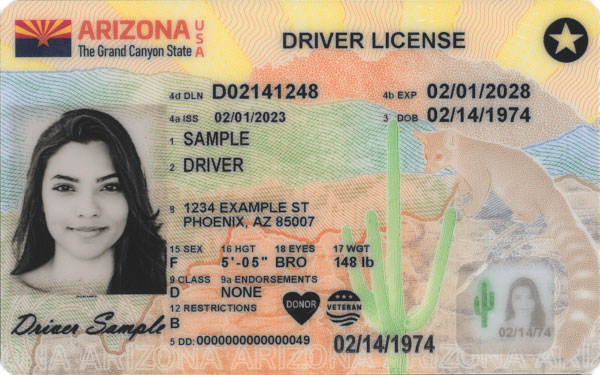
Arizona's license is 100% polycarbonate in multi-layer construction, making physical tampering nearly impossible without destroying the card.
All personal information and the black-and-white photo are laser-engraved into the substrate. Under UV, a cactus and background designs fluoresce green. Tilt the card: depending on the angle, you'll see either a saguaro cactus or a ponderosa pine in the angle-dependent imagery.
Georgia ID
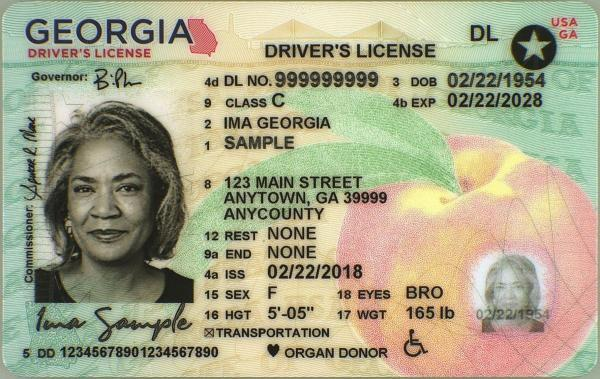
Georgia IDs feature fine-line background printing and a front state seal with "Georgia" text that glows under UV light, along with a holographic overlay.
One critical distinction: IDs issued prior to 2009 contain no UV security features. If you're verifying an older Georgia document with no UV response, that alone doesn't indicate fraud.
However, it does mean you've lost a key verification layer and should rely more heavily on other checks.
Ohio ID
Under UV light, "OHIO - 1803" text appears at the upper center of the card.
Two to three state seals fluoresce across the card face. Laser perforation creates patterns visible when the card is held to light, and a ghost image is placed in a specific location that should match the primary portrait.
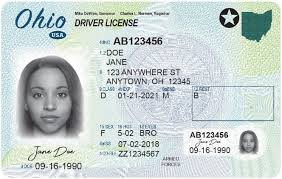
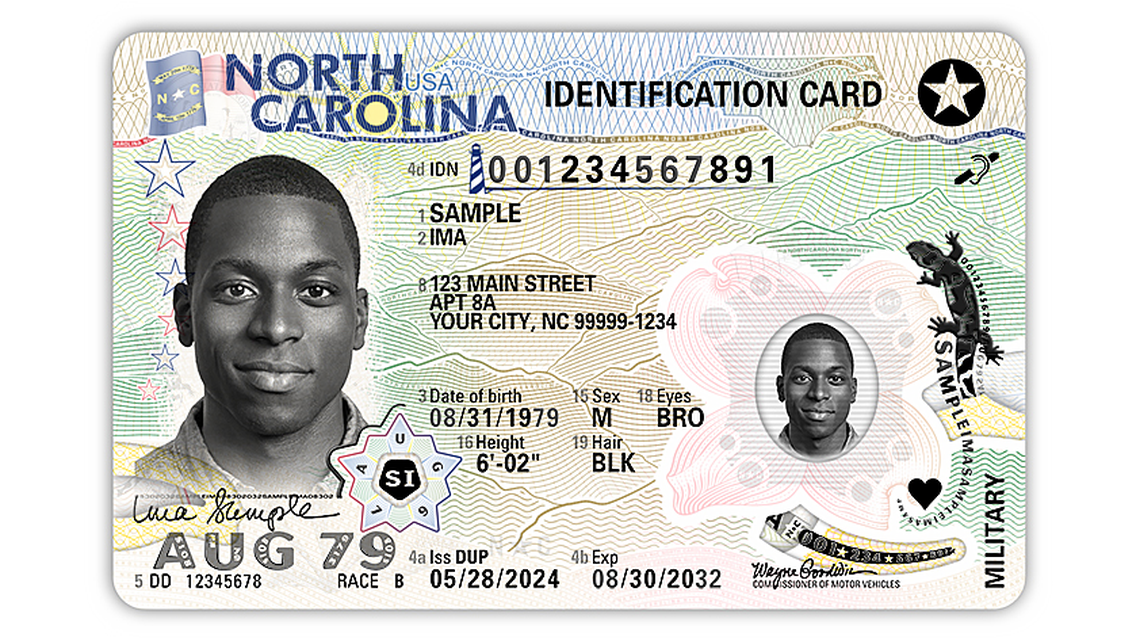
North Carolina ID
North Carolina moved to 100% polycarbonate construction with laser engraving throughout in its 2024 redesign. Embossed and debossed patterns create distinct tactile features. Drop the card on a hard surface.
Genuine polycarbonate produces a distinct metallic sound, unlike laminated or PVC counterfeits. The laser-engraved date of birth provides tactile verification. Imagery includes dogwood flowers, the state flag, a marbled salamander, and a lighthouse.
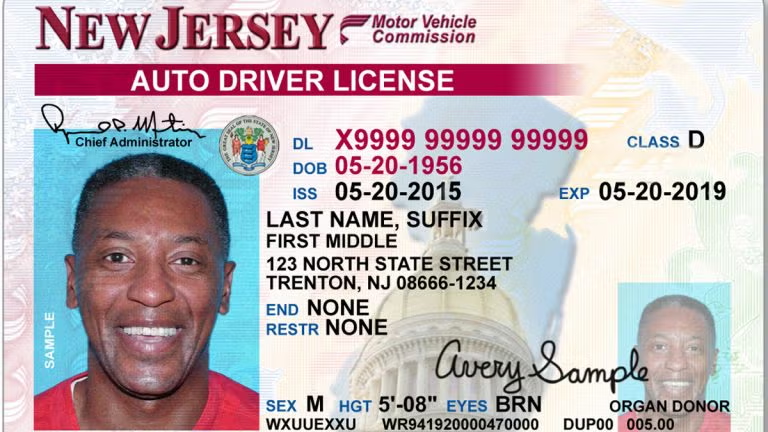
New Jersey ID
New Jersey IDs include a UV-reactive coat of arms, holographic overlay elements, and ghost image features. Flag this state for extra caution.
Counterfeit hologram overlays for New Jersey are widely available on dark web marketplaces, making physical inspection alone insufficient for reliable verification. For transactions in New Jersey, digital verification is required. You cannot just rely on a physical inspection.
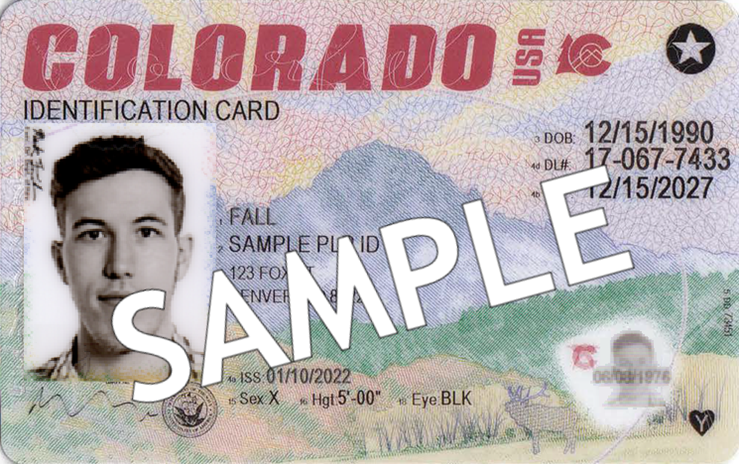
Colorado ID
Colorado IDs use UV-reactive features, fine-line background printing, and tactile elements. This state warrants particular attention because Colorado's hot real estate markets — Denver and Colorado Springs especially — make it a frequent target for seller impersonation schemes involving out-of-state parties.
While these 12 states cover most of what you'll encounter, the core principles — UV reactivity, tactile features, laser engraving, and microprinting — apply across all 50 states.
For unfamiliar IDs, check the issuing state's DMV website for published security feature guides, and keep an updated reference guide in your office.
Tools and technology for ID verification
Manual inspection alone leaves dangerous gaps. A skilled forger can replicate visual features that pass a casual check—and increasingly, even a careful one. Modern verification requires technology-assisted authentication.
- UV blacklights (365nm wavelength). These are essential for revealing fluorescent security features. A standard blacklight won’t cut it; you need the 365nm wavelength that state security features are calibrated to
- ID scanners. These compare encoded barcode and magnetic stripe data against printed information on the card’s face. Mismatches indicate tampering
- Magnification tools (10x loupes). You need these to inspect microprinting. Genuine microprinting is crisp and legible under magnification, while counterfeit microprinting blurs into lines or dots
These tools catch altered and forged documents, but they have a hard ceiling — and synthetic identity fraud is where that ceiling shows.
A synthetic ID is a fabricated identity assembled from real data fragments: a legitimate Social Security number, a fictitious name, a plausible address.
For example, a fraudster might combine a real Social Security number with a fictitious name and address. The resulting document can appear physically perfect because it is based on real credential data. UV lights and loupes find nothing wrong because there is nothing physically wrong to find.
Digital identity verification platforms close that gap. CertifID Match, for instance, cross-references authoritative databases (including AAMVA and 250+ global government sources). It runs biometric liveness detection and knowledge-based authentication. This catches both altered IDs and synthetic identities that would sail through a UV test.
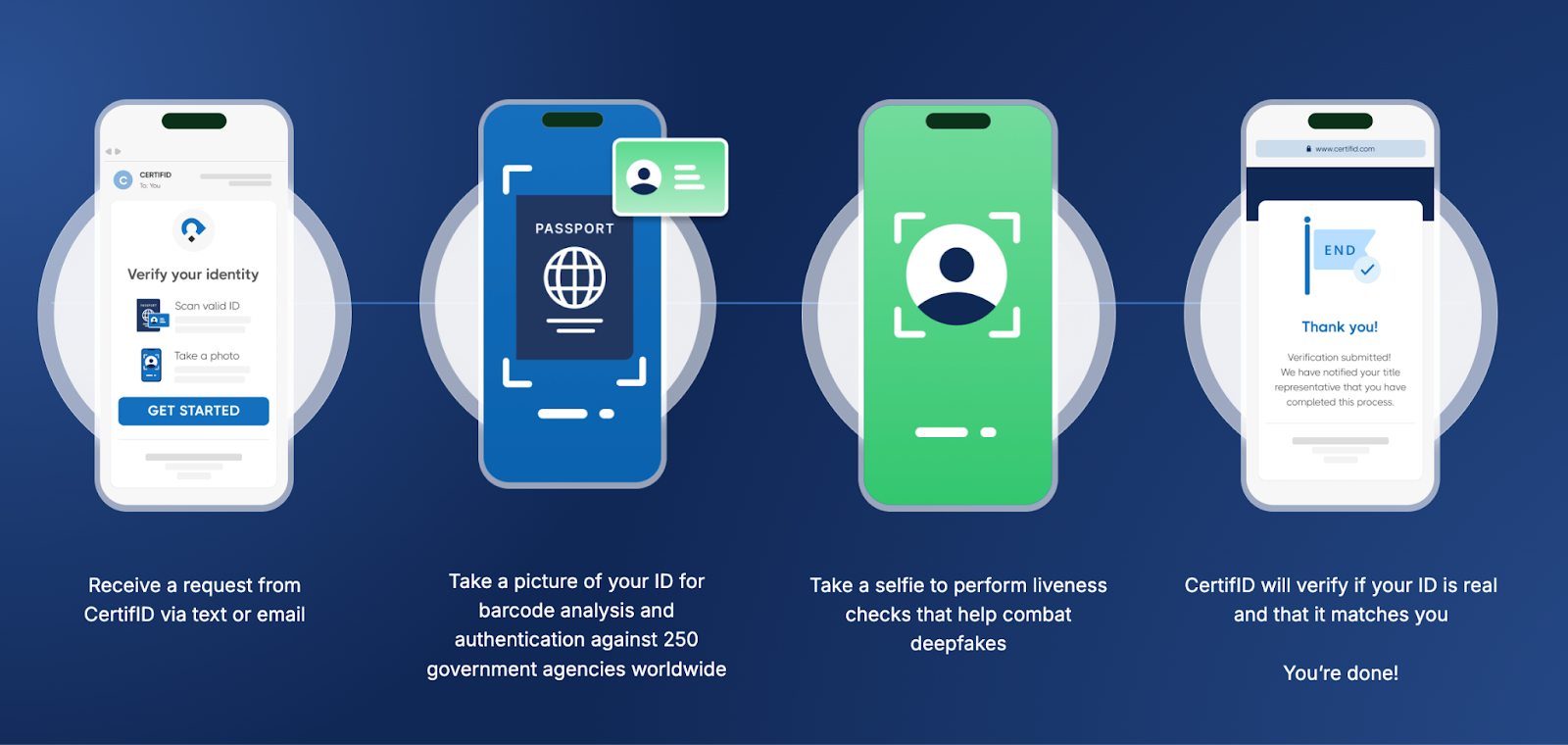
These platforms also create an auditable documentation trail, which matters when an insurer or regulator asks how you verified a party's identity.
It's important to have clear identity verification steps when you file a claim against your E&O policy. Insurers now require this documentation to cover wire fraud losses. A report generated by your platform is much stronger evidence than just telling someone about your process.
The cost-benefit calculation is straightforward. Compare a small per-file verification fee to the average $172,000 loss from a seller proceeds fraud event found in the 2026 State of Wire Fraud Report.
What to do when you suspect a fake ID
When red flags appear, follow a systematic protocol that balances security with professionalism.
- Remain professional. Do not accuse anyone directly. Statements like "I need to complete our standard verification process" keep you protected without escalating the situation
- Cross-reference data. Scan the barcode and compare encoded information against printed text. Check the license number format against state standards
- Initiate enhanced verification. Use a digital platform to run knowledge-based authentication, and database cross-referencing. This is where borrowed and altered IDs get caught
- Document everything. Record the time, date, specific concerns, and steps taken. This documentation protects you regardless of the outcome
- Refuse to proceed. If verification fails, decline to open escrow. A legitimate seller will understand; a fraudster will pressure you to continue
- Contact law enforcement. Only when strong evidence exists and your company policy requires it. For most situations, refusing service and documenting the encounter is sufficient
- Notify your underwriter. Underwriting agreements and E&O policies require you to report suspected fraud attempts regardless of whether you contact police
Having a protocol matters. But avoiding common pitfalls in the verification process is equally important.
Common verification mistakes to avoid
Even experienced escrow officers fall into these traps.
- Glancing only at the birth date. A quick age check catches underage drinkers, not identity thieves. You need to verify the full document.
- Ignoring tactile features. Raised lettering, embossed emblems, and laser-engraved text are designed to be felt. If you're only looking, you're missing half the security features.
- Assuming out-of-state IDs are legitimate. Unfamiliarity with a state's features doesn't mean the document is genuine. It means you need additional verification, not less
- Over-relying on technology. Scanners catch data mismatches but may not flag a physically altered card. Combine digital tools with hands-on inspection
- Accepting copies instead of originals. Photocopies and digital images strip away every physical security feature — texture, holograms, laser perforations, UV reactions. Always verify original documents.
These mistakes connect to a broader regulatory environment that increasingly expects documented, systematic diligence from closing professionals.
Spot a fake ID by state and keep all your transactions protected
You've moved from relying on gut instinct to knowing exactly what a laser perforation should look like, how a polycarbonate card should sound when dropped, and which UV features to expect from North Carolina versus New Jersey.
That knowledge, combined with the right tools creates a defensible documentation trail that protects you, your firm, and your clients on every transaction.
To stay current on security features, fraud trends, and verification protocols, sign up for the CertifID newsletter.

FAQ
Which state's ID is faked most often?

California, Texas, Florida, New York, and Illinois are faked most frequently due to their large populations and high transaction volumes.
However, there's a rising trend in counterfeits of less common states —Wyoming, Montana, and Maine— specifically because verifiers are less familiar with their security features and less likely to catch discrepancies. Dark web marketplaces offer templates for virtually every state.
Can a fake ID pass a barcode scan?
Yes. Sophisticated counterfeits encode matching data into barcodes and magnetic stripes, meaning the encoded information will align with what's printed on the card.
This is why manual inspection — UV checks, tactile verification, microprinting examination — remains essential alongside scanning. Platforms like CertifID Match go beyond barcode validation to cross-reference identity data against authoritative government databases.
Is it illegal to confiscate a fake ID?
This varies by state. Some states, like Arizona and Arkansas, permit businesses to confiscate suspected fraudulent documents.
Others, like California, do not. Consult your legal counsel on your state's specific rules. In practice, most title companies refuse to proceed with the transaction and document their concerns rather than attempting confiscation.
How often do states update their ID designs?
Major redesigns typically happen every five to 10 years, often coinciding with REAL ID compliance deadlines.
However, incremental security upgrades —new UV features, updated microprinting, format changes — occur more frequently. The DHS REAL ID website and AAMVA both publish updated security feature references.
How do I verify an ID from a state I've never seen before?
Follow a three-step process.
First, check the issuing state's DMV website, as most publish security feature guides with images.
Second, use a digital verification platform like CertifID Match to cross-reference the identity against authoritative databases, which works regardless of your familiarity with the physical document.
Third, apply universal principles: check for tactile features, UV reactivity, laser perforations, and microprinting. If any of these are absent or inconsistent, escalate to enhanced verification before proceeding.

Director of Product

Luis brings over a decade of design and product leadership experience to the team. Before joining CertifID, Luis co-founded InHouse, a real estate marketing, and data platform. Today, he combines his passion for thoughtful design and his experience in real estate to help create a future safe from wire fraud.
Lisa held the California driver's license under her desk lamp, tilting it back and forth. The hologram shifted. The photo looked right.
But something about the texture felt wrong — slightly too thin, the edges a fraction too smooth. She was 20 minutes from opening escrow on a $172,000 seller proceeds disbursement, and her gut told her to slow down.
But gut feelings don't create audit trails. If she was wrong, she risked letting a fraudster through or offending a legitimate seller without documentation to back her up. This guide replaces that guesswork with a reliable state-by-state framework.
What is a fake ID?
A fake ID is any document used to fraudulently misrepresent someone's identity, age, or residency to gain access to transaction funds. They fall into three categories:
- Forged IDs. Completely fabricated documents produced with commercial-grade printers, often sourced from dark web template marketplaces.
- Altered IDs. Legitimate government-issued documents modified with new photos, names, or addresses.
- Borrowed IDs. Real, unaltered documents used by lookalikes who physically resemble the actual holder.
The stakes are enormous. Seller impersonation losses exceeded $262 million according to the FBI Internet Crime Complaint Center's 2025 public service announcement. That fraud starts at the transaction opening, when a fake ID is presented as the first tool in a seller impersonation scheme.
Why state-specific knowledge matters in real estate
Every US state designs its driver's licenses and ID cards with unique security features, materials, and layouts.
A one-size-fits-all approach to verification fails because the tactile feel of an Arizona polycarbonate card is nothing like a pre-2020 Georgia laminate overlay.
This creates a specific challenge for you. Title and escrow professionals regularly verify documents from dozens of states without specialized training in any of them.
Out-of-state transactions deserve higher scrutiny precisely because unfamiliar documents are harder to authenticate. And the consequences of failure — regulatory penalties, liability for fraudulent disbursements, and reputational damage — make this knowledge operationally essential.
Universal red flags: How to spot a fake ID regardless of state
Before you examine state-specific features, apply these universal checks as your first line of defense:
- Physical feel. A genuine US driver's license is approximately 30-mil thick and made from polycarbonate or Teslin material. If the card feels flimsy, has rough edges, or bends too easily (or not enough), flag it immediately
- Photo irregularities. Look for shadows that don't match the background lighting, pixelation around the edges of the portrait, or images that appear pasted on rather than laser-engraved
- Text and font errors. Misspellings, inconsistent letter spacing, incorrect typefaces, or blurred microprinting are strong indicators of forgery. Genuine state IDs use precise, consistent typography
- Hologram defects. Authentic holograms shift color and image when tilted at different angles. Counterfeit holograms often appear flat, static, or display incorrect symbols
- Barcode failures. Run every barcode through a scanner. Failures to scan or mismatches between encoded data and printed text are immediate red flags
- Behavioral indicators. Watch the person presenting the ID. Nervousness, hesitation when asked basic questions (date of birth, address, middle name), or pressure to rush the process can signal fraud
If an ID passes these physical checks, the next step is examining the security features unique to the issuing state.
How to spot a fake ID by state in 2026: Key security features
This is where identity verification shifts from general instinct to systematic authentication. The following 12 states cover the majority of transactions most title professionals encounter.
California ID
California introduced several advanced features in its 2025 redesign. Check for the raised signature and tactile birth date — you should feel them with your fingertip.
Under UV light, a bear and bridge design fluoresces. Hold the card up to a light source to see laser-perforated "CA" lettering. Fine-line printing across the card surface should be crisp and unbroken. The new design also includes a digital security signature embedded in the back barcode that older counterfeits won't replicate.
New York ID
New York uses polycarbonate construction with a laser-engraved transparent window containing a secondary portrait. To see the Statue of Liberty image, use UV light.
The word "Excelsior" features color-shifting ink that changes hue when tilted. Multiple ghost images appear at different locations on the card, so verify that all match the primary photo.
Texas ID
Texas IDs feature a UV-reactive state outline and lone star that fluoresces under blacklight. Extensive microprinting runs along borders and within design elements.
Use magnification to confirm it reads as actual text, not a blurred line. Raised lettering provides a tactile check, and a laser-engraved ghost image should be visible on the card surface.
Florida ID
Florida's current design uses a polycarbonate core with an embedded ghost image that cannot be peeled or separated.
Under UV, the state seal and sunshine imagery fluoresce. The laser-engraved signature is embedded into the card material.
A color-shifting palm tree changes appearance at different angles. Note the 2024 update: Florida license numbers now require at least four randomly generated numbers. Older counterfeits may not reflect this format change.
Illinois ID
Illinois places a laser-engraved portrait on the back of the card — a feature many counterfeiters overlook entirely. Under UV light, the Capitol building appears. A color-shifting state emblem changes hue when tilted, and the date of birth is tactile, meaning you can feel the raised numbers.
Pennsylvania ID
Look for the raised keystone emblem and run your thumb across it. Under UV light, a repeating "PA" pattern fluoresces across the card.
Dual ghost photos appear at separate locations. Border microprinting should be legible under magnification, and a laser-perforated state outline is visible when held to light.
Arizona ID
Arizona's license is 100% polycarbonate in multi-layer construction, making physical tampering nearly impossible without destroying the card.
All personal information and the black-and-white photo are laser-engraved into the substrate. Under UV, a cactus and background designs fluoresce green. Tilt the card: depending on the angle, you'll see either a saguaro cactus or a ponderosa pine in the angle-dependent imagery.
Georgia ID
Georgia IDs feature fine-line background printing and a front state seal with "Georgia" text that glows under UV light, along with a holographic overlay.
One critical distinction: IDs issued prior to 2009 contain no UV security features. If you're verifying an older Georgia document with no UV response, that alone doesn't indicate fraud.
However, it does mean you've lost a key verification layer and should rely more heavily on other checks.
Ohio ID
Under UV light, "OHIO - 1803" text appears at the upper center of the card.
Two to three state seals fluoresce across the card face. Laser perforation creates patterns visible when the card is held to light, and a ghost image is placed in a specific location that should match the primary portrait.
North Carolina ID
North Carolina moved to 100% polycarbonate construction with laser engraving throughout in its 2024 redesign. Embossed and debossed patterns create distinct tactile features. Drop the card on a hard surface.
Genuine polycarbonate produces a distinct metallic sound, unlike laminated or PVC counterfeits. The laser-engraved date of birth provides tactile verification. Imagery includes dogwood flowers, the state flag, a marbled salamander, and a lighthouse.
New Jersey ID
New Jersey IDs include a UV-reactive coat of arms, holographic overlay elements, and ghost image features. Flag this state for extra caution.
Counterfeit hologram overlays for New Jersey are widely available on dark web marketplaces, making physical inspection alone insufficient for reliable verification. For transactions in New Jersey, digital verification is required. You cannot just rely on a physical inspection.
Colorado ID
Colorado IDs use UV-reactive features, fine-line background printing, and tactile elements. This state warrants particular attention because Colorado's hot real estate markets — Denver and Colorado Springs especially — make it a frequent target for seller impersonation schemes involving out-of-state parties.
While these 12 states cover most of what you'll encounter, the core principles — UV reactivity, tactile features, laser engraving, and microprinting — apply across all 50 states.
For unfamiliar IDs, check the issuing state's DMV website for published security feature guides, and keep an updated reference guide in your office.
Tools and technology for ID verification
Manual inspection alone leaves dangerous gaps. A skilled forger can replicate visual features that pass a casual check—and increasingly, even a careful one. Modern verification requires technology-assisted authentication.
- UV blacklights (365nm wavelength). These are essential for revealing fluorescent security features. A standard blacklight won’t cut it; you need the 365nm wavelength that state security features are calibrated to
- ID scanners. These compare encoded barcode and magnetic stripe data against printed information on the card’s face. Mismatches indicate tampering
- Magnification tools (10x loupes). You need these to inspect microprinting. Genuine microprinting is crisp and legible under magnification, while counterfeit microprinting blurs into lines or dots
These tools catch altered and forged documents, but they have a hard ceiling — and synthetic identity fraud is where that ceiling shows.
A synthetic ID is a fabricated identity assembled from real data fragments: a legitimate Social Security number, a fictitious name, a plausible address.
For example, a fraudster might combine a real Social Security number with a fictitious name and address. The resulting document can appear physically perfect because it is based on real credential data. UV lights and loupes find nothing wrong because there is nothing physically wrong to find.
Digital identity verification platforms close that gap. CertifID Match, for instance, cross-references authoritative databases (including AAMVA and 250+ global government sources). It runs biometric liveness detection and knowledge-based authentication. This catches both altered IDs and synthetic identities that would sail through a UV test.
These platforms also create an auditable documentation trail, which matters when an insurer or regulator asks how you verified a party's identity.
It's important to have clear identity verification steps when you file a claim against your E&O policy. Insurers now require this documentation to cover wire fraud losses. A report generated by your platform is much stronger evidence than just telling someone about your process.
The cost-benefit calculation is straightforward. Compare a small per-file verification fee to the average $172,000 loss from a seller proceeds fraud event found in the 2026 State of Wire Fraud Report.
What to do when you suspect a fake ID
When red flags appear, follow a systematic protocol that balances security with professionalism.
- Remain professional. Do not accuse anyone directly. Statements like "I need to complete our standard verification process" keep you protected without escalating the situation
- Cross-reference data. Scan the barcode and compare encoded information against printed text. Check the license number format against state standards
- Initiate enhanced verification. Use a digital platform to run knowledge-based authentication, and database cross-referencing. This is where borrowed and altered IDs get caught
- Document everything. Record the time, date, specific concerns, and steps taken. This documentation protects you regardless of the outcome
- Refuse to proceed. If verification fails, decline to open escrow. A legitimate seller will understand; a fraudster will pressure you to continue
- Contact law enforcement. Only when strong evidence exists and your company policy requires it. For most situations, refusing service and documenting the encounter is sufficient
- Notify your underwriter. Underwriting agreements and E&O policies require you to report suspected fraud attempts regardless of whether you contact police
Having a protocol matters. But avoiding common pitfalls in the verification process is equally important.
Common verification mistakes to avoid
Even experienced escrow officers fall into these traps.
- Glancing only at the birth date. A quick age check catches underage drinkers, not identity thieves. You need to verify the full document.
- Ignoring tactile features. Raised lettering, embossed emblems, and laser-engraved text are designed to be felt. If you're only looking, you're missing half the security features.
- Assuming out-of-state IDs are legitimate. Unfamiliarity with a state's features doesn't mean the document is genuine. It means you need additional verification, not less
- Over-relying on technology. Scanners catch data mismatches but may not flag a physically altered card. Combine digital tools with hands-on inspection
- Accepting copies instead of originals. Photocopies and digital images strip away every physical security feature — texture, holograms, laser perforations, UV reactions. Always verify original documents.
These mistakes connect to a broader regulatory environment that increasingly expects documented, systematic diligence from closing professionals.
Spot a fake ID by state and keep all your transactions protected
You've moved from relying on gut instinct to knowing exactly what a laser perforation should look like, how a polycarbonate card should sound when dropped, and which UV features to expect from North Carolina versus New Jersey.
That knowledge, combined with the right tools creates a defensible documentation trail that protects you, your firm, and your clients on every transaction.
To stay current on security features, fraud trends, and verification protocols, sign up for the CertifID newsletter.
Director of Product
Luis brings over a decade of design and product leadership experience to the team. Before joining CertifID, Luis co-founded InHouse, a real estate marketing, and data platform. Today, he combines his passion for thoughtful design and his experience in real estate to help create a future safe from wire fraud.
Sign up for The Wire to join the conversation.






Austin
3601 South Congress Ave.
Ste D200, Austin, Texas 78704

Grand Rapids
124 Fulton Street E
Grand Rapids, MI 49503

