


The next phase of closings: 2026 Winter Product Launch
Introducing new ways to manage payoffs, documents, and payments in one connected closing workflow.
Share article:


.png)
Michelle Artreche
6 minutes
Product Launch
Feb 13, 2026
Apr 22, 2026
Closings have always been high stakes. They bring together people, paperwork, and money at a moment that feels both exciting and high-pressure.
Over time, that moment has picked up more complexity. A closing that once involved three parties now involves five or six. Documents that arrive by fax now come through four different portals. Buyers who once brought cashier's checks now text asking about Venmo.
Title agents and closing attorneys are doing the same careful work they always have. What has changed is how much coordination and visibility are required behind the scenes.
At CertifID, we spend a lot of time listening to how closings actually unfold. Where teams slow down. Where questions tend to pile up. Where confidence matters most.
Our Winter 2026 Release is a direct response to those conversations. We’ve introduced new capabilities across payoff ordering, document workflows, and digital payments, all designed to make closings feel more predictable, more connected, and easier to manage.
What’s available now
All three capabilities are rolling out to CertifID customers:
- Payoff Ordering: Available now for all customers
- eSignatures via Docusign: Available now for per-file pricing customers
- Digital Payments: Available now with ACH, Instant Payment (RTP/FedNow), and Wire configurations
Request and track payoffs without the chaos
Payoff ordering is one of those steps in a closing that everyone knows is important, and almost everyone wishes were easier.
Requests come from different places. Information arrives in different formats. Timelines can shift quickly. When multiple parties are involved, it can be difficult to know exactly where things stand at any given moment.
Now, payoff ordering is built directly into CertifID.
.png)
Title teams and closing attorneys can request mortgage payoffs in one place and track progress without jumping between systems. Once a payoff is ordered, status updates are visible in real time. When information is returned, it is verified before funds move forward.
For title agents, this creates a much clearer picture of what is happening across files. Instead of tracking requests across emails and portals, teams can see what has been submitted, what is still outstanding, and what is ready to move ahead. That visibility makes it easier to manage volume and keep closings on schedule.
For closing attorneys, payoff ordering is about confidence and accountability. Having payoff requests, responses, and verification in one secure workflow creates a stronger audit trail and reduces reliance on informal checks.
Payoff ordering will always be a critical step. The goal here is to make it feel steadier and more predictable, so teams spend less time chasing details and more time focused on closing.
eSignatures without the tool switching
Documents sit at the center of every transaction, but the way they are handled often feels disconnected from the rest of the process.
Teams are switching between tools to prepare documents, send them for signature, track completion, and store records. That context switching adds friction, especially when timelines are tight and multiple parties are involved.
With the 2026 Winter Product Launch, CertifID introduces eSignatures via Docusign, bringing secure document workflows directly into the CertifID platform. We chose Docusign because buyers and sellers already recognize and trust the signing experience, eliminating the friction of introducing an unfamiliar tool at a critical moment.
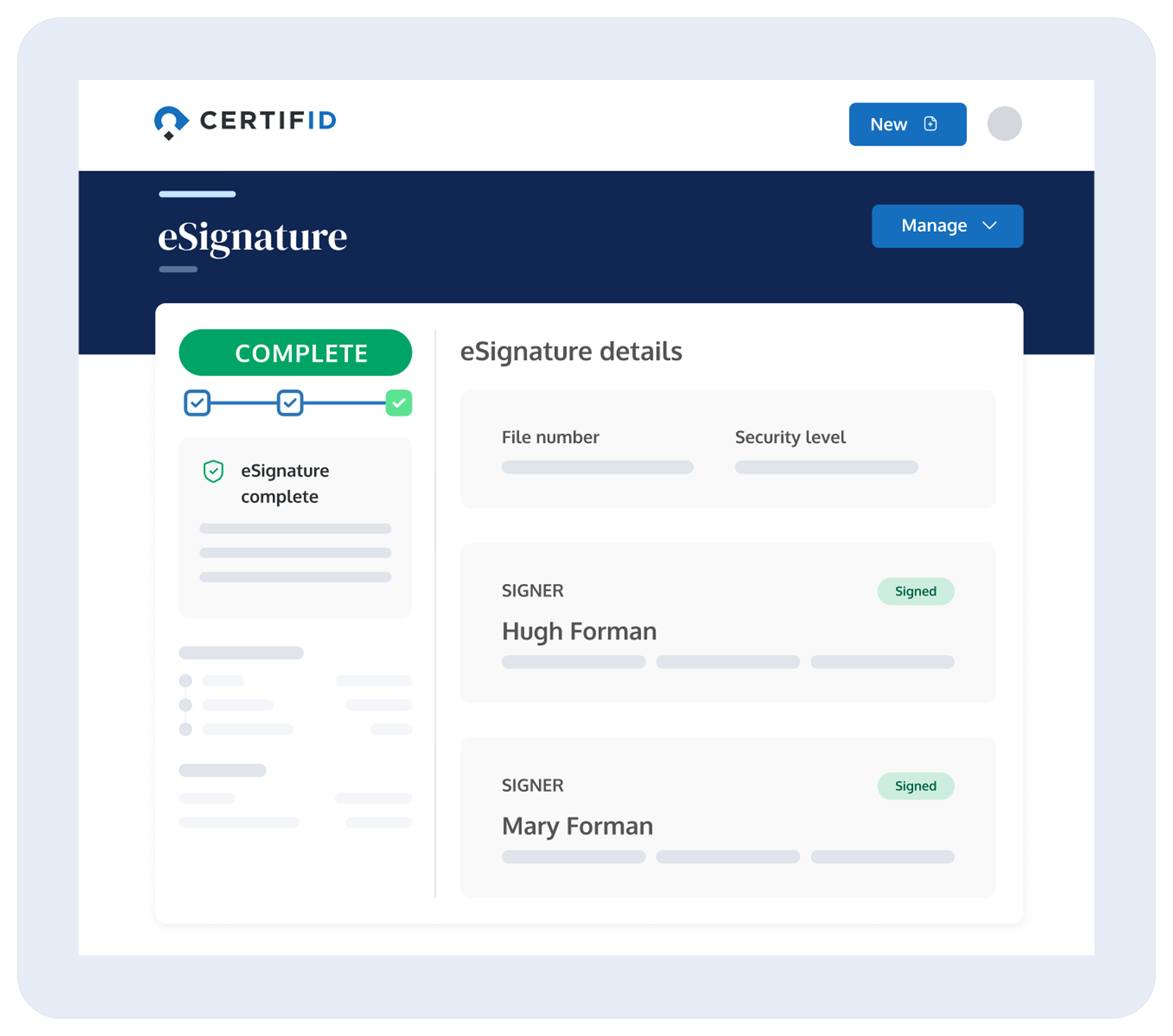
Documents can now be prepared, sent, and tracked without leaving CertifID. Activity stays connected to the transaction, so teams can see progress alongside the rest of the closing workflow. When documents are sent, it is clear who has signed, who still needs to take action, and when everything is complete.
For title teams, this reduces the number of tools they need to manage and helps keep documents tied to the correct file. eSignatures are included as part of the CertifID platform, removing the need for separate contracts or per-envelope pricing.
For closing attorneys, eSignatures provide a consistent signing experience with built-in audit trails and document integrity. Identity verification and document access live within the same trusted environment as other sensitive steps, supporting clearer oversight and record keeping.
Keeping documents and signing activity inside CertifID helps create smoother handoffs and clearer visibility, especially when many moving parts are involved.
Accept earnest money your way: ACH, Instant, or Wire
Earnest money is often the first moment when money changes hands in a transaction. It sets expectations early for buyers and for the teams supporting the closing.
If you're already accepting earnest money digitally, you know the challenges: fielding "where's my payment?" inquiries, reconciling returns, and trying to track payments across multiple systems. If you're still using checks, you know the delays and risks. Digital Payments addresses both scenarios.
Even so, the process can feel confusing. Buyers have questions about how to send funds and when they will arrive. Title teams spend time explaining timing, good funds requirements, and what happens next.
Digital Payments for earnest money was built to make this step easier to understand and easier to manage.
With this release, title companies can accept earnest money through ACH, Instant payments, or wire. Teams can choose the delivery options that align with their policies and state requirements, while buyers are guided through a clear digital experience.
Visibility plays a big role here. Buyers can see where their payment is and what to expect next. Title teams can see when funds are initiated, when they are held, and when they are available, all in one place. A standard two-day delivery helps ensure funds are final, and once they are in escrow, there are no clawbacks or reconciliation work to manage later.
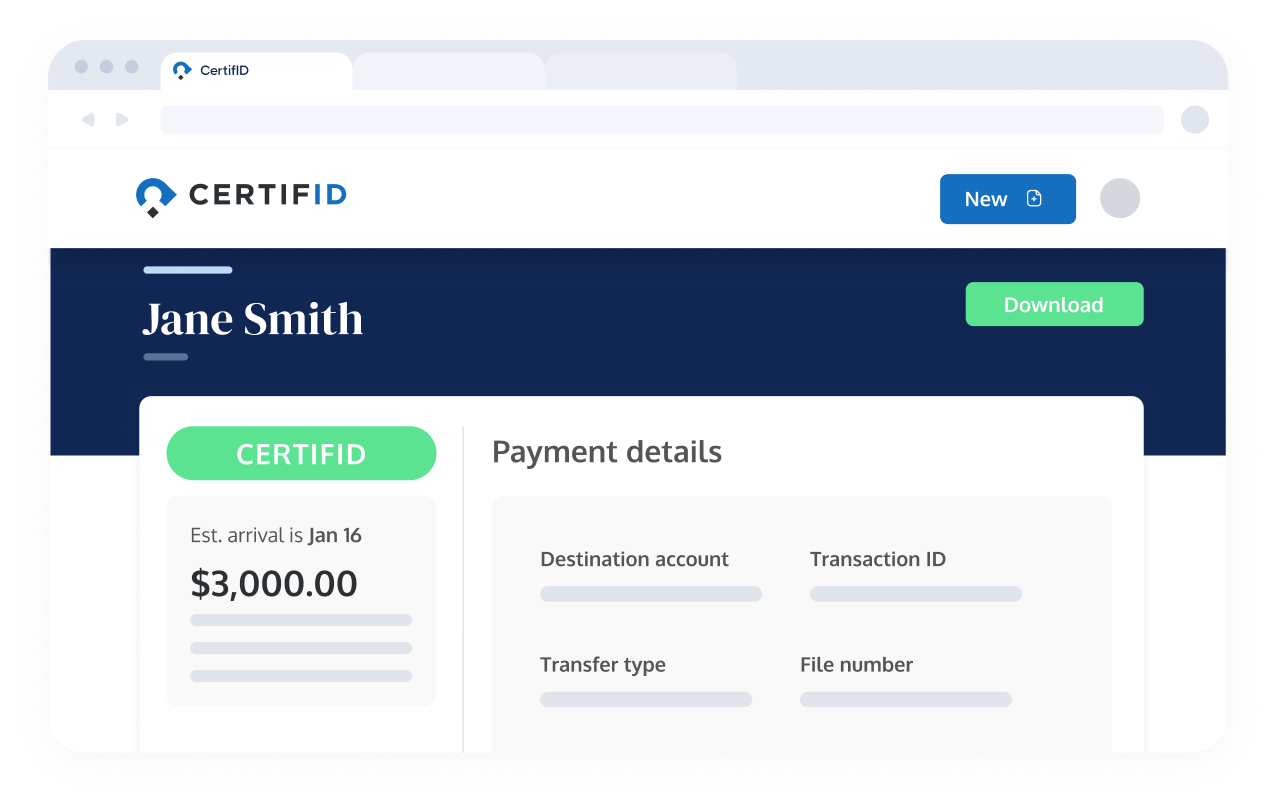
For title companies, this means fewer questions and fewer exceptions to track. Payments arrive with the right context attached, making it easier to apply funds correctly and keep files moving.
Earnest money does not need to feel complicated or risky. Digital Payments help buyers get started with confidence and help closing teams move forward knowing this first step is handled clearly and securely.
Built-in support for fraud, compliance, and closing-day questions
Technology plays an important role in all of this, but it is not the only thing teams rely on during a closing.
Real estate transactions involve people, judgment calls, and moments where something needs a closer look. Like when a payoff verification comes back unclear. Or when a buyer's identity check raises a question, you need to talk through. Or when you're handling your first out-of-state seller and want to confirm you're following the right protocol.
That is why we pair our platform with people who truly understand real estate fraud and the realities of closing day. When a team has a question or needs a second set of eyes, they are not left guessing or working through it alone.
Customer Success is part of that same commitment. From onboarding through everyday use, CSMs help teams feel confident in how CertifID fits into their workflows and evolves with their needs.
Additional support available to CertifID customers:
- Fraud education: Free training courses keep teams informed as fraud tactics evolve
- FinCEN compliance: Managed filings through our partnership with FinCEN Real Estate Report reduce the administrative burden of new regulatory requirements
- Office hours: Regular opportunities to ask questions, learn best practices, and connect with other title professionals
Together, this support is about helping teams feel steady and supported, especially during high-pressure moments.
What’s next?
If you are new to CertifID, a good place to start is seeing the platform in action. A demo gives you a clear view of how these new capabilities work together and how they can support the way your team already operates.
If you're new to CertifID, schedule a demo to see how payoff ordering, eSignatures, and digital payments work together in a real closing workflow.
If you're already a customer, these features are rolling out now. Check your dashboard for availability, or reach out to your Customer Success Manager to get started. Your next closing can be your smoothest one yet.
Whether you are just getting started or continuing to grow with CertifID, our focus stays the same: Be a reliable partner. Support confident closings. And keep building systems that help teams do their best work when it matters most.

FAQ

Content Marketer

Michelle has spent her career in B2B SaaS startups leading content marketing, strategy, and social media efforts that help teams grow and audiences stay informed. At CertifID, she applies that expertise to help title and real estate professionals understand fraud risks and stay ahead of emerging threats.
Closings have always been high stakes. They bring together people, paperwork, and money at a moment that feels both exciting and high-pressure.
Over time, that moment has picked up more complexity. A closing that once involved three parties now involves five or six. Documents that arrive by fax now come through four different portals. Buyers who once brought cashier's checks now text asking about Venmo.
Title agents and closing attorneys are doing the same careful work they always have. What has changed is how much coordination and visibility are required behind the scenes.
At CertifID, we spend a lot of time listening to how closings actually unfold. Where teams slow down. Where questions tend to pile up. Where confidence matters most.
Our Winter 2026 Release is a direct response to those conversations. We’ve introduced new capabilities across payoff ordering, document workflows, and digital payments, all designed to make closings feel more predictable, more connected, and easier to manage.
What’s available now
All three capabilities are rolling out to CertifID customers:
- Payoff Ordering: Available now for all customers
- eSignatures via Docusign: Available now for per-file pricing customers
- Digital Payments: Available now with ACH, Instant Payment (RTP/FedNow), and Wire configurations
Request and track payoffs without the chaos
Payoff ordering is one of those steps in a closing that everyone knows is important, and almost everyone wishes were easier.
Requests come from different places. Information arrives in different formats. Timelines can shift quickly. When multiple parties are involved, it can be difficult to know exactly where things stand at any given moment.
Now, payoff ordering is built directly into CertifID.
Title teams and closing attorneys can request mortgage payoffs in one place and track progress without jumping between systems. Once a payoff is ordered, status updates are visible in real time. When information is returned, it is verified before funds move forward.
For title agents, this creates a much clearer picture of what is happening across files. Instead of tracking requests across emails and portals, teams can see what has been submitted, what is still outstanding, and what is ready to move ahead. That visibility makes it easier to manage volume and keep closings on schedule.
For closing attorneys, payoff ordering is about confidence and accountability. Having payoff requests, responses, and verification in one secure workflow creates a stronger audit trail and reduces reliance on informal checks.
Payoff ordering will always be a critical step. The goal here is to make it feel steadier and more predictable, so teams spend less time chasing details and more time focused on closing.
eSignatures without the tool switching
Documents sit at the center of every transaction, but the way they are handled often feels disconnected from the rest of the process.
Teams are switching between tools to prepare documents, send them for signature, track completion, and store records. That context switching adds friction, especially when timelines are tight and multiple parties are involved.
With the 2026 Winter Product Launch, CertifID introduces eSignatures via Docusign, bringing secure document workflows directly into the CertifID platform. We chose Docusign because buyers and sellers already recognize and trust the signing experience, eliminating the friction of introducing an unfamiliar tool at a critical moment.
Documents can now be prepared, sent, and tracked without leaving CertifID. Activity stays connected to the transaction, so teams can see progress alongside the rest of the closing workflow. When documents are sent, it is clear who has signed, who still needs to take action, and when everything is complete.
For title teams, this reduces the number of tools they need to manage and helps keep documents tied to the correct file. eSignatures are included as part of the CertifID platform, removing the need for separate contracts or per-envelope pricing.
For closing attorneys, eSignatures provide a consistent signing experience with built-in audit trails and document integrity. Identity verification and document access live within the same trusted environment as other sensitive steps, supporting clearer oversight and record keeping.
Keeping documents and signing activity inside CertifID helps create smoother handoffs and clearer visibility, especially when many moving parts are involved.
Accept earnest money your way: ACH, Instant, or Wire
Earnest money is often the first moment when money changes hands in a transaction. It sets expectations early for buyers and for the teams supporting the closing.
If you're already accepting earnest money digitally, you know the challenges: fielding "where's my payment?" inquiries, reconciling returns, and trying to track payments across multiple systems. If you're still using checks, you know the delays and risks. Digital Payments addresses both scenarios.
Even so, the process can feel confusing. Buyers have questions about how to send funds and when they will arrive. Title teams spend time explaining timing, good funds requirements, and what happens next.
Digital Payments for earnest money was built to make this step easier to understand and easier to manage.
With this release, title companies can accept earnest money through ACH, Instant payments, or wire. Teams can choose the delivery options that align with their policies and state requirements, while buyers are guided through a clear digital experience.
Visibility plays a big role here. Buyers can see where their payment is and what to expect next. Title teams can see when funds are initiated, when they are held, and when they are available, all in one place. A standard two-day delivery helps ensure funds are final, and once they are in escrow, there are no clawbacks or reconciliation work to manage later.
For title companies, this means fewer questions and fewer exceptions to track. Payments arrive with the right context attached, making it easier to apply funds correctly and keep files moving.
Earnest money does not need to feel complicated or risky. Digital Payments help buyers get started with confidence and help closing teams move forward knowing this first step is handled clearly and securely.
Built-in support for fraud, compliance, and closing-day questions
Technology plays an important role in all of this, but it is not the only thing teams rely on during a closing.
Real estate transactions involve people, judgment calls, and moments where something needs a closer look. Like when a payoff verification comes back unclear. Or when a buyer's identity check raises a question, you need to talk through. Or when you're handling your first out-of-state seller and want to confirm you're following the right protocol.
That is why we pair our platform with people who truly understand real estate fraud and the realities of closing day. When a team has a question or needs a second set of eyes, they are not left guessing or working through it alone.
Customer Success is part of that same commitment. From onboarding through everyday use, CSMs help teams feel confident in how CertifID fits into their workflows and evolves with their needs.
Additional support available to CertifID customers:
- Fraud education: Free training courses keep teams informed as fraud tactics evolve
- FinCEN compliance: Managed filings through our partnership with FinCEN Real Estate Report reduce the administrative burden of new regulatory requirements
- Office hours: Regular opportunities to ask questions, learn best practices, and connect with other title professionals
Together, this support is about helping teams feel steady and supported, especially during high-pressure moments.
What’s next?
If you are new to CertifID, a good place to start is seeing the platform in action. A demo gives you a clear view of how these new capabilities work together and how they can support the way your team already operates.
If you're new to CertifID, schedule a demo to see how payoff ordering, eSignatures, and digital payments work together in a real closing workflow.
If you're already a customer, these features are rolling out now. Check your dashboard for availability, or reach out to your Customer Success Manager to get started. Your next closing can be your smoothest one yet.
Whether you are just getting started or continuing to grow with CertifID, our focus stays the same: Be a reliable partner. Support confident closings. And keep building systems that help teams do their best work when it matters most.
Content Marketer
Michelle has spent her career in B2B SaaS startups leading content marketing, strategy, and social media efforts that help teams grow and audiences stay informed. At CertifID, she applies that expertise to help title and real estate professionals understand fraud risks and stay ahead of emerging threats.
Sign up for The Wire to join the conversation.




Austin
3601 South Congress Ave.
Ste D200, Austin, Texas 78704

Grand Rapids
124 Fulton Street E
Grand Rapids, MI 49503

